
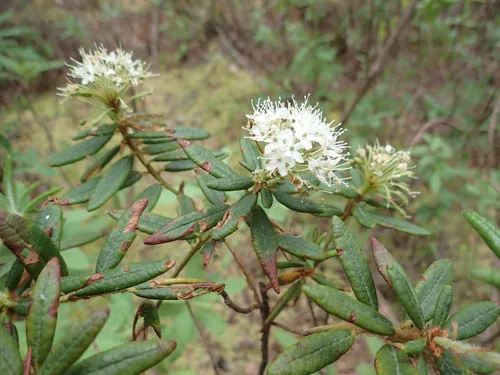
Labrador Tea is grown for its foliage and the structure it brings to a planting. Its spring flowers are a moderate draw for native bees.
Score Labrador Tea on your exact land.
Zone averages can't see the slope, soil, frost, and sun that decide whether labrador tea actually takes — and those shift from one yard to the next. Enter your address and we'll score labrador tea against your land's real conditions.
We read public map data for this spot — soil, climate, flood, and parcel records. How we handle your address.
No card required · your parcel report in seconds — read in full free for your first 14 days
What Labrador Tea is
Labrador Tea grows as a perennial. It blooms in spring.
How to grow Labrador Tea
 USDA Zones
Data pending
Soil pH
Data pending
Sun
Data pending
Drainage
Data pending
Start the season right
Plant labrador tea in full sun.
Match the soil
Pull a soil test from your local Extension lab to confirm pH and drainage match labrador tea's needs before planting.
Water steadily
Keep the root zone evenly moist through establishment. Match watering to the plant's drainage preference and your local rainfall.
Keep it in good form
Prune labrador tea to shape as it grows; the reward is its foliage and structure, not a harvest, so steady upkeep is the whole job.
Where Labrador Tea thrives
Whether labrador tea thrives on a given site comes down to its soil pH, drainage, sun, and frost dates — the conditions that vary parcel to parcel.
What grows around Labrador Tea
Growing guides for labrador tea
Good to know
One caution for pet owners — labrador tea is toxic to dogs, cats and horses (severe severity). Keep it out of reach, and call ASPCA Animal Poison Control at (888) 426-4435 in an emergency. (Source: ASPCA.)
Labrador Tea offers moderate value to bees and other pollinators. (Source: Lady Bird Johnson Wildflower Center.)
Your land is one point inside Labrador Tea's range
This page resolves to the species. Your state page draws the county line, and a report reads the parcel — the soil pH, drainage, sun, and frost dates on your exact ground, which no species average can see.
See if Labrador Tea will thrive on your land
Zone averages are a start. Your exact soil pH, drainage, sun exposure, and frost dates shape whether labrador tea actually takes — we score it against the real conditions at your address.
Three things about your exact spot that zone averages miss:
We read public map data for this spot — soil, climate, flood, and parcel records. How we handle your address.
25+ data sources analyzed in seconds
How we know this about Labrador Tea
The figures above are cited per row, not per site: the pH band names this plant’s own source column, the three temperature figures each carry their own, and days-to-maturity cites the publication that actually lists it. All of it comes from the Growable Ground Plant Database — a compilation over FAO ECOCROP, USDA PLANTS, and university Extension sources, published openly with per-field provenance.
Grounded inUSDA PLANTS Database•ASPCA
Frequently asked questions
Can I grow Labrador Tea in my zone?
Zone data for labrador tea is being finalized. A Growable Ground report checks your parcel's full suitability against federal soil, climate, and zone data.
When should you plant Labrador Tea?
Time labrador tea to your own season rather than the calendar. Your local frost dates set the exact window — a Growable Ground report reads them for your address.
What soil does Labrador Tea need?
Specific pH data for labrador tea is pending. A soil test from your local Extension lab confirms what your site needs.
Does Labrador Tea attract pollinators?
Yes — labrador tea's flowers are a solid nectar source for native bees. (Source: Lady Bird Johnson Wildflower Center.)
Is Labrador Tea safe for pets?
Labrador Tea is toxic to dogs, cats and horses with severe severity. Keep it out of reach, and call ASPCA Animal Poison Control at (888) 426-4435 in an emergency. (Source: ASPCA.)