
Growing Guide
Container Gardening: When Your Soil Doesn't Matter, But Your Climate Still Does
Sources: USGS 3DEP (sun exposure), NOAA NCEI (frost dates), USDA PHZM 2023 (hardiness zones)
Last updated:
 Min pot for a tomato
5 gal
10–20 gal for indeterminate
Summer watering
Daily
Twice for small terracotta
Shade greens need
3–4 hr
Lettuce, kale, herbs
Why containers change the scoring equation
When you grow in containers, you control the growing medium. Potting mix replaces your native soil, which means three of the ten plant-scoring constraints drop out entirely: soil pH, drainage class, and soil texture. You choose the pH. You choose the drainage. You choose the mix.
But containers don't change your climate. Sun exposure — cast across your terrain, buildings, and a leaf-on tree-canopy model — still determines how many hours of direct light your plants receive. NOAA frost dates still define your growing season window. Your USDA hardiness zone still determines which perennials survive winter outdoors in pots.
In fact, containers can make some climate factors harder: potted plants freeze faster than in-ground plantings because soil insulation is reduced. A perennial rated for Zone 6 in-ground may need Zone 5 hardiness to survive winter in a container on a Zone 6 balcony.
The potting mix is the whole game
The single biggest container mistake is filling a pot with garden soil. Native soil that drains fine in the ground compacts into a dense, airless brick inside a container — it holds too much water, starves roots of oxygen, and undoes the one advantage a pot gives you. Containers want a soilless mix: light, fast-draining, and built for the job.
A good all-purpose blend is roughly a third moisture-holding organic matter (peat moss or coconut coir), a third compost for fertility, and a third drainage material (perlite or coarse sand), with a handful of vermiculite to hold water and nutrients. Because you mix it, you also control the pH — the easiest way there is to grow an acid-lover like a blueberry, which wants a peat-heavy pH 4.5–5.5 mix you'd fight your native ground to reach.
Match the pot to the crop — and mind the material
Root volume sets the ceiling on what a plant can become. Too small a pot dries out hourly, cramps the roots, and caps the yield no matter how good the mix. Size up to the crop:
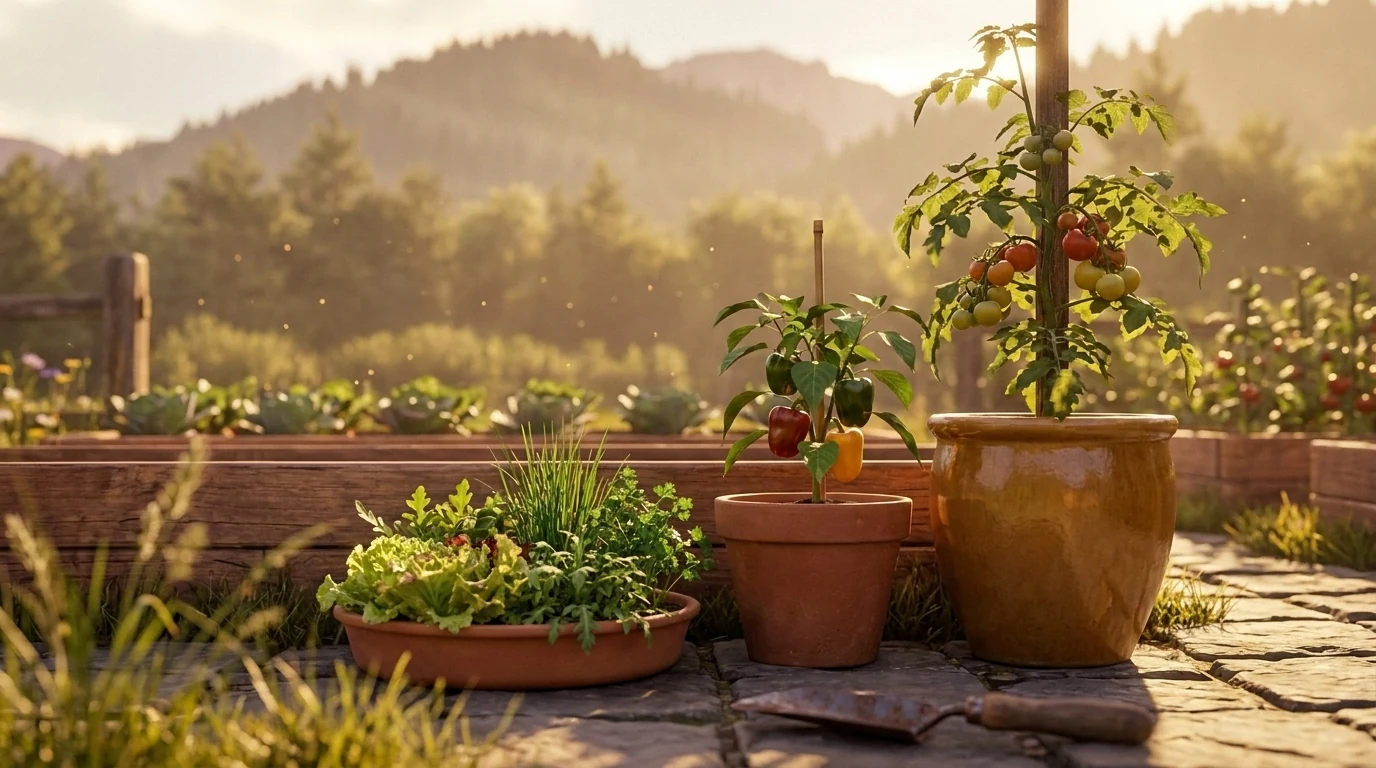
- 6–8 in deep: lettuce, radishes, arugula, and most herbs — basil, parsley, chives
- 3–5 gallons: peppers, eggplant, kale, chard, bush beans, a compact tomato
- 10–20 gallons: a full indeterminate tomato, dwarf fruit trees, anything you stake or trellis
The pot material matters too. Terracotta breathes and looks the part but wicks moisture out its walls, so it dries fastest and cracks if left to freeze full. Glazed ceramic and plastic hold moisture longer and suit thirsty crops. Fabric pots air-prune the roots for a denser root ball and never waterlog, though they too dry quickly. And a dark pot in full sun can cook roots on a hot balcony — a light-colored or shaded outer pot keeps the root zone livable.
Water and feed a small, closed volume
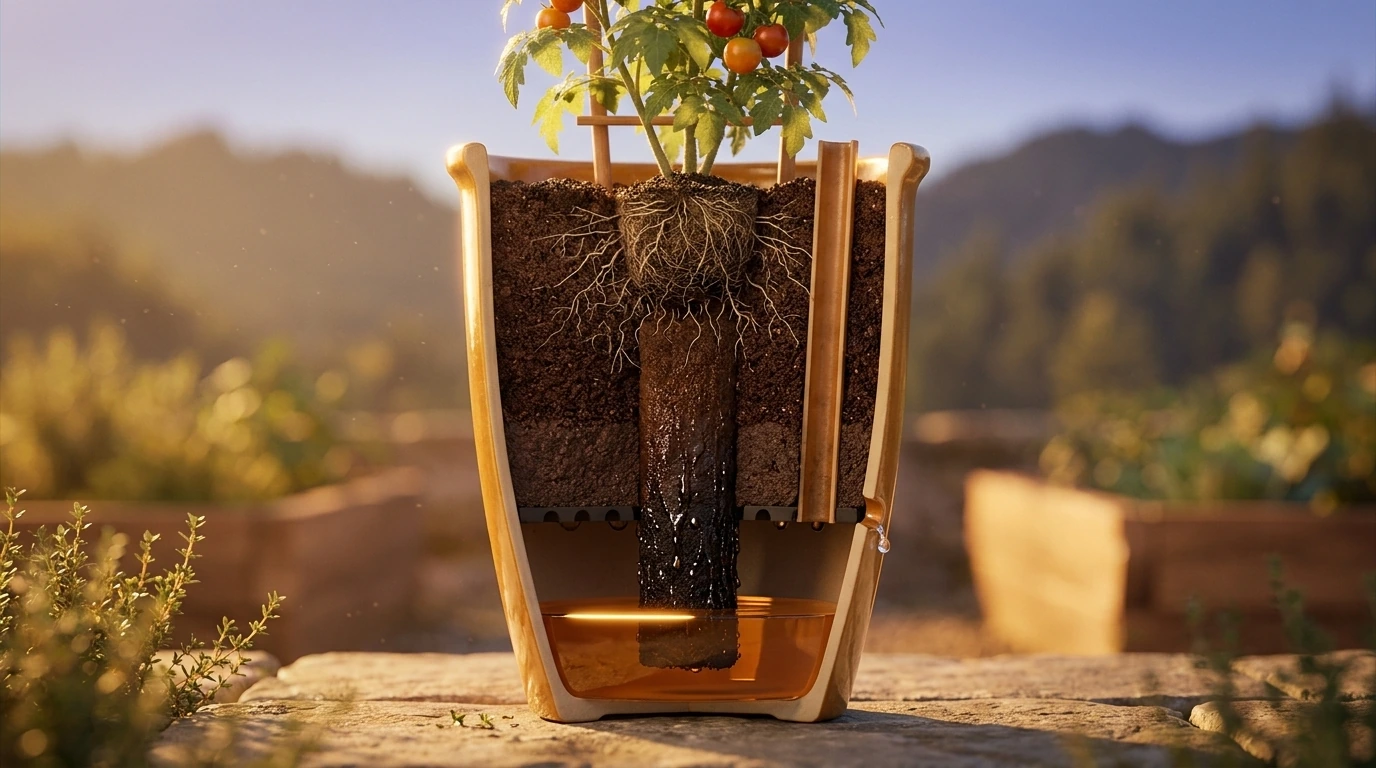
A container is a small reservoir with nowhere to draw backup from, so it dries far faster than open ground — daily in summer heat, twice a day for small or terracotta pots on a windy balcony. Check by pushing a finger two knuckles deep and water when that depth feels dry, soaking until it runs from the drain holes. A self-watering (wicking) planter with a bottom reservoir buys you a few days between waterings and is the single best upgrade for anyone who travels or forgets. A proper wicking planter also has an overflow port partway up the side — extra water from a downpour drains out there instead of flooding the mix from below. A shallow mulch of bark or straw slows evaporation from the surface.
Fertility is the flip side of all that watering: every time water drains out the bottom, it carries dissolved nutrients with it, so a container leaches out far faster than a garden bed. Compost in the mix gives a slow baseline; on top of that, feed lightly and often — a dilute liquid feed every week or two through the growing season beats a single heavy dose that just washes away.
Overwintering: roots freeze where the ground never would
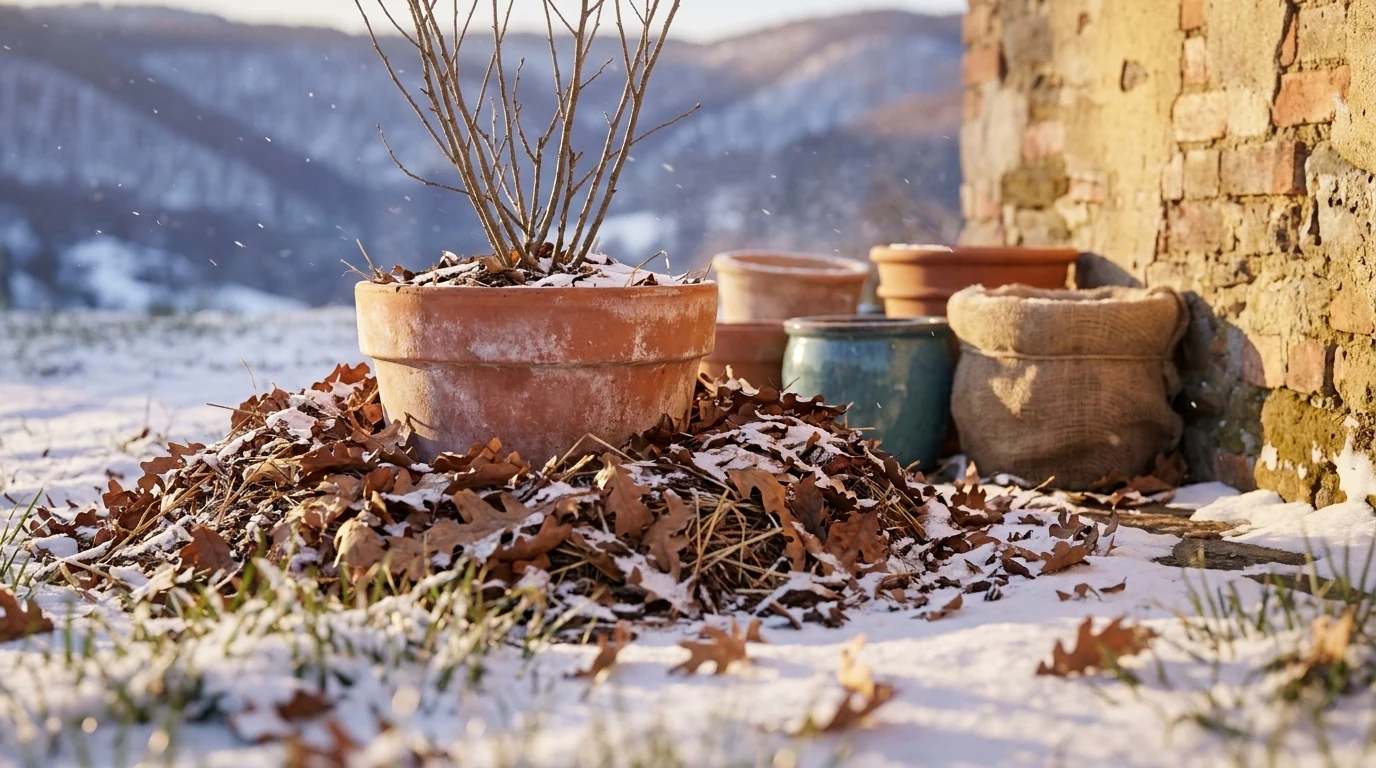
A perennial's roots are noticeably less cold-hardy than its top growth, and in the ground they're insulated by the whole earth around them. A pot has no such buffer — it can freeze solid straight through. That's why a shrub that sails through winter in your beds can die in a container in the same yard.
The working rule: to overwinter outdoors in a pot, a plant should be rated about one to two hardiness zones colder than your area. To close that gap, cluster pots together against a warm wall, wrap them or sink them in a mulch pile, move them into an unheated garage or shed for the coldest months, or simply grow tender perennials as annuals and start fresh in spring. Your local frost dates (NOAA normals) tell you when that cold window opens and closes.

See what thrives in YOUR climate
Container growing removes soil constraints. See which plants score highest for your sun and frost conditions.
Three things about your exact spot that zone averages miss:
We read public map data for this spot — soil, climate, flood, and parcel records. How we handle your address.
25+ data sources analyzed in seconds
What container scoring looks like
Growable Ground's container persona re-scores all 1,085 plants with soil constraints zeroed out. This means plants that score poorly due to alkaline soil or poor drainage in-ground often score significantly higher in containers.
- - Soil pH (you control the mix)
- - Drainage class (pots have drain holes)
- - Soil texture (potting mix, not clay/sand)
- + Sun exposure (hours of direct light)
- + Frost dates (last spring / first fall)
- + Hardiness zone (winter survival)
- + Growing degree days (heat accumulation)
- + Precipitation (outdoor containers)
Best plants for containers by zone
Container success depends primarily on sun and frost timing. Here's how hardiness zone shapes what works best in containers:
- Zones 3-4 (short seasons): Focus on fast-maturing crops — lettuce, radishes, herbs, and compact tomato varieties that fruit within 60-70 days. Start indoors and move containers out after last frost.
- Zones 5-7 (moderate): The broadest range. Tomatoes, peppers, eggplant, herbs, strawberries, and dwarf fruit trees all work. The season is long enough for most warm-season crops.
- Zones 8-10 (warm/hot): Year-round container growing is possible. Heat-tolerant varieties score higher. Citrus, tropical herbs, and perennial vegetables can overwinter outdoors in pots.
Container growing for renters and urban growers
If you're renting, don't have a yard, or live in an apartment, containers are your path to growing food. Balconies, patios, rooftops, fire escapes, and windowsills can all support container gardens.
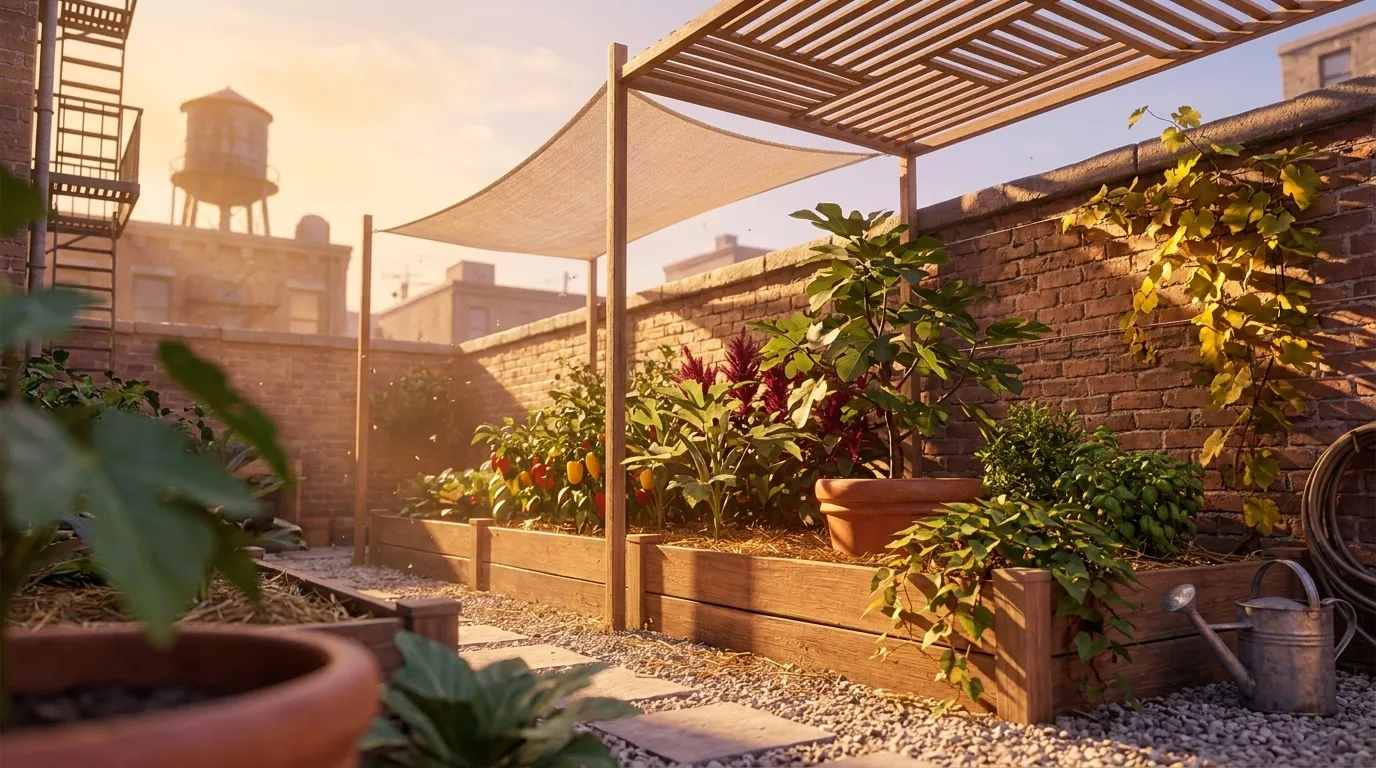
The critical constraint for urban container growers is sun exposure. Buildings create shadow patterns that vary by season — a south-facing balcony might get 8 hours of direct sun in June but only 3 in December. Growable Ground's shadow modeling — USGS 3DEP terrain and buildings plus a leaf-on canopy model — calculates actual sun hours at your location, accounting for surrounding structures, trees, and terrain.
For north-facing or heavily shaded locations, focus on shade-tolerant edibles: lettuce, spinach, kale, mint, parsley, chives, and some Asian greens perform well with as little as 3-4 hours of direct sun.
See what thrives in YOUR climate
Container growing removes soil constraints. See which plants score highest for your sun and frost conditions.
Three things about your exact spot that zone averages miss:
We read public map data for this spot — soil, climate, flood, and parcel records. How we handle your address.
25+ data sources analyzed in seconds
Frequently Asked Questions
What is the best potting mix for containers?
A soilless mix, not garden soil. Native soil compacts into a dense brick inside a pot, drains poorly, and drowns roots. Reach for a bagged potting mix, or blend your own from roughly one-third organic matter that holds water (peat moss or coconut coir), one-third compost for fertility, and one-third drainage material (perlite or coarse sand), with a little vermiculite to hold moisture and nutrients. Because you build the mix, you also set the pH — an easy win for acid-lovers like blueberries, which want a peat-heavy pH 4.5–5.5 blend you'd struggle to hit in native ground.
How often should I water container plants?
More often than you think — usually daily in summer heat, sometimes twice a day for small or terracotta pots on a hot, windy balcony. A container is a small, exposed volume with nowhere to pull reserve moisture from, so it dries top-down fast. Check by pushing a finger two knuckles deep; water when that depth feels dry, and water until it runs from the drainage holes. Self-watering (wicking) planters with a bottom reservoir stretch the interval to every few days and are worth it for anyone who travels or forgets.
What size pot does a tomato need?
At least 5 gallons for a compact or determinate variety, and 10 to 20 gallons for a full indeterminate tomato — the bigger the reservoir of mix, the less it swings between soaked and bone-dry, and the bigger the crop. As a rule the pot has to fit the root system: herbs and lettuce are happy in 6–8 inches of depth, peppers and eggplant want 3–5 gallons, and anything you'd stake or trellis wants 5 gallons and up.
What can I grow on a shady balcony?
Leafy greens and herbs. Lettuce, spinach, kale, chard, arugula, mint, parsley, and chives all crop on as little as 3 to 4 hours of direct sun or bright reflected light. What you can't force in shade is fruit: tomatoes, peppers, and squash need 6 to 8 hours to set and ripen, so a north-facing balcony steers you toward the salad-and-herb end rather than a fruiting-vegetable garden.
Do container perennials survive winter outdoors?
Often not without help — roots are far less cold-hardy than the tops, and a pot freezes solid where the ground never would. As a working rule, a plant needs to be rated about one to two hardiness zones colder than your area to overwinter in a container outdoors. Cluster pots together against a wall, wrap or sink them, move them to an unheated garage or shed, or simply treat tender perennials as annuals.
How does Growable Ground score plants for containers?
The container persona re-scores all 1,085 plants with soil constraints zeroed out — SSURGO pH, drainage class, and native texture are bypassed. The factors that still bind — hardiness zone, sun hours, frost dates, growing degree days, and precipitation — are scored normally against your parcel's measured conditions.
Related Guides
See what this means where you are
This guide is national — a state's own zones, frost dates and soils change how it plays out. Start with your state's growing hub: