
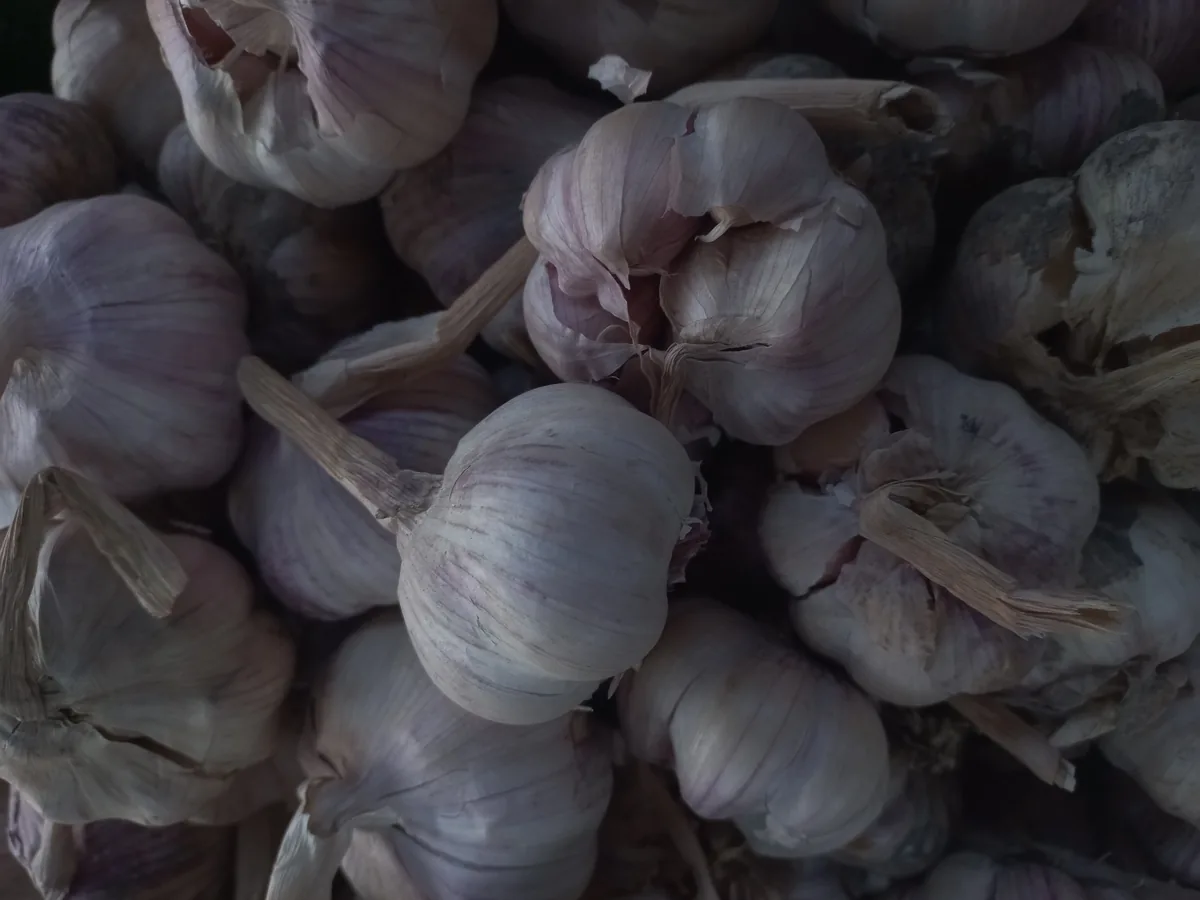
Yes — Strong Match
garlic (zones 2-10) covers every zone Michigan contains (4a-7a), so hardiness is not what limits it anywhere in the state.
Garlic in Michigan — the short answer
Garlic in Michigan: hardy in zones 2–10, full sun.
- Plant zones
- 2-10
- Not verified — NC State Extension Gardener Plant Toolbox lists zones 4a–9b
- Michigan zones
- 4a-7a
- USDA PHZM 2023
- Frost window
- Apr 19 - May 8 – Oct 12 - Oct 31
- NOAA RCC ACIS 1991-2020, 28°F
- Shortest county season
- 126 days
- NOAA Regional Climate Centers ACIS, 1991-2020, county 28°F killing freeze
- Days to maturity
- 220 days
- Growable Ground Plant Database
Plant data: Growable Ground Plant Database, compiled from FAO ECOCROP, USDA PLANTS and university Extension sources — per-field provenance varies and is published with the dataset.
Your yard isn't the whole zone.
Michigan spans zones 4a-7a, but your yard sits in exactly one — and slope, tree cover, and cold-air pockets nudge it further. Enter your address and we'll score garlic against your parcel's actual hardiness, soil, and sun.
We read public map data for this spot — soil, climate, flood, and parcel records. How we handle your address.
No card required · your parcel report in seconds — read in full free for your first 14 days
Michigan is not one climate
Michigan’s winter-low ladder runs across 83 counties, from zone 4 in Gogebic County to zone 7 in Allegan County. That is 30°F between the two counties’ average coldest night — the difference between garlic overwintering in the ground and coming under cover.
The middle half of 83 counties runs 5–6 zones, with a median of 6 zones — a 3-zone span end to end.
Measured across 83 Michigan counties. USDA PHZM 2023, per county. Quartiles are order statistics — every figure shown is a value a real county recorded, not an interpolation. Your own site sits somewhere inside this range; a parcel report resolves where.
Where in Michigan Fits Best
Even within Michigan's zones 4a-7a, county microclimates differ enough to change what thrives. These counties carry the closest zone match for garlic (USDA PHZM 2023):
Zone Comparison
Garlic Needs
- USDA Zones: 2-10
- Sun: Full Sun
- Mature size: 2 ft tall
- Picking window: ~14 days of harvest
- Drought tolerance: Medium
Michigan Has
- USDA Zones: 4a-7a
- Last Hard Freeze (28°F): Apr 19 - May 8
- First Hard Freeze (28°F): Oct 12 - Oct 31
- Annual Rainfall: 28-38 inches
- Common Soils: Sandy loam, Clay loam, Muck
Plant Zone Range (zones 2-10)
Preferred Soil pH
Plant data: Growable Ground Plant Database, compiled from FAO ECOCROP, USDA PLANTS, and university Extension sources — per-field provenance varies and is published with the dataset. State data: USDA ARS PHZM 2023, NOAA Climate Normals, NRCS SSURGO.
When to Plant Garlic in Michigan
The frost window
Across Michigan, the last spring hard freeze (28°F) clears between Apr 19 and May 8, and the first fall hard freeze lands between Oct 12 and Oct 31 (NOAA Regional Climate Centers ACIS, 1991-2020). Counting from the latest last freeze to the earliest first freeze, that's a 157-day window you can count on — up to 195 days on a mild site in a kind year. That marks the hard freeze, not the last light frost, so tender transplants usually wait another 2-3 weeks.
When to start the seed
Garlic is direct-sown where it grows rather than started under cover, so there is no seed-tray head start to bank — Michigan's dates above are the whole calendar for it. That makes the last-freeze date the binding constraint, and a warmer pocket of your own yard is worth more to this crop than it is to a transplanted one.
Establishment timing
As a long-lived plant, garlic isn't racing the calendar to a harvest date. Plant it in spring once the last hard-freeze window passes so roots settle in through the full season, or in early fall while the soil still holds summer warmth.
Timing tuned to sub-state frost dates — Luce County, not the statewide average.
Frost window: NOAA Climate Normals 1991-2020. Plant timing fields: Growable Ground Plant Database — frost-free days from FAO ECOCROP, days to harvest from university Extension production guides, and growing-degree-day and chill-hour minimums that are compilation estimates rather than published figures. Your site's own frost dates can run earlier or later than the state range — a parcel report pins them down.
Growing Season Fit
The zone check says garlic survives winter here. Whether the season is long enough — and warm enough — is a different question.
Growing degree days
Garlic needs ~1200 GDD (base 50°F) to ripen. The state median runs ~1976 GDD (from PRISM 1991-2020 climate normals), so Michigan's typical season clears that easily.
GDD and chill-hour figures are computed from PRISM 1991-2020 monthly climate normals; frost-free days from NOAA Regional Climate Centers ACIS, 1991-2020. Each is the state median across its counties (P25/P75 span the within-state spread). Hardiness-zone range is USDA PHZM 2023.
Soil + Drainage Fit
Garlic tolerates a wide pH range (pH 5-8.5) — 3.5 units, acid ground through alkaline — so soil acidity is rarely what limits it in Michigan. A soil test is still worth having, but for what else it tells you about this site, not to clear this plant. It will grow across that whole span, but it does best between pH 6 and 6.6 — worth knowing before you decide whether a Michigan soil test result is a problem or just a number. Drainage matters: this plant wants well (dry spells). If your Michigan site is heavier clay or sits in a low spot, raised beds or amendment with compost solve it.
Your land, not the state average
Whether garlic is safe to eat from Michigan soil is a block-by-block question, not a town-wide one — 60,035 documented contamination sites mean levels spike on some parcels and not the one next door. Garlic roots to about 19 inches, so it is the top 19 inches under your address that decide what it takes up, so only a test on your address settles it.
Check your parcel → Source: USDA NRCS SSURGO + EPA/state contamination databases.
Plant pH requirements: FAO ECOCROP and USDA PLANTS, with the remaining rows from other published sources or Growable Ground compilation. Drainage: FAO ECOCROP, with the remaining rows from other published sources or Growable Ground compilation. Michigan soil profile from USDA NRCS SSURGO. Site-specific verification: a 30-minute soil test from your local Extension lab.
Before you plant garlic for food
Anything you grow to eat takes up what is in the ground it grows in, so what is on record near you is worth knowing before garlic goes in. What follows is Michigan’s documented federal record at state scale — a screening signal, not a soil test, and not a statement about any one lot.
 Safe to Grow Here?
What the federal record shows across Michigan — and how to grow with it.
We checked the federal record across Michigan — 60,035 documented sites across 8 of the 8 source types we track.
The most significant on record: 711 Superfund sites. Sites tracked in EPA's Superfund program — from assessment-stage CERCLIS entries to confirmed National Priorities List cleanup sites.
Michigan carries one of the heavier federal records we track — and that's not a verdict on your yard. Proximity to a documented site is information, not a diagnosis: nothing here says any particular parcel is affected. It does earn one concrete step — before food beds go in the ground, a professional soil test tells you exactly what you're working with, and raised beds with clean imported soil grow well almost anywhere in the meantime.
Sources Checked
across Michigan
Severity Distribution
across Michigan
Highest-Severity Sites
Know Before You Grow
- •Underground tanks leak petroleum as they age — near a former filling station, test the soil.
- •Near a brownfield, raised beds of imported soil give your food clean ground.
- •On a private well, test for nitrates: above 10 mg/L the water needs treatment before irrigating.
Sources: EPA, USGS — 1.8M documented sites tracked nationwide across 8 federal source types.
What Else to Consider for Garlic in Michigan
Zone compatibility tells you about winter cold survival — but Michigan growers also need to think about:
Lake effect weather creates highly localized microclimates
Short northern season (100-120 frost-free days in UP)
Sandy soils in western MI drain too quickly
Growing garlic here specifically
Because you eat the bulb of garlic that sit in the soil, contamination matters more than for most crops — Michigan has 60,035 documented sites, and lead concentrates block by block, not town-wide.
Test your soil for lead first, and raise garlic in clean imported soil if the reading is high. How to handle it →
What to actually do about these — and the constraints that apply to every Michigan grower, not just garlic — is covered on the Michigan growing guide.
Timing shifts within Michigan
Michigan isn't one climate. In Luce County, the last hard freeze (28°F) holds until about May 22 — roughly 27 days later than the recorded state median — so plant garlic to your county's window, not the statewide date.
County last-freeze dates: NOAA Regional Climate Centers ACIS (1991-2020), county 28°F freeze (earlier than the folk 32°F "last frost"). A parcel report resolves your address's own frost dates.
Where in Michigan Garlic Is Zone-Hardy
Garlic is rated for USDA zones 2–10. Every one of Michigan’s 83 counties sits inside that band — from Gogebic County at zone 4a to Allegan County at zone 7a — so winter cold is not what decides this plant anywhere in the state. What is left to vary is your own parcel: slope, shelter and cold-air drainage routinely move a site half a zone either way from the county figure.
Across those 83 counties Michigan’s winter-low ladder runs from zone 4a in Gogebic County to zone 7a in Allegan County — 3 USDA zones of spread, which is 30°F between the two counties’ average coldest night of the year. That is why a statewide hardiness answer is where you start and not where you finish.
The planting window moves with it. Luce County holds its last hard freeze (28°F) until about May 22, while Berrien County is clear by Apr 6 — 46 days apart. Set garlic out on your county’s date, not the state’s.
County hardiness zones: USDA Plant Hardiness Zone Map (PHZM) 2023, per county. County last-freeze dates: NOAA Regional Climate Centers ACIS (1991-2020), county 28°F killing freeze — earlier than the folk 32°F "last frost". Garlic’s zone 2–10 band: Not verified — NC State Extension Gardener Plant Toolbox lists zones 4a–9b. A parcel report resolves your address’s own zone and frost dates rather than its county’s.
Pollinator + Wildlife Value
Garlic draws honeybees, native bees, and butterflies (moderate value, Growable Ground Plant Database). Planting it near vegetable beds can lift fruit set on neighboring crops. Outdoors, garlic can only work that bloom inside Michigan's frost window — roughly 186 days, opening after the last 28°F freeze (Apr 19 - May 8) and closing at the first (Oct 12 - Oct 31), per NOAA Regional Climate Centers ACIS, 1991-2020. Deer pressure is meaningful across much of Michigan; garlic is listed as deer-resistant (USDA PLANTS Database), which makes it a safer pick for unfenced sites. Our deer & wildlife guide carries the full deer-resistant list and how to protect the rest.
Good to Know Before You Plant Garlic
Garlic is listed as toxic to dogs, cats (all) at a moderate level (ASPCA). Most listed plants only cause brief upset — a raised bed or a fenced corner usually keeps curious pets clear. Worth knowing for placement: garlic overwinters through Michigan — its sourced hardiness floor is zone 4 and the state runs no colder than zone 4 — so it stands in the bed year-round, and where you site it is a long-term decision.
Michigan Cooperative Extension
For Michigan-specific cultivar recommendations, planting calendars, and pest pressure for garlic, the canonical source is MSU Extension. Their fact sheets carry the local trial data we can't generalize across 50 states.
Is Garlic native to Michigan?
No — the USDA PLANTS Database lists Garlic as introduced rather than native in the Lower 48, so it is not part of Michigan's native flora. It grows here as a garden plant; pairing it with a few Michigan natives keeps local pollinators fed too.
Looking for plants that belong here? The Michigan growing guide lists USDA-documented natives for the state.
Native-range data: USDA PLANTS Database state-distribution records, accessed 2026-07-01.
Common Questions About Growing Garlic in Michigan
When can I plant Garlic in Michigan?
Michigan's last spring hard freeze (28°F) clears between Apr 19 and May 8, and the first fall hard freeze lands between Oct 12 and Oct 31 (NOAA Regional Climate Centers ACIS, 1991-2020). Garlic is a long-lived planting, so target spring just after your local last hard freeze — or early fall while the soil holds warmth — and let it establish through the season.
What hardiness zone is Garlic grown in across Michigan?
Michigan spans USDA hardiness zones 4a-7a (USDA ARS PHZM 2023). Garlic carries a range of zones 2-10, so the overlap zones are where outdoor growing is most reliable.
How many frost-free days does a typical Michigan site have?
A typical Michigan site sees ~186 frost-free days per year (derived from NOAA Regional Climate Centers ACIS, 1991-2020). Garlic needs 90+ frost-free days, so check whether your local microclimate runs above or below the state average before settling on a planting date. In cooler counties like Luce, the freeze-free season runs shorter than the state average, so verify your own county's window.
Is Garlic native to Michigan?
No — the USDA PLANTS Database lists Garlic as introduced rather than native in the Lower 48, so it is not part of Michigan's native flora. It grows here as a garden plant; pairing it with a few Michigan natives keeps local pollinators fed too.
How should I amend the soil for Garlic in Michigan?
Garlic tolerates pH 5-8.5 and well (dry spells) drainage (FAO ECOCROP). That is a 3.5-unit span, acid ground through alkaline, so pH is rarely what limits this plant on a Michigan site — amend for drainage and organic matter first.
Will Garlic actually grow on my specific land in Michigan?
State-level zone + climate data is a sketch. A Growable Ground parcel report scores garlic against your address's exact soil pH, drainage, sun, and frost-date data drawn from USDA SSURGO, NOAA, and PRISM — not state averages.
Check your specific parcel in Michigan
State-level data is a sketch. Your Growable Ground report scores garlic against your parcel's exact soil, sun, drainage, and frost data — not zone averages.
Three things about your lot that Michigan garlic averages can't show:
We read public map data around Michigan — soil, climate, flood, and parcel records. How we handle your address.
25+ data sources read at your address, not the Michigan garlic average
Explore More
Growing guides for garlic
Explore Michigan county by county
Michigan carries 83 counties with their own USDA zone — a sample of the growing pages for garlic there:
Where else garlic grows
Garlic's zone band crosses state lines — these are the states closest to Michigan in winter climate where it also has a page, plus the far ends of its range. Each one re-answers the question with that state's own record.
More to grow in Michigan
Michigan has a growing page for 889 plants — a rotating sample of the rest of the shelf.
Analysis by the Growable Ground research team, grounded in USDA PLANTS, USDA NRCS SSURGO, NOAA Climate Normals (1991-2020), and named Cooperative Extension sources. How we know →
Cite this dataset
Kirchick, M. (2026). Growable Ground Plant Database [Data set]. Zenodo. https://doi.org/10.5281/zenodo.21435643
Licensed CC BY-NC 4.0. DOI 10.5281/zenodo.21435643
Last updated: