Deer & Wildlife: Protect Your Garden Without a War
Sources: Standard wildlife-damage-management practice
Animals
9
Covered in this guide
Groups
3
Browsers to foragers
Approach
Exclude
A real barrier beats a repellent
The animals that raid a garden are not out to spite you — they are hungry, and your beds are the best meal for miles. That is the whole strategy in a sentence: make the meal hard to reach. Nearly every reliable fix here is a physical one — a fence a deer cannot clear, a hardware-cloth cylinder a rabbit cannot gnaw through, a net a bird cannot reach past. Scent repellents and scare devices have their place, but they work by persuasion, and a hungry animal is a hard sell. A barrier does not have to persuade anything.
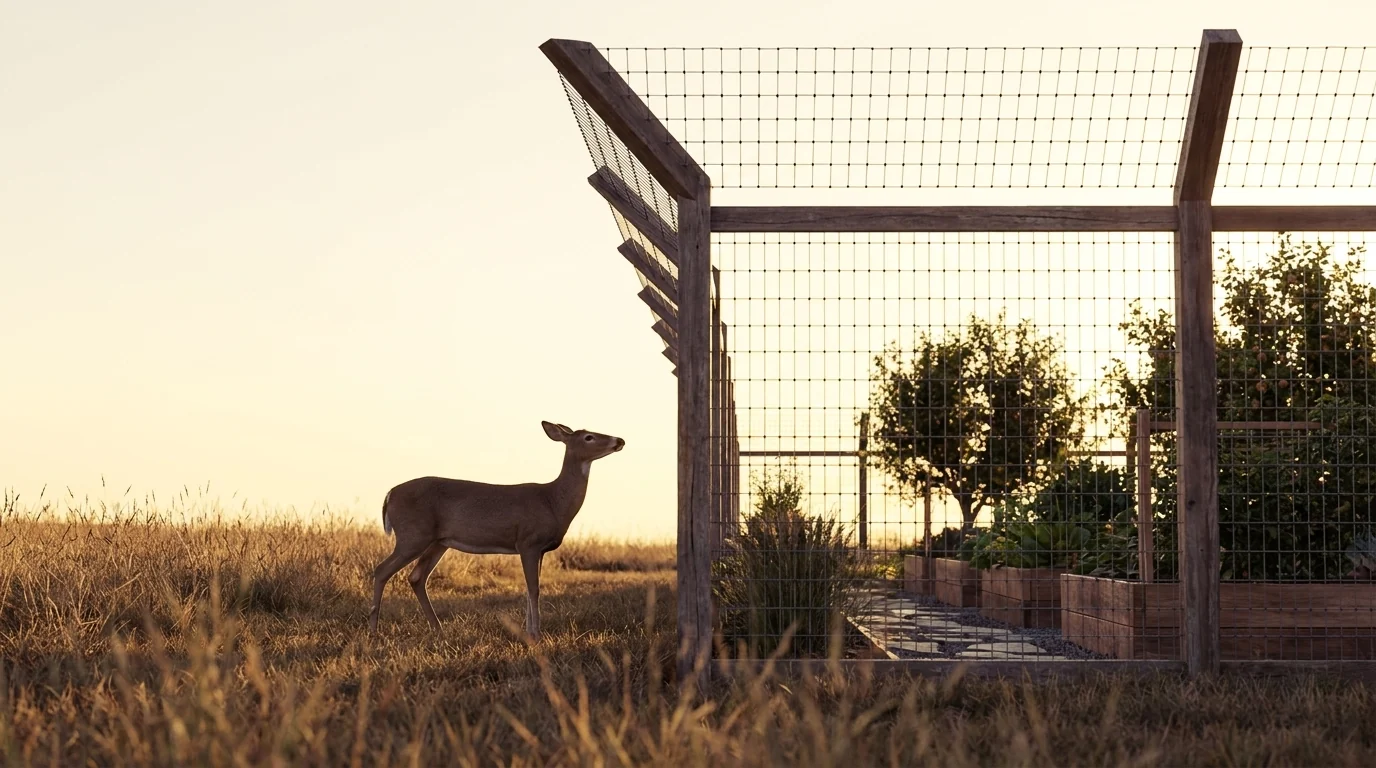
Deer clear a surprising height, so a fence works on two counts: about eight feet tall, with the top angled outward — a deer won’t jump what it’s too tall to clear and can’t judge the width of.
Each entry covers three things: what the animal is, the sign it leaves (usually the first thing you notice), and the exclusion-first move that works. The order of operations is always the same — identify what you are dealing with, exclude it from where it does harm, and only then reach for repellents, scare tactics, or tolerance. Which species are active near you, and the local hunting, trapping, and relocation rules, are genuinely local — that is where your Cooperative Extension and state wildlife agency come in.
Free Report
The best defense is a garden worth defending — matched to your land.
Enter your address and we score 1,085 plants against your soil, sun, and climate — including the aromatic herbs, ferns, and bulbs that deer and rabbits tend to leave alone.
Three things about your exact spot that zone averages miss:
Your soil pHYour frost-free daysYour sun & shade
We read public map data for this spot — soil, climate, flood, and parcel records. How we handle your address.
25+ data sources analyzed in seconds
The Browsers
Deer and rabbits eat foliage from the outside in, and they do the most damage of any garden animal because they are big, they are hungry, and they come back nightly. The good news is that the same fact makes them manageable: they feed by walking up to the plant, so a barrier they cannot get past is a near-total fix. Everything else — repellents, scare devices, resistant plants — is a way to buy time until you build the fence.
White-Tailed Deer
Includes: Deer browse
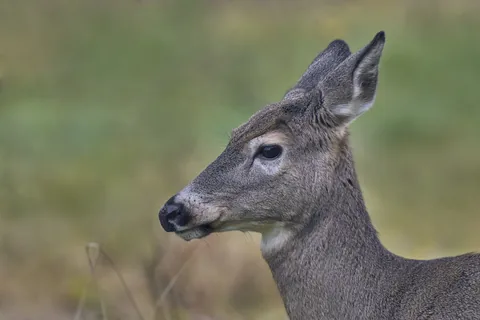
A white-tailed deerPaul Danese · CC BY-SA 4.0
What it looks like
You often see the animal itself at dawn or dusk, or read its calling cards: heart-shaped split hoof prints in soft soil, small piles of pellet droppings, and — in fall — young trees with the bark rubbed raw where bucks polish their antlers.
The damage
Because deer have no upper front teeth, they tear rather than clip — leaving a ragged, torn edge on browsed shoots (rabbits, by contrast, cut clean at a 45° angle). Whole plants can be stripped to stubs overnight, and browse damage typically starts above knee height and works up.
The move
A fence is the only reliable control, and height is everything — deer clear a low fence easily, so the standard is a tall barrier (roughly 8 feet), or a slanted or double fence line that defeats their poor depth perception. Short of that, protect individual plants with cages, rotate two or three scent-and-taste repellents so they never habituate, and lean on genuinely deer-resistant plants (aromatic herbs, ferns, daffodils, boxwood) for the unfenced edges. Repellents and scare devices buy time; the fence ends the problem.
Browse pressure spikes when natural forage is thin — late winter and a dry late summer — and the local hunting seasons and any depredation permits are set by your state wildlife agency. (The deer-resistant plant picks are just below, drawn from our own plant data.)
Cottontail Rabbits
Includes: Rabbits · Hares
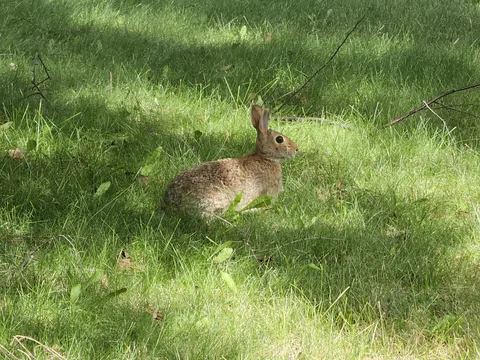
An eastern cottontail rabbit
What it looks like
The familiar brown-gray rabbit, most active at dawn and dusk, sheltering under brush piles, decks, and shrubs. The sign is small, round, pea-sized droppings scattered near the damage and shallow forms scratched in sheltered soil.
The damage
Clean, angled cuts on stems and leaves — as if snipped with a sharp pruner at 45° — on low growth up to about two feet, the height a rabbit can reach. Newly set beans, peas, lettuce, and the bark of young fruit trees in winter take the worst of it.
The move
A low fence does it: two-foot poultry netting or hardware cloth with the bottom few inches bent outward and pinned, or buried a few inches, so they cannot push under. Cylinders of hardware cloth guard young tree trunks against winter gnawing. Clear the brush piles and tall weedy cover that shelter them near the beds, and a resident dog or cat is a genuine deterrent.
Diggers & Gnawers
Groundhogs, voles, moles, and gophers work at or below the soil line, so you usually meet the damage — a toppled row, a girdled trunk, a raised tunnel — before you meet the animal. You manage them by reading the sign correctly (a mole is not a vole, and the fix is opposite), then excluding them from where they do harm rather than trying to clear them from the whole property.
Groundhogs
Includes: Woodchucks · Whistle-pigs
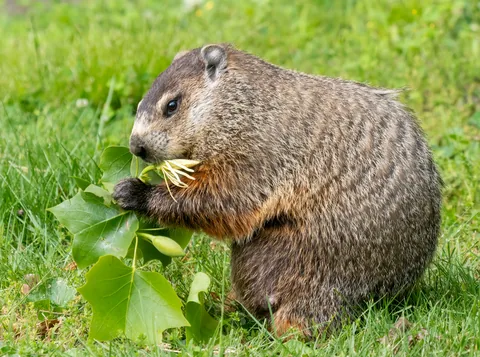
A groundhog feedingRhododendrites · CC BY-SA 4.0
What it looks like
A stout, brown, low-slung rodent up to two feet long, active by day, rarely far from its burrow. The burrow is the tell: a main entrance mound of excavated soil, six to twelve inches across, usually with a hidden back door nearby, dug under a shed, deck, or brush pile.
The damage
Wholesale grazing of beans, peas, greens, and melon vines — a groundhog can flatten a row in a sitting — plus the burrow system itself, which undermines foundations, sheds, and slopes.
The move
Exclusion beats trapping, because a cleared burrow is quickly re-colonized. Fence with the bottom bent outward into an L and buried a foot down so they cannot dig under, and leave the top foot unattached so it wobbles when they try to climb. If a burrow sits under a structure, close it only once you are sure no young are inside. Live-trapping and relocation are tempting but are regulated — and often prohibited — so check the rules first.
Relocation and lethal control of groundhogs are governed by state wildlife law and vary widely — your state wildlife agency has the current rules, and your Extension office has the exclusion how-to for your area.
Voles
Includes: Meadow mice · Field mice
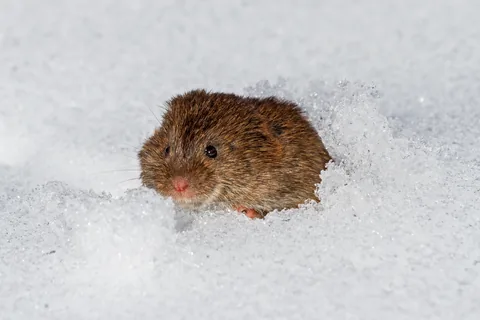
A meadow vole in its surface runwayChuck Homler d/b/a Focus On Wildlife · CC BY-SA 4.0
What it looks like
Small, stout, short-tailed rodents that look like a mouse with a blunt face. You rarely see them — the sign is a network of narrow surface runways an inch or two wide worn through the grass and mulch, most obvious when snow melts in spring.
The damage
Girdled bark at the base of young trees and shrubs (often hidden under mulch or snow, discovered only when the plant collapses), gnawed roots and bulbs, and the tell-tale runways threading through turf and beds.
The move
Pull mulch back a few inches from tree trunks and stems so voles lose their cover, and ring young trunks with hardware-cloth guards pushed an inch into the soil. Keep the grass short and the bed edges clean, since voles will not cross open ground they can be seen on — which is also why a resident cat or hawk perch helps. Snap traps set in the runways knock back a local population.
Moles
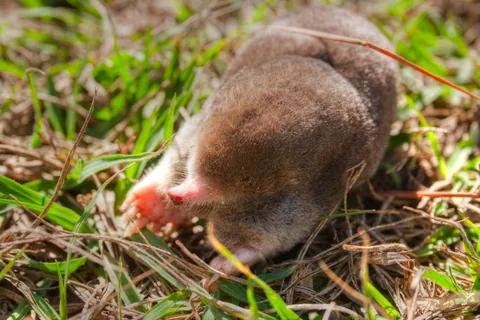
An eastern moleBert Cash from Brunswick , USA · CC BY 2.0
What it looks like
You will almost never see the animal — a small insectivore with paddle-like front feet, living underground. What you see is its tunneling: raised ridges of pushed-up soil snaking across the lawn, and volcano-shaped mounds of loose earth at the tunnel exits.
The damage
Spongy raised ridges and molehills across turf and beds, and heaved seedlings whose roots are left dangling in an air pocket. Note the honest distinction: moles eat grubs and earthworms, not your plants — the harm is mechanical (and vole runways often follow mole tunnels, so the two get blamed together).
The move
Because moles are after soil insects, tolerance is often the right call — they aerate the soil and eat pest grubs. Where the tunneling is genuinely disruptive, firm heaved plants back down and roll the ridges, and set a mole-specific trap in an active main runway (test which runs are active by tamping a section and seeing which re-opens). Skip the grub-killers and gimmick repellents; the reliable control is the trap in the right tunnel.
Pocket Gophers
Includes: Gophers
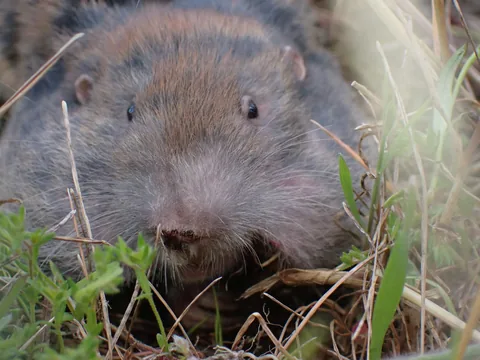
A northern pocket gopher
What it looks like
A burrowing rodent of the West and Plains, larger than a vole, with big front claws and fur-lined cheek pouches. Like the mole, it stays underground — its signature is the mound, a fan- or horseshoe-shaped pile of soil with the hole plugged off to one side (a mole mound is round with a central plug).
The damage
Fan-shaped soil mounds across the garden, plants pulled straight down into the burrow by the roots, and gnawed roots, tubers, and drip lines. Unlike moles, gophers are true herbivores and eat your plants.
The move
Trapping in the main lateral tunnel is the proven control — locate a fresh mound, open the runway, and set a gopher trap in each direction. For high-value beds and young trees, line the planting hole or the whole raised bed with a basket of galvanized hardware-cloth (gopher wire) so the roots grow through but the gopher cannot reach them. Flood-and-poison folk remedies are unreliable; the trap or the basket is what works.
Pocket gophers are a Western and Plains issue and are largely absent from the East — your Extension can confirm whether the digger you have is a gopher, a mole, or a vole, since the fix differs for each.
Pro Tip
Before you declare war on a digger, read the sign carefully — a mole is hunting grubs and does no harm to your plants, while the vole using its tunnels is quietly girdling your young trees. Get the ID right and half the problem solves itself, because the fix for one is the opposite of the fix for the other.
Climbers & Foragers
Squirrels, chipmunks, raccoons, and birds are opportunists — they take ripe fruit, dig fresh transplants, and raid the corn the night before you would have picked it. They are clever and mobile, so the winning move is timing and physical covers on the specific thing you want to protect, not a war across the whole yard.
Squirrels & Chipmunks
Includes: Tree squirrels · Ground squirrels
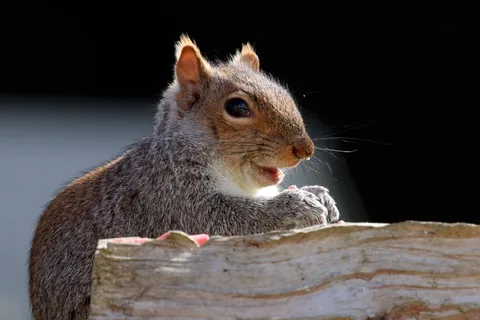
An eastern gray squirrelCharles J. Sharp · CC BY-SA 4.0
What it looks like
The familiar bushy-tailed tree squirrel and the small, striped, ground-dwelling chipmunk — both busy by day, both endlessly caching food. The sign is shallow digging in beds and containers, half-eaten fruit left on the plant, and bulbs unearthed and nibbled.
The damage
Tomatoes and other ripening fruit with a single bite taken and abandoned, freshly planted transplants and spring bulbs dug up, and containers rummaged as the animals bury and re-bury nuts.
The move
Physical covers on the specific target win here: a lightweight net or a wire cloche over the ripening tomatoes and the bulb bed, and a layer of hardware cloth pinned over newly planted containers until the plants root in. Harvest fruit a touch early and ripen it indoors to remove the temptation, and stop hand-feeding or leaving pet food out, which trains them to the yard. There is no fence for a climber — you protect the prize, not the perimeter.
Raccoons
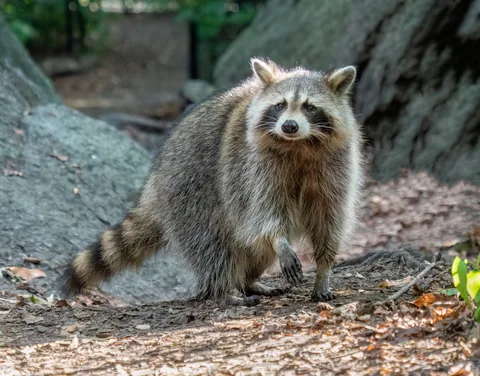
A raccoonRhododendrites · CC BY-SA 4.0
What it looks like
A stocky, masked, ring-tailed mammal that works at night, with dexterous hands that open, unroll, and pry almost anything. You find the aftermath in the morning: knocked-over containers, rolled-back sod, and tell-tale hand-like tracks in mud.
The damage
A sweet-corn patch raided the night before harvest — stalks pulled down and ears stripped — melons holed and scooped, and beds dug over as they hunt grubs. Raccoons are also a rabies and roundworm vector, so the mess is a health matter, not just a garden one.
The move
Corn is the classic battleground: a two-wire electric fence (one low, one higher) around the patch as the ears ripen is the standard fix, since raccoons climb over anything passive. Harvest at peak and do not let ripe ears linger, secure compost and trash that draw them in, and never leave pet food out. Because of the disease risk, handle raccoon control through your local wildlife authority rather than DIY relocation.
Raccoon trapping and relocation are regulated and, because of rabies risk, often restricted to licensed handlers — your state wildlife agency has the rules and the referral.
Birds
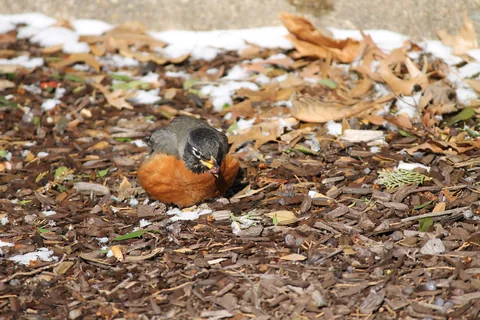
An American robin eating a berry
What it looks like
Robins, starlings, crows, jays, and sparrows — welcome most of the year for the insects they eat, a problem for a few weeks when the fruit ripens or the seed goes in. You will see them at work and find the sign: pecked fruit and pulled seedlings.
The damage
Ripening berries, cherries, and tomatoes pecked and torn, just-sown seed scratched up, and rows of emerging corn and pea seedlings pulled for the swelling seed at the root.
The move
Netting is the honest fix for fruit — drape it over berry bushes and cherry trees on a frame so birds cannot reach through, and secure the edges so nothing gets trapped inside. Floating row cover protects newly sown rows until they are up and past the vulnerable stage. Scare devices (reflective tape, a moving scare-eye balloon) help for a while but fade as birds habituate, so rotate and move them. Remember most of the year they are on your side eating pests — this is a short, targeted defense of the ripe crop, not a campaign.
Plants Deer Tend to Skip
The unfenced edges of a garden are where plant choice earns its keep. These 24 are the reliably low-preference picks from our own plant database — aromatic herbs, alliums, and bitter or toxic ornamentals deer walk past in all but the hardest winters. Each links to its full growing page.
“Resistant” means lower-preference, never deer-proof — a hungry deer in a lean winter will test almost anything. Flagged deer-resistant in our own plant database, then curated down to the species where that holds up. No single authority publishes deer preference in comparable form: where our rows do name one it is usually a Cooperative Extension service or the Missouri Botanical Garden, and about half carry no citation at all — which is exactly why this list is curated rather than dumped.
Wildlife control is an ordered set of moves — you climb only as far as you need to, and the durable fixes are all on the lower rungs, where you change what the animal can reach rather than what it wants.
1 · Identify
Read the sign before you act — hoof print vs. clean cut, mole ridge vs. vole runway, fan mound vs. round mound. The right fix depends entirely on which animal you have.
2 · Exclude
A fence, a dug-in barrier, a hardware-cloth cage or trunk guard, a net over the crop. The single most reliable control there is, because it does not depend on changing the animal’s mind.
3 · Habitat
Clear the brush piles, tall cover, and food that shelter and draw animals in. Keep grass short and bed edges clean so voles and rabbits lose the cover they need.
4 · Repel
Rotate scent-and-taste repellents so animals never habituate, and reapply after rain. Real but temporary — a way to buy time until a barrier is up.
5 · Scare
Reflective tape, scare-eye balloons, motion sprinklers, a resident dog or cat. Effective for a while, then animals learn the bluff — so move and vary them.
6 · Tolerate or refer
Some damage is cosmetic and some animals (like moles) do more good than harm — let them be. For trapping, relocation, and any lethal control, follow your state wildlife agency’s rules.
Free Report
Start with plants your local wildlife tends to skip
We read your parcel's soil, sun, and climate and score 1,085 plants against the real conditions — so you can lean the unfenced edges of your garden toward the ones deer and rabbits pass by.
Three things about your exact spot that zone averages miss:
Your soil pHYour frost-free daysYour sun & shade
We read public map data for this spot — soil, climate, flood, and parcel records. How we handle your address.
25+ data sources analyzed in seconds
Frequently Asked Questions
How do I keep deer out of my garden for good?
A fence is the only reliable control, and height is everything. Deer clear a low fence easily, so the standard is a tall barrier around 8 feet, or a slanted or double fence line that defeats their poor depth perception. Repellents, cages, and deer-resistant plants buy time, but the fence is what ends the problem.
Is it a mole or a vole damaging my yard?
They are opposite problems. Moles are insect-eaters — they leave raised soil ridges and volcano-shaped mounds while hunting grubs and worms, and rarely eat plants. Voles are plant-eaters — they leave narrow surface runways through the grass and girdle bark and roots. The fix differs, so identify first: trap a disruptive mole in its tunnel; deny voles their cover and guard your trunks.
Do deer repellents actually work?
For a while. Scent-and-taste repellents genuinely reduce browsing, but deer habituate to any single product, so you have to rotate two or three and reapply after rain. Think of them as a way to protect plants until a fence goes up or through a short pressure spike — not a permanent substitute for a barrier.
Can I trap and relocate a groundhog or raccoon myself?
Often no — live-trapping and relocation of wildlife are regulated by state law and are frequently restricted or prohibited, and raccoons carry rabies, so control is often limited to licensed handlers. Exclusion (a dug-in fence, a sealed burrow, physical covers) is both more effective and legal everywhere. Check your state wildlife agency’s rules before you trap anything.
We keep the deer-resistant plant list above, grounded in our own data. What stays genuinely local is the rulebook: which species are active near you, and the hunting, trapping, and relocation rules — set by your state wildlife agency, with your Cooperative Extension for the local how-to. Everything you can plan for ahead of time lives right here on this page.

 Animals