
Growing Guide
Drainage Is the Factor Most Gardeners Overlook
Sources: USDA SSURGO, FEMA NFHL, USFWS NWI, USGS NHD, NRCS National Soil Survey Handbook Part 618
Last updated:
 Drainage Classes
7 levels
USDA SSURGO
Key for
Root health
Waterlogging risk
Data Source
Web Soil Survey
NRCS national
Drainage is a soil property, not a weather property
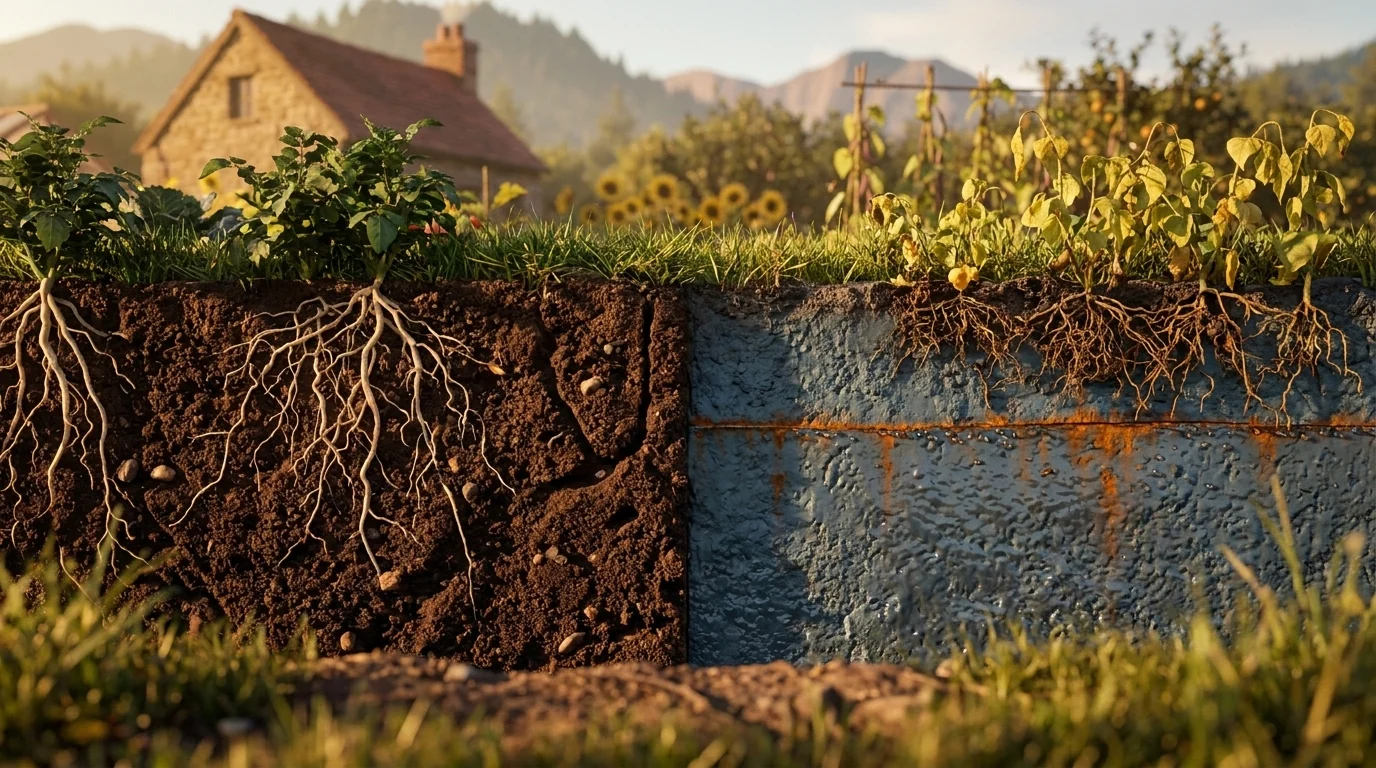
The most common misconception: "drainage is about how much rain falls." It isn't. Drainage describes how quickly water moves through the soil profile — a physical property of the soil itself, determined by particle size (sand vs. silt vs. clay), structure, depth to bedrock, and depth to the seasonal water table.
Two parcels receiving identical rainfall can have completely different drainage. Sandy loam on a gentle slope drains within hours. Dense clay in a low-lying area stays saturated for weeks. The soil doesn't care how much rain fell — it moves water at a rate determined by its physical composition.
This matters because most plant roots need both water and air. When soil stays saturated, air is displaced from pore spaces. Roots suffocate and rot. It's not drowning from above — it's suffocation from below. Understanding your soil's drainage class tells you which plants can survive the wet periods and which will struggle.

See YOUR drainage class
See your USDA SSURGO drainage classification plus flood zone status and plant scores matched to your conditions.
Three things about your exact spot that zone averages miss:
We read public map data for this spot — soil, climate, flood, and parcel records. How we handle your address.
25+ data sources analyzed in seconds
The 7 USDA drainage classes explained
The USDA Natural Resources Conservation Service defines 7 soil drainage classes in the National Soil Survey Handbook (Part 618). These classifications are based on the frequency and duration of wet periods in the soil profile — not surface water.
Water moves through the soil very rapidly. Common in deep sands and gravelly soils on steep slopes. Soil dries out quickly after rain. Drought stress is the primary concern — not waterlogging. Drought-sensitive plants may struggle without irrigation. Suited for lavender, rosemary, cacti, and deep-rooted natives.
Source: NRCS National Soil Survey Handbook, Part 618
Water moves through soil rapidly. Similar to excessively drained but with slightly more water-holding capacity. Sandy loams on moderate slopes. Most crops suitable with regular watering. Root vegetables do well.
Source: NRCS National Soil Survey Handbook, Part 618
Water moves through soil freely but not rapidly. Optimal for most garden crops. Water is available to plants throughout most of the growing season. The sweet spot — suits vegetables, fruit trees, herbs, and most ornamentals. This is what most gardening advice assumes you have.
Source: NRCS National Soil Survey Handbook, Part 618
Water moves through soil at a moderate rate. Some seasonal wetness possible, especially in spring. Most crops still suitable. May see brief saturation at depth after heavy rain. Slight seasonal wetness — most growers won't notice a problem unless planting drought-loving species.
Source: NRCS National Soil Survey Handbook, Part 618
Soil is wet at shallow depth for significant periods during the growing season. The transition zone — conventional gardening is possible but requires attention. Raised beds recommended for vegetables. Root crops and plants needing dry feet (lavender, rosemary) will struggle in-ground. Berries and many perennials adapt well.
Source: NRCS National Soil Survey Handbook, Part 618
Soil is wet at or near the surface for much of the growing season. Water table is high. Most conventional garden plants cannot survive — root rot is the primary failure mode. Raised beds essential for vegetables. In-ground options: elderberry, aronia (chokeberry), red osier dogwood, native sedges, Joe-Pye weed, swamp milkweed.
Source: NRCS National Soil Survey Handbook, Part 618
Water is at or on the surface most of the year. Standing water common. Typically associated with wetlands, bogs, or floodplains. In-ground growing limited to wetland-adapted species: cranberries, wild rice, cattails, native willows. Raised beds required for any conventional gardening — and may require permitting if the area is classified as wetland.
Source: NRCS National Soil Survey Handbook, Part 618
How drainage interacts with other factors
Drainage doesn't act in isolation. It compounds with other site conditions in ways that generic gardening advice ignores.
Drainage + soil pH: Poorly drained soils tend to be more acidic because organic matter decomposes anaerobically, producing organic acids. A pH reading of 5.2 on poorly drained soil behaves differently than 5.2 on well-drained soil — the wet soil amplifies aluminum toxicity and locks up phosphorus more aggressively.
Source: USDA SSURGO correlation data
Drainage + flood zone: Drainage and flooding are independent variables. A parcel can have well-drained sandy soil and still sit in a FEMA AE flood zone because it's near a river. Conversely, poorly drained clay on a hilltop may never flood but stays waterlogged for weeks after rain. Your report separates these: SSURGO drainage class (soil property) from FEMA flood zone (geographic risk).
Source: FEMA NFHL, USDA SSURGO
Drainage + contamination: Poorly drained soils can concentrate contaminants because water moves slowly and doesn't flush pollutants downward. If your parcel is near a former industrial site or busy road, poor drainage may mean contaminants persist longer in the root zone. Well-drained soils leach contaminants faster — better for surface growing, but potentially moving them to groundwater.
Source: EPA Site Assessment guidance
Drainage + wetlands: Very poorly drained soils often overlap with National Wetlands Inventory (NWI) polygons. If your land is classified as wetland, there may be legal restrictions on filling, grading, or altering drainage — even on private property. Check with your local conservation commission before modifying any wetland-associated soil.
Source: USFWS NWI, Clean Water Act Section 404
What to grow in poorly drained soil
Poor drainage is not a death sentence for growing. It's a constraint that narrows your plant list — and some of the species that thrive in wet conditions are valuable, productive, and beautiful.
Edible — wet-tolerant
Wild rice also grows here, in standing water 6–12 inches deep — a specialist crop worth a look if your land holds a true pond edge. Source: USDA PLANTS Database.
Ornamental + ecological
Photos are real, licensed images (CC0 / CC-BY, via iNaturalist, Wikimedia, GBIF and USDA); each card opens the plant’s full profile.
For conventional vegetable gardening on poorly drained soil, raised beds are the standard solution. A bed 12-18 inches above grade with imported well-drained soil mix effectively creates a "well drained" growing zone regardless of the native soil below. Growable Ground's Garden Builder factors drainage into per-bed plant recommendations.
Pro TipFlood zone gardening
FEMA flood zones describe the probability of surface flooding from rivers, streams, and coastal sources — a geographic risk separate from soil drainage. Zone AE means a 1% annual chance of flooding (the "100-year floodplain"). Zone X means outside the mapped flood hazard area.
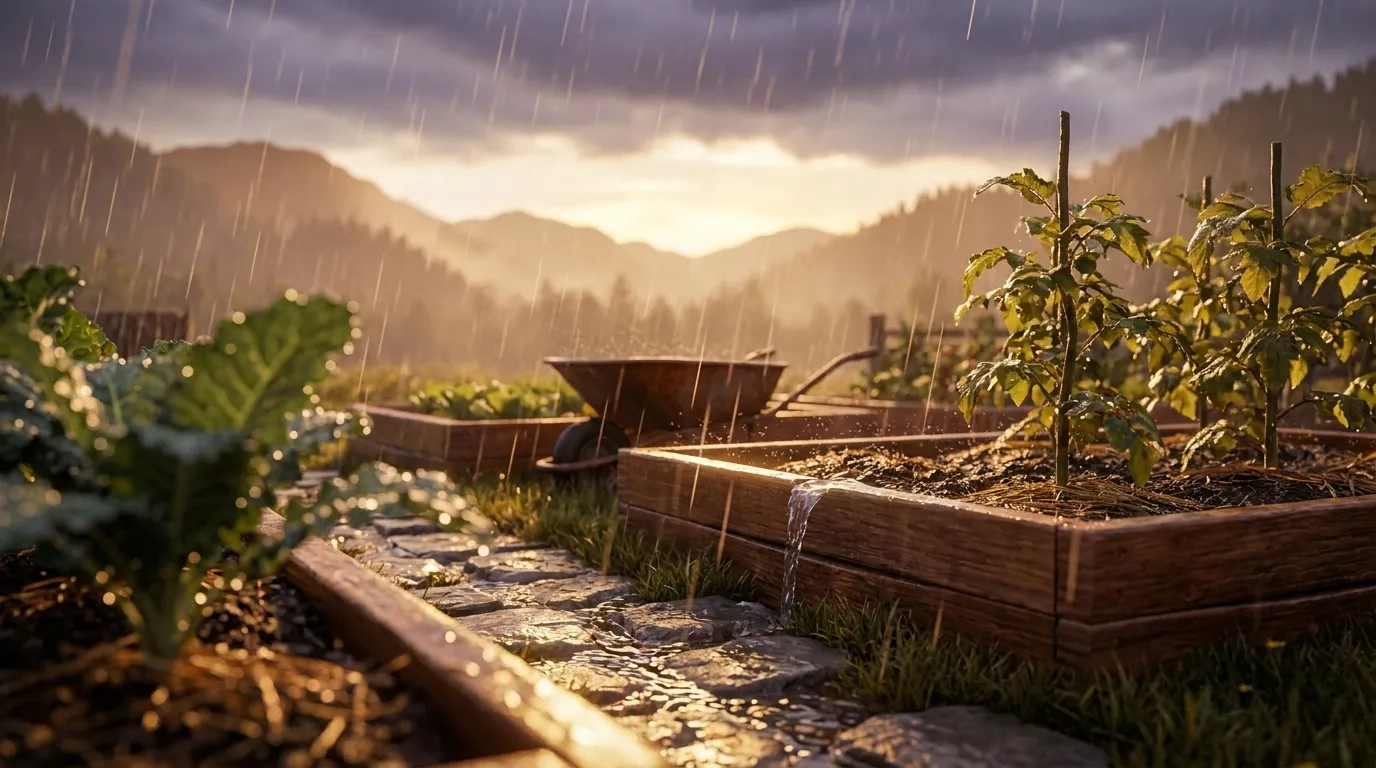
Gardening in a flood zone is possible but requires planning for periodic inundation. Annual crops risk total loss during flood events. Perennial species with deep root systems — like elderberry, willow, and native grasses — recover better after flooding. Raised beds protect root zones from brief floods but are destroyed by major events.
Contamination risk increases in flood zones: floodwaters carry sediment from upstream sources, potentially depositing heavy metals, pesticides, or sewage on your garden soil. If your parcel is in a FEMA flood zone and near an industrial site or wastewater facility, soil testing before growing edibles is strongly recommended.
How Growable Ground scores drainage
Growable Ground queries USDA SSURGO Soil Data Access for the soil map units that intersect your parcel boundary. Each map unit carries a dominant drainage class — the class that represents the majority of the mapped area. For parcels spanning multiple map units, we report the drainage class at each location (bed-level in Garden Builder, parcel-dominant in the report).
The crop engine uses drainage class as one of 8 matching constraints. Species that require well-drained conditions (tomatoes, peppers, lavender) score lower on poorly drained soil. Species adapted to wet conditions (cranberry, elderberry, swamp milkweed) score higher. This isn't a binary filter — it's a graduated penalty that reflects how drainage tolerance maps to real-world growing success.
Drainage also feeds into the composite Grow Zone map — the 5-tier synthesis that combines sun, drainage, flood, wetland, and building data into a single "where to grow" layer. Poorly drained areas are classified as CONSTRAINED, meaning growing is possible but plant selection must account for wet conditions.
See YOUR drainage class
See your USDA SSURGO drainage classification plus flood zone status and plant scores matched to your conditions.
Three things about your exact spot that zone averages miss:
We read public map data for this spot — soil, climate, flood, and parcel records. How we handle your address.
25+ data sources analyzed in seconds
Frequently Asked Questions
What is soil drainage class?
Soil drainage class describes how quickly water moves through the soil profile after rainfall or irrigation. The USDA classifies soils into 7 drainage classes, from excessively drained to very poorly drained. Drainage class is determined by soil texture, depth to water table, and landscape position — not by how much rain falls.
Can you garden in poorly drained soil?
Yes, but plant selection is critical. Poorly drained soils stay saturated, which rots the roots of most vegetables and fruit trees. Raised beds bypass the problem by elevating the root zone. In-ground options include cranberries, elderberry, aronia, willow, and native sedges — species that evolved in wet conditions.
Is drainage the same as flooding?
No. Drainage describes how water moves through the soil profile — a permanent physical property. Flooding describes water temporarily covering the land surface from an overflowing water body. A parcel can have well-drained soil and still be in a FEMA flood zone, or have poorly drained soil on high ground that never floods.
How does Growable Ground score drainage?
We query USDA SSURGO for the soil map units under your parcel and retrieve the dominant drainage class. The crop engine adjusts suitability scores for every plant — species needing dry feet score lower on poorly drained soil, while wetland-adapted species score higher. Drainage also feeds into the composite Grow Zone map.
Sources & further reading
Related Guides
See what this means where you are
This guide is national — a state's own zones, frost dates and soils change how it plays out. Start with your state's growing hub: