
Growing Guide
How to Read Your Soil Report
Sources: USDA SSURGO (Soil Survey Geographic Database), Natural Resources Conservation Service
Last updated:
 Ideal pH
6.0 – 7.0
Most vegetables
Data Source
SSURGO
USDA Web Soil Survey
Resolution
Soil polygon
Field-mapped boundaries
Example: Optimal vegetable range
What is SSURGO — and why does it matter?
SSURGO is the most detailed soil survey dataset in the United States, published by the USDA Natural Resources Conservation Service. It maps soil types at the field level — far more precise than county-level estimates or zip code generalizations. Each mapped area (called a "map unit") carries laboratory-tested properties including pH, drainage class, texture, organic matter, and water-holding capacity.
When Growable Ground analyzes your parcel, we query SSURGO data for the exact soil map units that intersect your property boundary. Two neighbors on the same street can have completely different soil map units — and completely different growing potential.

See YOUR soil data
See your SSURGO soil pH, drainage, and texture along with 1,085 plant suitability scores.
Three things about your exact spot that zone averages miss:
We read public map data for this spot — soil, climate, flood, and parcel records. How we handle your address.
25+ data sources analyzed in seconds
Soil pH: The number that determines what thrives
Soil pH measures acidity or alkalinity on a scale from 0 to 14, with 7.0 being neutral. Most garden soils fall between 4.5 and 8.5. This single number controls nutrient availability — iron, phosphorus, manganese, and other elements become locked in the soil at the wrong pH, even when physically present.
Ideal for blueberries, azaleas, rhododendrons, and cranberries. Most vegetables struggle here without lime amendments.
The sweet spot for most vegetables, herbs, and fruit trees. Nutrient availability peaks in this range. Tomatoes, peppers, beans, and squash all perform well here.
Your Growable Ground report shows your parcel's SSURGO-measured pH and scores every plant in our database against it. A blueberry scoring 96 on a pH 4.8 parcel might score 40 on a pH 7.4 parcel three houses away — same plant, completely different viability.
Pro TipDrainage Class: Where water goes after rain
USDA classifies soil drainage into seven classes, from "excessively drained" (water passes through almost immediately) to "very poorly drained" (water sits on the surface for extended periods). Drainage class is determined by soil texture, depth to water table, and landscape position.
- Well drained / Moderately well drained: Suits most vegetables, fruit trees, and herbs. Water moves through the root zone within 24 hours after heavy rain.
- Somewhat poorly drained: Workable with raised beds. Root crops and plants needing dry feet (lavender, rosemary) will struggle in-ground. Berries and some perennials adapt.
- Poorly / Very poorly drained: Waterlogged soils that limit growing to wetland-adapted species — cranberries, wild rice, some native sedges. Raised beds or drainage infrastructure required for conventional gardening.
Growable Ground's crop engine adjusts scores based on drainage. A tomato variety doesn't just need the right pH and sun — it needs drainage that prevents root rot. Our scoring catches these compound interactions.
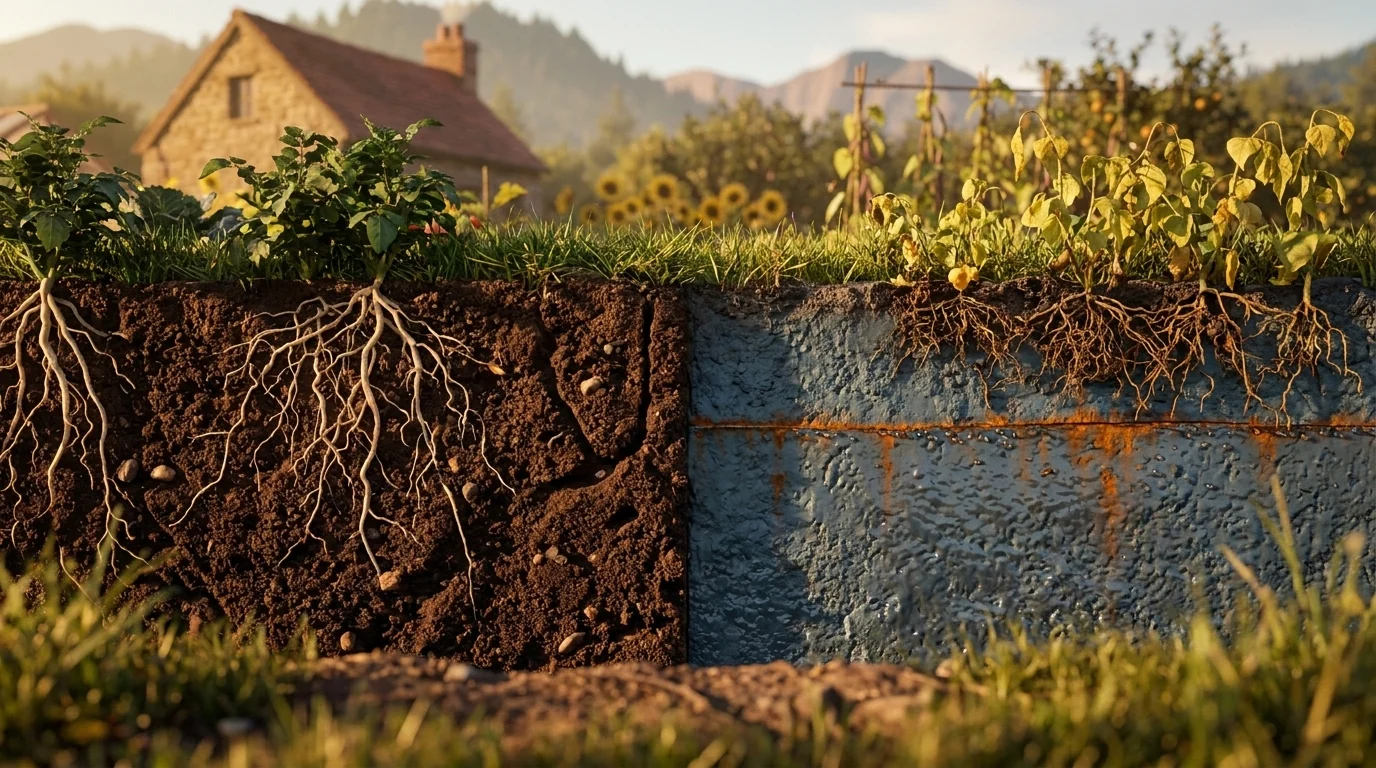
Understanding your soil map unit
SSURGO organizes soils into map units, each identified by a code (like "254B" or "Wg"). The letter suffix indicates slope: A is nearly flat (0–3%), B is gentle (3–8%), C is moderate (8–15%), and so on. Steeper slopes affect erosion, water retention, and ease of cultivation.
Each map unit carries a complete soil profile — pH, texture (sand/silt/clay percentages), organic matter, available water capacity, depth to bedrock, and more. Your report pulls these properties directly from the USDA Soil Data Access service for the map units under your parcel.
When your report says "map unit 254B — Bridgewater fine sandy loam, 3 to 8 percent slopes" — that's the USDA's classification for the specific soil at your location, mapped by soil scientists who walked the ground and collected samples.
The map unit says where. The soil type says what.
A soil report tells you where your soil sits on the USDA map and what it measures — pH, drainage class, texture. The soil type is the other half of the story: whether your ground is glacial till, sandy loam, red clay, or drained muck tells you how it got there, how it behaves through a season, and which crops have thrived in it for generations.
We keep a full field guide to every soil type named on our state growing pages — what each one is, how it drains, what thrives in it, and how to work with it: Soil Types Explained →
See YOUR soil data
See your SSURGO soil pH, drainage, and texture along with 1,085 plant suitability scores.
Three things about your exact spot that zone averages miss:
We read public map data for this spot — soil, climate, flood, and parcel records. How we handle your address.
25+ data sources analyzed in seconds
Frequently Asked Questions
What is SSURGO soil data?
SSURGO (Soil Survey Geographic Database) is the most detailed soil survey dataset published by the USDA Natural Resources Conservation Service. It maps soil types at the field level across the US, including properties like pH, drainage class, texture, and organic matter content.
What soil pH is best for vegetable gardens?
Most vegetables grow best in soil pH 6.0–7.0. Blueberries prefer acidic soil (pH 4.5–5.5), while brassicas like cabbage tolerate slightly alkaline conditions up to pH 7.5. Your specific soil pH determines which plants will thrive without amendments.
What does drainage class mean for gardening?
USDA drainage class describes how quickly water moves through soil. "Well drained" soil suits most vegetables and fruit trees. "Poorly drained" soil stays waterlogged, which rots roots of most crops but suits wetland plants and some berry species.
Can I change my soil pH?
Yes — lime raises pH and sulfur lowers it, though the process takes months and requires regular re-application. Raised beds with imported soil are faster for extreme mismatches. Your Growable Ground report flags amendment opportunities and scores which plants work without changes.
Sources & further reading
- USDA NRCS — soil-survey standards
- SSURGO — the soil database
- Web Soil Survey — look up your own address
Related Guides
See what this means where you are
This guide is national — a state's own zones, frost dates and soils change how it plays out. Start with your state's growing hub: