
Growing Guide
A Greenhouse Changes What Your Land Can Grow
Sources: USGS 3DEP, NAIP-CHM canopy, NOAA Climate Normals, USDA PHZM
Last updated:
 Season Extension
3-4 months
Unheated hoop house
Ideal Temp Range
60-85 F
USDA Extension
Greenhouse Types
4 tiers
Cold frame / hoop / earth-sheltered / heated
How a greenhouse changes your growing equation
A greenhouse modifies two fundamental constraints: temperature and season length. By trapping solar radiation and reducing radiative heat loss, a greenhouse raises minimum temperatures inside the structure. This effectively extends the frost-free growing window on both ends — earlier starts in spring, later harvests in fall.
For the crop engine, this means recalculating growing degree days (GDD). GDD accumulation drives plant development — flowering, fruiting, maturity. A greenhouse that adds 4–8 weeks of growing season can accumulate enough additional GDD to bring long-season crops (peppers, melons, eggplant) within reach in climates where they otherwise wouldn't mature.
But a greenhouse does not change everything. Light levels are still governed by latitude and sun angle. Winter photoperiods in northern zones limit fruiting crops regardless of temperature. And heating costs scale with the gap between outdoor and target indoor temperatures — making year-round tropical growing impractical in cold climates without significant energy investment.

See YOUR greenhouse potential
See your sun hours, frost dates, and growing degree days — the data that shows what a greenhouse could unlock.
Three things about your exact spot that zone averages miss:
We read public map data for this spot — soil, climate, flood, and parcel records. How we handle your address.
25+ data sources analyzed in seconds
What a greenhouse unlocks by zone
An unheated greenhouse effectively shifts growing conditions by roughly 1–2 USDA hardiness zones warmer. A heated greenhouse extends this further, depending on the heating system. The USDA Plant Hardiness Zone Map (PHZM) defines zones by average annual extreme minimum temperature — and a greenhouse raises the minimum your plants experience.
Greenhouse extends growing season from ~100 frost-free days to ~140–160 days. Unlocks tomatoes, peppers, and cucumbers that otherwise struggle to mature. Winter growing requires heated structures and supplemental lighting.
Unlocks species normally limited to Zone 7+: figs, some cold-hardy citrus, ginger. Extended-season tomatoes and peppers become reliable. An unheated greenhouse can sustain cool-season greens through much of winter.
Enables tropical species: turmeric, lemongrass, tropical peppers. Year-round production becomes practical for many crops. Primary constraint shifts from cold to heat management and ventilation.
Crops a greenhouse can bring within reach
What a greenhouse unlocks on your land
The zone bands above are the general case. On your own parcel the answer is narrower, because a greenhouse does not lift every limit equally — it lifts specific ones. When Growable Ground scores a plant against your land, it checks a handful of measured gates one at a time, then re-runs those same gates as if the plant were growing under glass. Four of them can change.
- Winter cold. A greenhouse raises the minimum temperature your plants actually experience, so the engine re-checks hardiness with your USDA PHZM zone shifted two zones warmer. This is the gate that moves the fig-and-citrus class within reach in a cold-winter zone.
- Season length. Plants that need more frost-free days than your parcel measures get re-checked against the longer season a structure buys. A shortfall of a few weeks is the sweet spot; a shortfall of more than about a month is not something the engine will claim a greenhouse closes.
- Summer heat. Crops that need more accumulated warmth than your climate delivers — the long-season peppers, melons, and eggplant — are re-checked against the heat a closed structure holds.
- Your soil reading. Under glass you are usually growing in beds or containers you filled yourself, so a blocking pH or a structurally wet SSURGO drainage class stops applying. That is the same mechanism a raised bed uses — which is why the lighter fix is often the honest recommendation.
Three limits a greenhouse does not lift, and we would rather say so than sell you a structure that won't help. Winter chill hours are a climate fact — the fruit trees that need a long cold dormancy do not get it from a warmer building, and warming the space works against them. Cold deeper than two zones past your own is outside what the engine will credit an unheated structure with. And a season shortfall beyond about a month is treated as blocking, not bridgeable.
This is why the "Grow more here" panel on your parcel page attributes each blocked plant to the lightest fix that clears every gate it fails. A plant only lands on the greenhouse card when nothing cheaper — a row cover, drip irrigation, a raised bed — would have been enough. The count you see there is computed from your parcel's own measurements, so it differs from anyone else's.
Pro TipGreenhouse types and their impact
Different greenhouse structures provide different levels of climate modification. The type you choose affects how much season extension you gain and what species become viable.
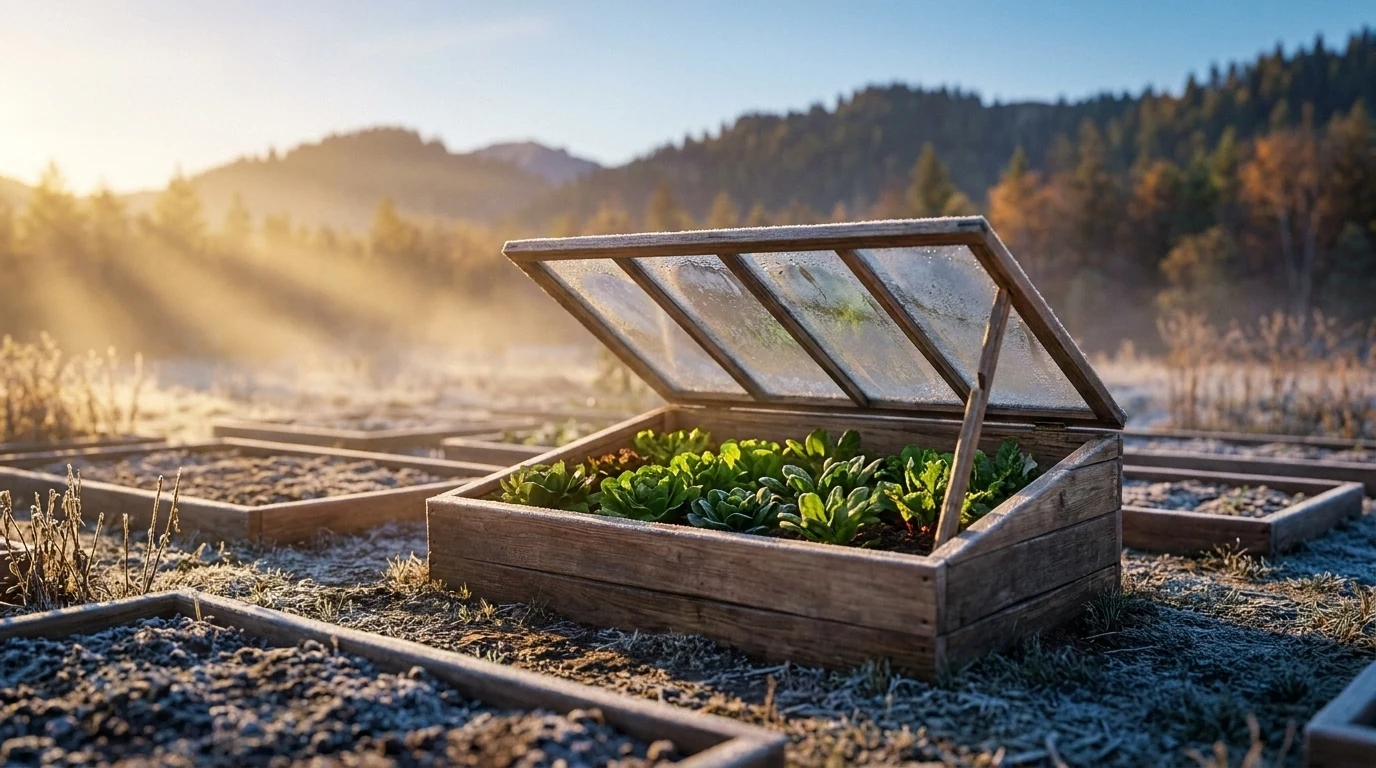
- Cold frame / low tunnel: Simplest and cheapest. Adds 2–4 weeks of season extension. No standing height. Best for hardening seedlings and extending leafy green harvests into early winter. Ground contact means native soil pH and drainage still matter.
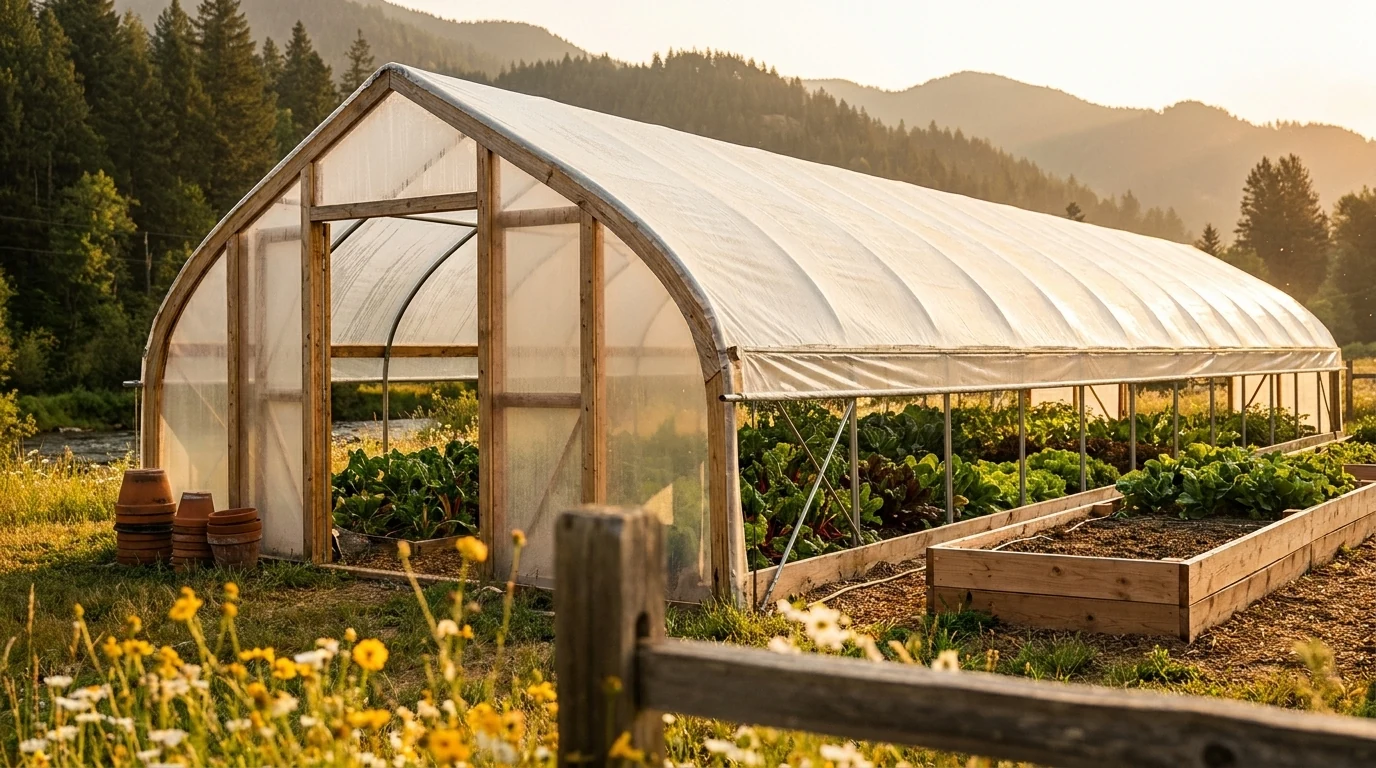
- Unheated hoop house: Walk-in structure with poly covering. Adds 4–8 weeks of season extension. Suitable for three-season growing of warm-season crops. Winter greens possible in zones 5+. No energy cost beyond construction.
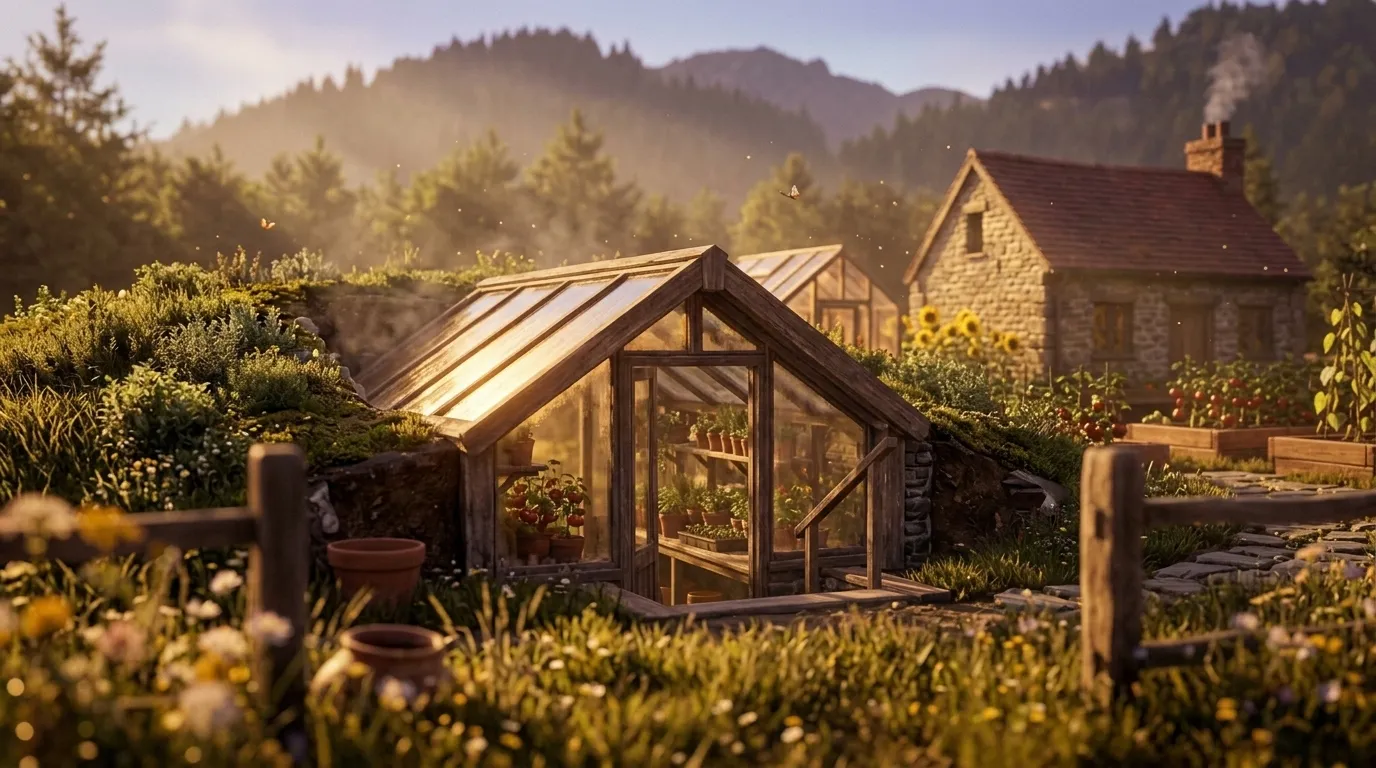
- Earth-sheltered (walipini): Built 6–8 feet into the ground with a south-facing glazed roof. Earth thermal mass maintains interior temperatures 20–30°F above outdoor minimums without any heating — effectively shifting your growing zone by 2–3 zones. Adds 3–4 months of season extension. No energy cost. Key constraints: requires a water table deeper than 6 feet, well-drained soil, and active humidity management (interior RH can reach 80–95%). Light is reduced to about 65% of outdoor levels due to single-face glazing. Best for sites with good drainage and strong winter sun exposure.
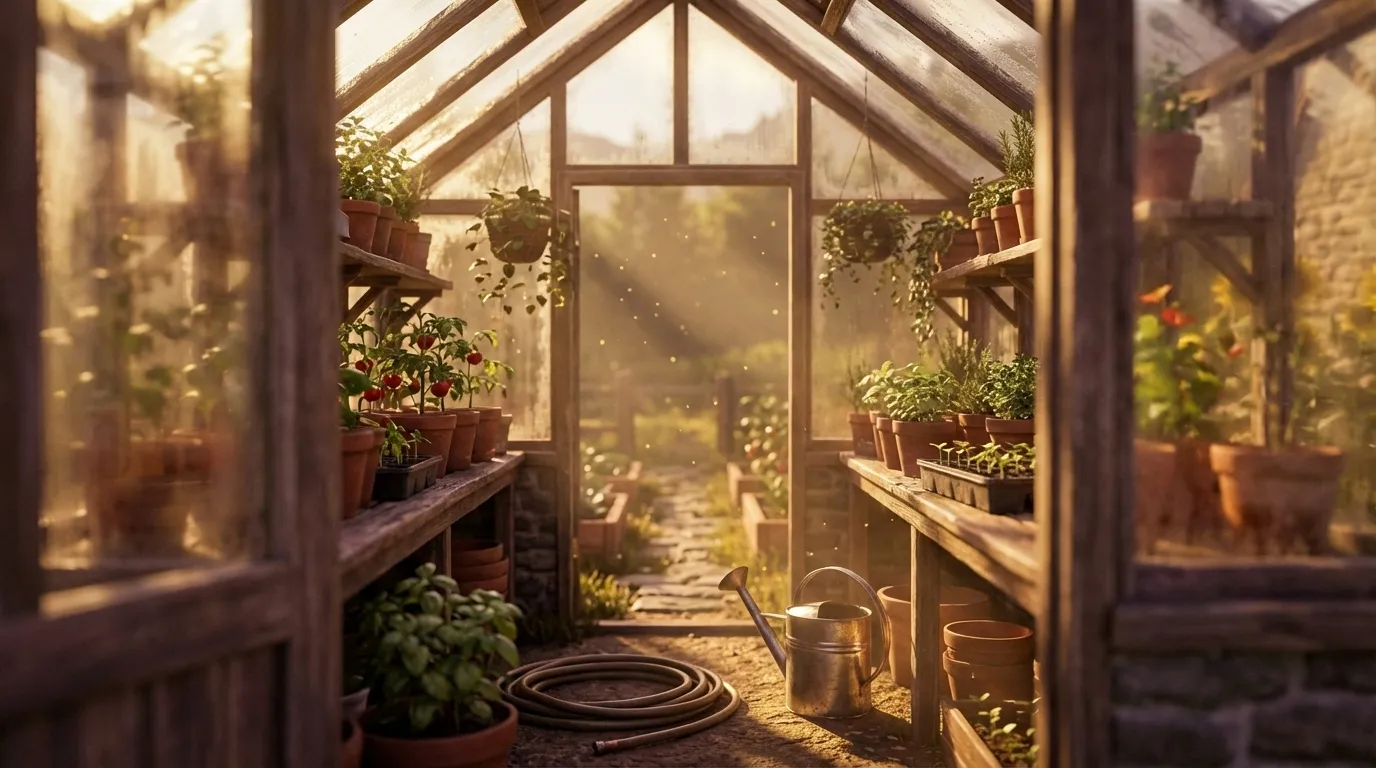
- Heated greenhouse (glass or polycarbonate): Full climate control. Can maintain target temperatures year-round. Enables tropical species in cold climates. Energy costs scale with the temperature differential between outdoor and target indoor conditions — NOAA heating degree day data helps estimate this cost for your specific location.
Why sun placement matters for greenhouses
A greenhouse amplifies whatever sunlight it receives — but it cannot create light. Placement on your property determines how many hours of direct sun the structure gets, especially during winter months when the sun angle is lowest and shadows are longest.
USGS 3DEP LiDAR maps your terrain and structures, and a leaf-on canopy-height model maps your trees. Growable Ground casts the sun across all three to calculate hour-by-hour shadow patterns across your parcel. A greenhouse placed in a north-facing shadow from a building or tree line could receive hours less daily light than one placed on the south-facing side of the same property.
Beyond shadow patterns, the total sunlight your location receives across the year — its solar irradiance — shapes how productive a greenhouse can be. Combined with the shade map, that tells you not just where to place a greenhouse, but how much it can do there.
Pro TipSee YOUR greenhouse potential
See your sun hours, frost dates, and growing degree days — the data that shows what a greenhouse could unlock.
Three things about your exact spot that zone averages miss:
We read public map data for this spot — soil, climate, flood, and parcel records. How we handle your address.
25+ data sources analyzed in seconds
Frequently Asked Questions
Can a greenhouse let me grow anything year-round?
Not without significant energy input. A greenhouse extends your season by trapping solar heat, but winter light levels and heating costs still limit what's practical. In zones 3–5, maintaining tropical temperatures through winter requires substantial heating infrastructure.
How many extra growing days does a greenhouse add?
An unheated greenhouse typically extends the growing season by 4–8 weeks on each end, depending on your location. NOAA frost date data for your parcel shows your current frost-free window — a greenhouse effectively shifts those dates by reducing radiative heat loss.
Does greenhouse placement on my property matter?
Yes — significantly. A greenhouse needs direct sun exposure, especially in winter when the sun is low. Shadow patterns from buildings and tree lines vary across your parcel. Growable Ground maps these shadows — terrain and buildings from USGS 3DEP, tree canopy from a leaf-on model — to identify optimal placement.
What species does a greenhouse unlock by hardiness zone?
It depends on the structure. A cold frame shifts about half a zone. A hoop house shifts 1–1.5 zones. An earth-sheltered greenhouse (walipini) can shift 2–3 zones using passive thermal mass alone — no energy cost. A heated greenhouse can maintain any target temperature. In Zone 5, an earth-sheltered design could unlock figs, citrus, and subtropical crops without heating.
What is an earth-sheltered greenhouse (walipini)?
A walipini is a greenhouse built 6–8 feet into the ground with a south-facing glazed roof. The surrounding earth provides passive thermal mass, keeping interior temperatures 20–30°F above outdoor minimums without any heating. This can extend the growing season by 3–4 months and shift effective hardiness by 2–3 zones. Key constraints: requires a water table deeper than 6 feet, well-drained soil, and active humidity management. Light levels are reduced to about 65% of outdoor due to single-face glazing. The concept originates from traditional Bolivian agriculture and was documented in Walipini Construction (The Underground Greenhouse) by the Benson Agriculture and Food Institute at Brigham Young University (2002).
Related Guides
See what this means where you are
This guide is national — a state's own zones, frost dates and soils change how it plays out. Start with your state's growing hub: