
Reading Your Land
Elevation, Slope & Aspect
Two parcels on the same road, in the same hardiness zone, can ripen tomatoes a month apart. The difference isn’t the ZIP code — it’s the shape of the land: how high it sits, which way it tilts, and how steeply. Those three things quietly decide when your last frost lifts, how much winter sun a bed catches, and whether water drains or drowns.
Read live from the USGS 3D Elevation Program (3DEP) — public LiDAR-grade elevation tiles at roughly 10 m resolution, sampled across your parcel for slope, aspect, and cold-pocket risk.
Last updated:
Your yard has more than one microclimate.
Enter your address to see your parcel's actual elevation, slope, and dominant aspect — and 1,085 plants scored against the microclimate your land really has, not the zone-map average.
We read public map data for this spot — soil, climate, flood, and parcel records. How we handle your address.
No card required · your parcel report in seconds — read in full free for your first 14 days
 Cold-pocket frost lag
1–3 wks
valley floor vs. slope above
South-facing winter sun
+30–50%
vs. a north-facing slope
Erosion-risk grade
15%+
USDA NRCS row-crop guidance
Aspect: which way your land faces
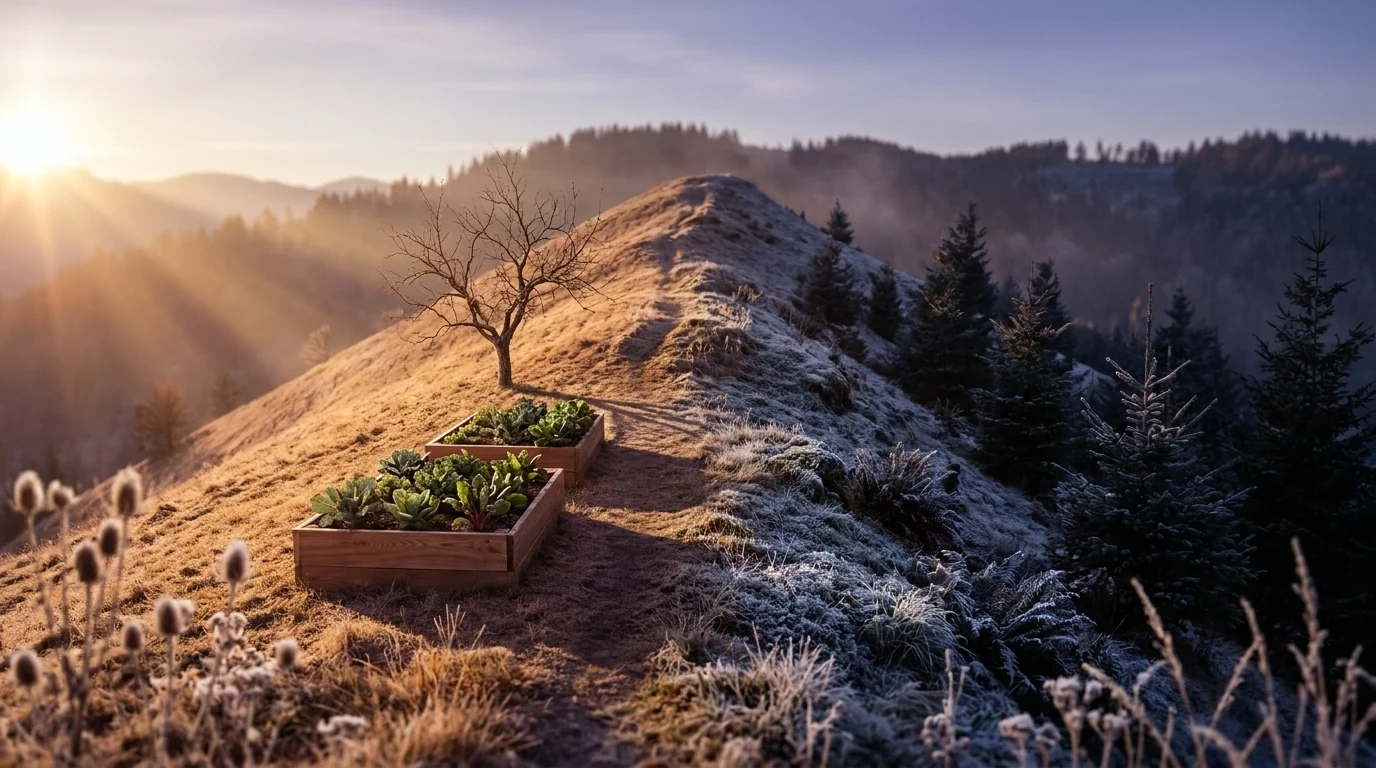
In the Northern Hemisphere the winter sun tracks low across the southern sky, so a south-facing slope takes that light nearly head-on — intercepting 30–50% more solar energy in winter than a north-facing face, and far more than flat ground. That shows up as soil that warms earlier in spring, a longer effective season, and a few degrees of frost protection on cold-clear nights.
A north-facing slope pays it back the other way: cooler summers, slower moisture loss, and dependable shade — prime ground for greens, currants, and woodland-edge natives that sulk in full afternoon heat. Neither aspect is “better.” What an experienced grower does is match the crop to the face: heat-lovers on the warm shoulder, cool-season and shade crops on the cool one.
Slope: why frost finds the low spot first
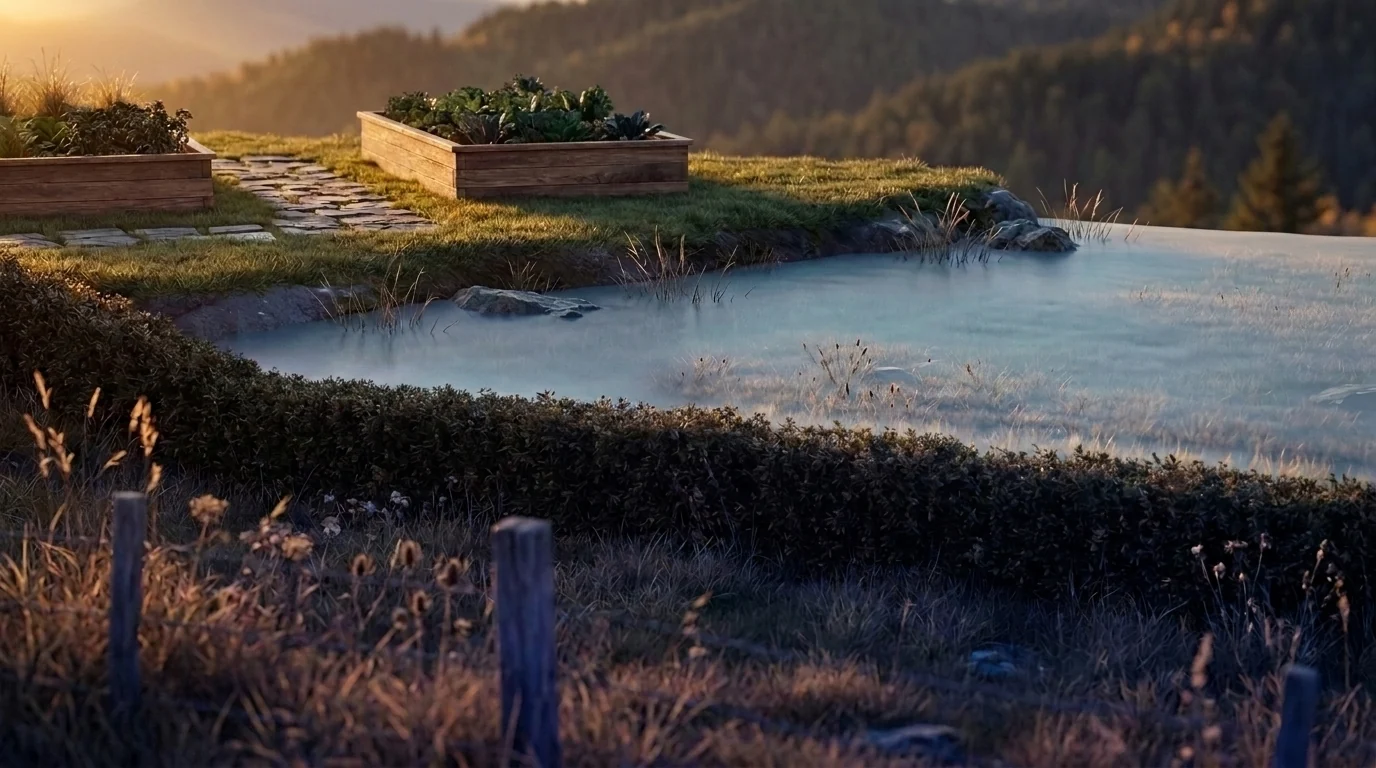
Cold air behaves like water. On a still, clear night the ground gives up its heat, the air against it chills and grows dense, and that dense air slides downhill and collects in the lowest enclosed spot. A parcel at the bottom of a shallow bowl can run 5–10°F colder than one 200 feet up the same hillside — enough to shift its last-spring-frost date by 1–3 weeks and shorten its frost-free season.
This is why old orchardists planted on the slope, not the valley floor: the band of hillside just above the cold pool — the thermal belt — escapes the worst frosts while keeping water access below. NOAA weather stations rarely sit in a frost pocket, so your ZIP-code frost date often can’t see the cold your low ground actually feels. If your tomatoes blacken while a neighbor uphill is fine, this is usually why.
Elevation: cooler up high, but drainage usually wins
Air cools about 3.5°F for every 1,000 ft of rise — the average environmental lapse rate — so a hilltop reads cooler than a valley on the same afternoon. But at the scale of one property, that raw elevation number rarely tells the story; cold-air drainage does. A modest 50–200 ft rise above a valley floor commonly has a longer frost-free season than the floor below it, because it sits above the pooling cold.
The USGS 3DEP tiles behind these readings cover the whole continental US at about 10 m resolution — fine enough to see the dip behind a hedgerow. The same elevation pixels drive slope, aspect, hour-by-hour shadow casting, and the direction water flows across your land: one measurement, many layers. That last layer reaches past drainage — the way runoff leaves your slope is also the way anything spilled or dumped uphill would travel toward your beds, which is why the shape of your land and the documented contamination record are worth reading together.
Reading your parcel’s terrain tells you where to put the frost-tender tomatoes (the warm shoulder), what to leave for the cold pocket (late hardy greens), and which steep ground to keep in perennials. It’s the difference a flat ZIP-code lookup can never see.
See the shape of your own land
Enter your address for your USDA zone, your site type, and a starting plant list — free, no account. Your full report adds the slope, aspect, and cold-pocket risk this page describes.
We read public map data for this spot — soil, climate, flood, and parcel records. How we handle your address.
Frequently Asked Questions
What can I grow on a north-facing slope?
A north-facing slope stays cooler, shadier, and moister than flat or south-facing ground, so lean into shade- and moisture-tolerant plants rather than fighting the site. Leafy greens, brassicas, currants, gooseberries, rhubarb, hostas, ferns, and many woodland-edge natives do well; heat-lovers like tomatoes, peppers, and melons will struggle. The cooler exposure is an advantage in a hot climate and a liability in a short-season one.
What plants grow well on a slope or hillside?
On gentle slopes (roughly 2–8%) most vegetables do fine — the grade sheds standing water without much erosion risk. On steeper ground, deep-rooted perennials, shrubs, and groundcovers hold the soil far better than tilled annual rows; terraces, contour beds, or swales let you garden a steep site without losing topsoil. A south-facing slope favors sun-lovers; a shaded one favors woodland edibles and shade-tolerant natives.
How much slope is too much for a vegetable garden?
For conventional tilled rows, USDA NRCS treats grades above about 15% as high erosion risk — every pass of tillage moves soil downhill. Below that, most gardens are fine, and 2–8% is close to ideal for drainage. Above 15%, switch to terraces, contour planting, or perennial cover rather than annual tillage.
Why does frost settle in the low spot of my yard first?
On clear, calm nights the ground radiates heat, the air touching it cools and grows denser, and that cold air flows downhill like water — pooling in the lowest enclosed spot. That "frost pocket" can run 5–10°F colder than a slope 200 feet above it, so it frosts first in fall, last in spring, and has a shorter frost-free season. Siting frost-tender crops a little upslope, or leaving the low path for cold air to keep draining out, avoids the worst of it.
Does a higher spot mean a shorter growing season?
Air cools roughly 3.5°F for every 1,000 feet of elevation gain (the average environmental lapse rate), so a hilltop is cooler than a valley on the same day. But at the parcel scale the bigger driver is usually cold-air drainage, not raw elevation: a modest rise of 50–200 feet above a valley floor often has a LONGER frost-free season than the valley, because it sits above the pool of cold air that settles below it.
Sources & further reading
- USGS 3DEP — the national elevation surface these terrain values are sampled from
- USGS National Map — download and view 3DEP elevation data yourself
- USDA NRCS — soil-survey slope classes and the ~15% erosion-risk guidance