Sources: Standard integrated pest management (IPM) practice
Pests
15
Covered in this guide
Families
5
Chewers to spreaders
Approach
IPM
Beneficials before broad sprays
A few holes in the leaves are not an emergency — a garden is supposed to have insects in it, and most of them are either harmless or on your side. The goal is not a sterile garden; it is a balanced one, where you step in on the pests that do real damage and leave the rest to the ladybugs, lacewings, and wasps that are already working for you. That is what integrated pest management means, and it is mostly common sense.
Each entry covers three things: what the pest looks like, the damage it leaves (often the first thing you notice), and the move that works. The order of operations is always the same — identify, then reach for the gentlest tool that does the job: your hands, a barrier, a targeted bait, and only then a spray, chosen to spare the good bugs. Emergence timing and species confirmation are genuinely local, and that is where your Cooperative Extension earns its keep.
Free Report
A vigorous plant shrugs off what a stressed one cannot.
Enter your address and we score 1,085 plants against your soil, sun, and climate — because a plant matched to your land grows strong enough to outrun most pest pressure on its own.
Three things about your exact spot that zone averages miss:
Your soil pHYour frost-free daysYour sun & shade
We read public map data for this spot — soil, climate, flood, and parcel records. How we handle your address.
25+ data sources analyzed in seconds
Pest playbooks: the ones that change what you do
For a few pests, one fact changes everything you do about them. These 10 deserve a full playbook — what is really going on, what it means for your plants, and exactly what an experienced grower does about it, every move sourced to Cooperative Extension IPM.
The beetles and caterpillars that eat leaves in the open are the pests you actually see — which makes them the easiest to manage. Scout, hand-pick, and barrier them off the young plants, and most of the damage that looks alarming turns out to be cosmetic on a healthy, established plant.
Japanese Beetle
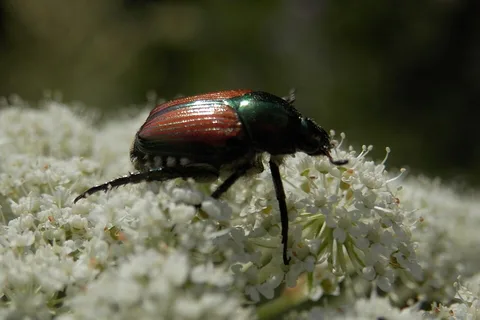
An adult Japanese beetleRyan Hodnett · CC BY-SA 4.0
What it looks like
Metallic copper-and-green beetles, about a half-inch long, feeding in groups on the tops of leaves in midsummer. They favor roses, beans, grapes, and many ornamentals, and they are easiest to spot clustered on warm mornings.
The damage
Leaves skeletonized to a lace of veins — the green tissue eaten away between them — plus chewed flowers and the beetles themselves out in the open.
The move
Hand-pick into soapy water early and often, in the cool of the morning when they are sluggish, and skip the pheromone traps — they pull in more beetles than they catch. Row-cover high-value plants through the few peak weeks. A healthy, well-watered plant shrugs off damage that looks worse than it is.
The adult flight lasts only a few weeks and shifts north to south — your Extension can tell you when to expect the local peak.
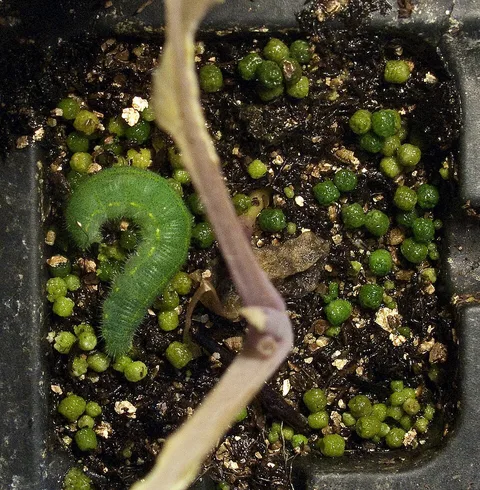
An imported cabbageworm and its frassDowntowngal · CC BY-SA 3.0
What it looks like
Velvety green caterpillars on cabbage, broccoli, kale, and their kin — the imported cabbageworm creeps along plump and fuzzy, the looper humps its back as it moves. Both are so well camouflaged you usually spot the damage first.
The damage
Ragged holes chewed through the leaves and into the heads, with crumbly dark-green droppings collecting in the crown of the plant.
The move
Row-cover the bed from transplant on — the white cabbage butterfly cannot lay eggs through it — hand-pick what slips in, and reach for Bt (Bacillus thuringiensis), a targeted biological that hits caterpillars and spares bees and beneficials. Healthy plants outgrow light feeding.
Flea Beetles
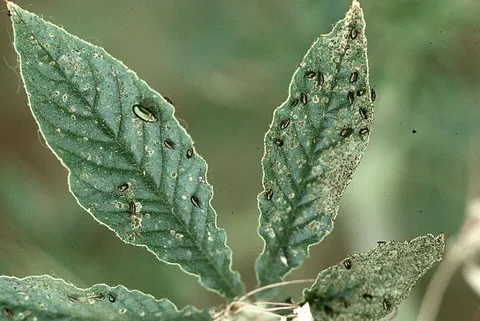
Flea beetles and their shot-hole damageWhitney Cranshaw, Colorado State University, Bugwood.org · CC BY 3.0 us
What it looks like
Tiny black or bronze beetles that spring away like fleas when disturbed, working over the leaves of eggplant, radishes, brassicas, and tomatoes. The seedlings take the worst of it.
The damage
A pepper-shot of small round "shot-holes" scattered across young leaves; heavy feeding can stall or kill seedlings outright.
The move
Protect seedlings under row cover until they are big enough to outgrow the damage, keep plants vigorous, and use a trap crop or reflective mulch to throw the beetles off. Mature plants tolerate the holes fine — the only urgency is at the seedling stage.
Colorado Potato Beetle
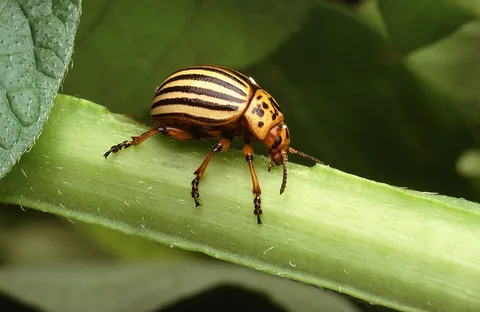
An adult Colorado potato beetle
What it looks like
A rounded beetle with bold yellow-and-black stripes on potatoes, eggplant, and tomatoes, alongside humpbacked brick-red larvae and clusters of bright orange eggs on the leaf undersides — adults, larvae, and eggs often all on the same plant.
The damage
Rapid defoliation — larvae and adults together can strip a potato plant to bare stems — and the orange egg masses tucked under the leaves.
The move
Scout the leaf undersides and crush the orange egg clusters before they hatch — the highest-leverage move you have. Hand-pick adults and larvae, rotate potatoes and eggplant well away from last year’s bed, and mulch deep with straw, which slows the adults walking in. They resist many sprays, so the mechanical moves carry it.
Cutworms
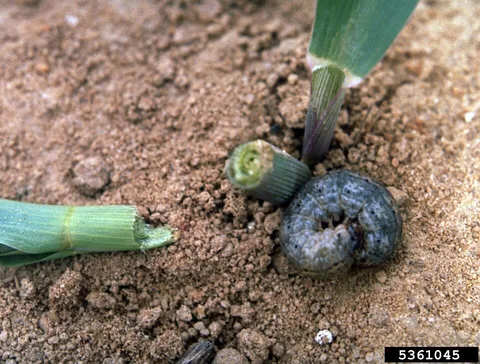
A cutworm curled beside a clipped seedlingW.M. Hantsbarger, Bugwood.org · CC BY 3.0 us
What it looks like
Fat, dull gray-brown caterpillars that curl into a tight C when you disturb them. You rarely catch them in the act — they feed at night and hide in the soil by day.
The damage
A young transplant clipped off clean at the soil line overnight, lying beside its own stump in the morning, as if cut with scissors.
The move
A simple collar around each transplant — a toilet-paper tube or a cardboard ring pushed an inch into the soil — stops them cold. Clear the weedy debris where they shelter, and when a plant goes down, press a finger into the soil around it: the culprit is usually within an inch or two.
The Big Larvae
A few caterpillars and grubs do damage out of all proportion to their numbers — one hornworm strips a tomato, one vine borer fells a squash. These reward knowing the sign before you see the animal, because by the time the plant wilts the larva is already inside or on top of it.
Tomato Hornworm
Includes: Tobacco hornworm
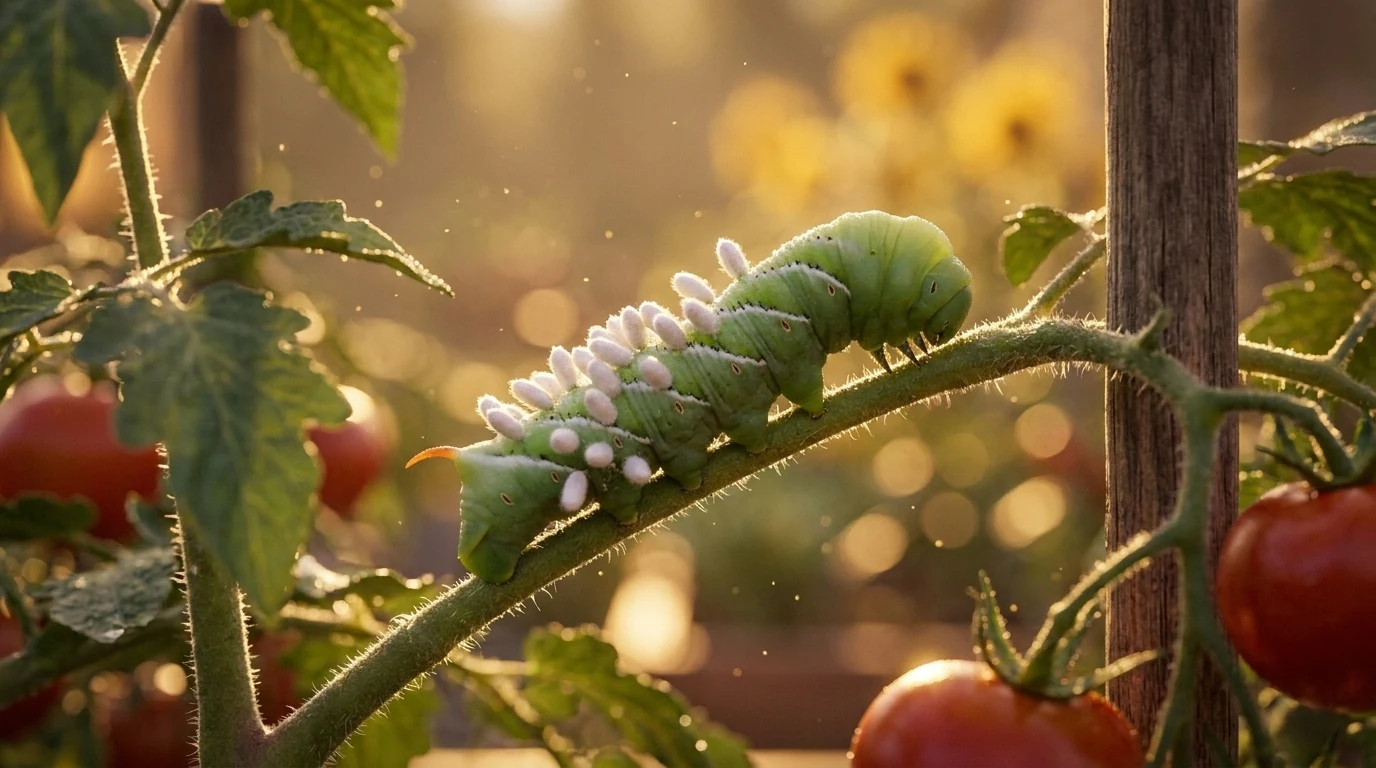
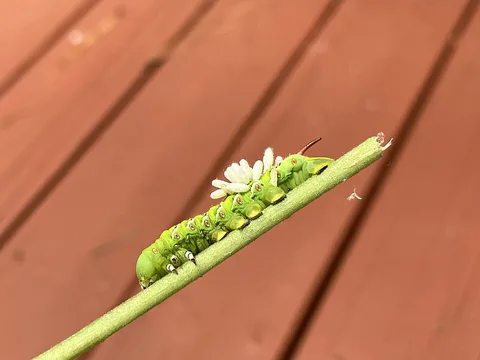
A hornworm carrying braconid-wasp cocoons
What it looks like
A big — up to four-inch — soft green caterpillar with white side-stripes and a single soft horn at the tail, on tomatoes, peppers, and eggplant. Its near-twin the tobacco hornworm is just as common in gardens: the tomato hornworm carries V-shaped white marks and a dark horn, the tobacco hornworm diagonal white stripes and a red horn — both do exactly the same damage, so the move is the same.
The damage
Defoliation from the top down, plus scattered dark pellet-like droppings on the leaves below. Follow the droppings up and you will find the caterpillar — it is invisible until you learn its outline.
The move
Hand-pick at dawn or dusk and drop them in soapy water; a few can clear a plant. Leave any hornworm studded with white rice-like cocoons — those are braconid-wasp pupae, and that wasp is your free, self-renewing control. Turning the soil in fall disrupts the pupae for next year.
The egg-laying hawk moths run on your local season — your Extension can tell you when to start scouting.
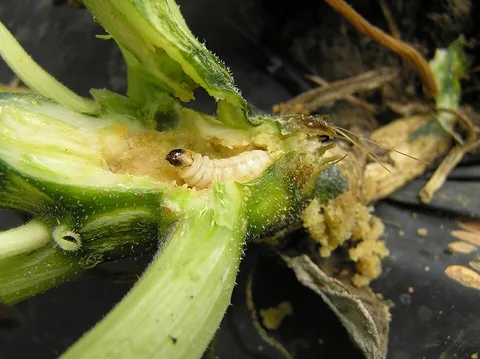
A squash vine borer grub inside a stemNY State IPM Program at Cornell University from New York, USA · CC BY-SA 2.0
What it looks like
You almost never see the culprit — a fat white grub tunneling inside the stem. The adult is a clear-winged moth that looks more like a wasp. What you notice is the plant, not the pest.
The damage
A squash or pumpkin vine that wilts suddenly from midsummer on, with a ragged hole near the base oozing sawdust-like frass, and a hollowed stem when you split it.
The move
Timing is everything: cover young plants until they flower (then lift the cover for pollination), mound soil over the vine at the leaf nodes so it can re-root past a wound, and if a borer is already in, slit the stem lengthwise, remove the grub, and bury the wound. A second, later succession planting is cheap insurance.
The moth’s single flight is short and regional — your Extension can pin the window when covering matters most.
Aphids, whiteflies, mites, and their kin do not chew — they pierce and drink, distorting new growth, coating leaves in sticky honeydew, and spreading viruses as they go. They also breed fast, which is exactly why the beneficial insects that eat them are your best long-term control.
Aphids
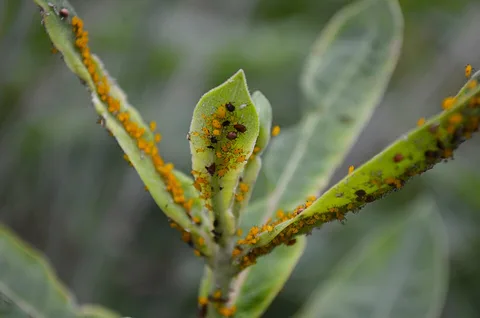
A dense aphid colony on new growth
What it looks like
Clusters of tiny soft-bodied insects — green, black, gray, or peach — packed onto new growth and leaf undersides. The tells: curled, puckered leaves, a sticky shine on the foliage below, sometimes black sooty mold on that shine, and ants running the stems to farm them.
The damage
Distorted, puckered new growth and a sticky sheen, often with ant traffic; heavy colonies stunt young plants and can carry plant viruses from bed to bed.
The move
A hard blast of water knocks most colonies off; insecticidal soap handles the rest. Then let the beneficials do the real work — ladybugs, lacewings, and hoverflies clear aphids fast, so skip the broad sprays that kill them too. A little patience early buys you the good bugs.
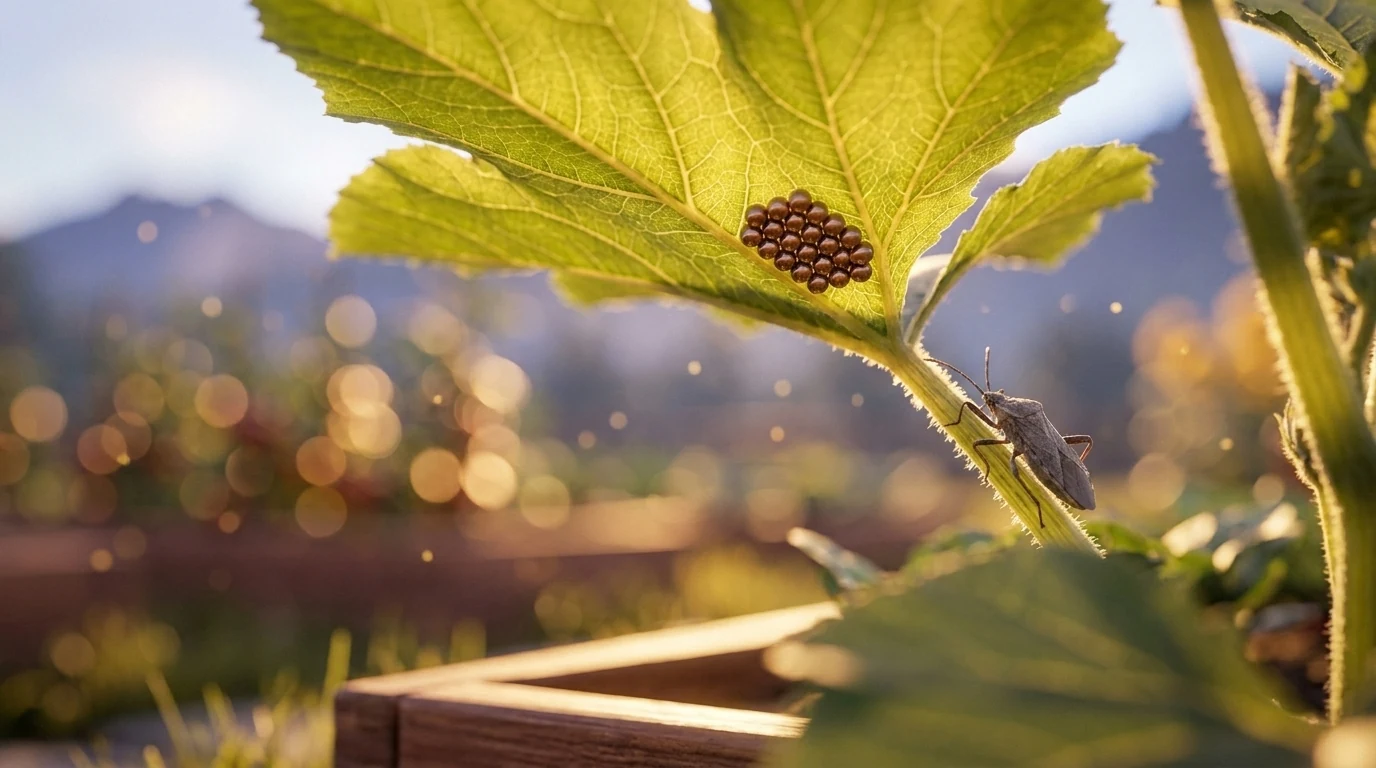
A squash-bug egg cluster on a leaf undersideBeatriz Moisset · CC BY-SA 4.0
What it looks like
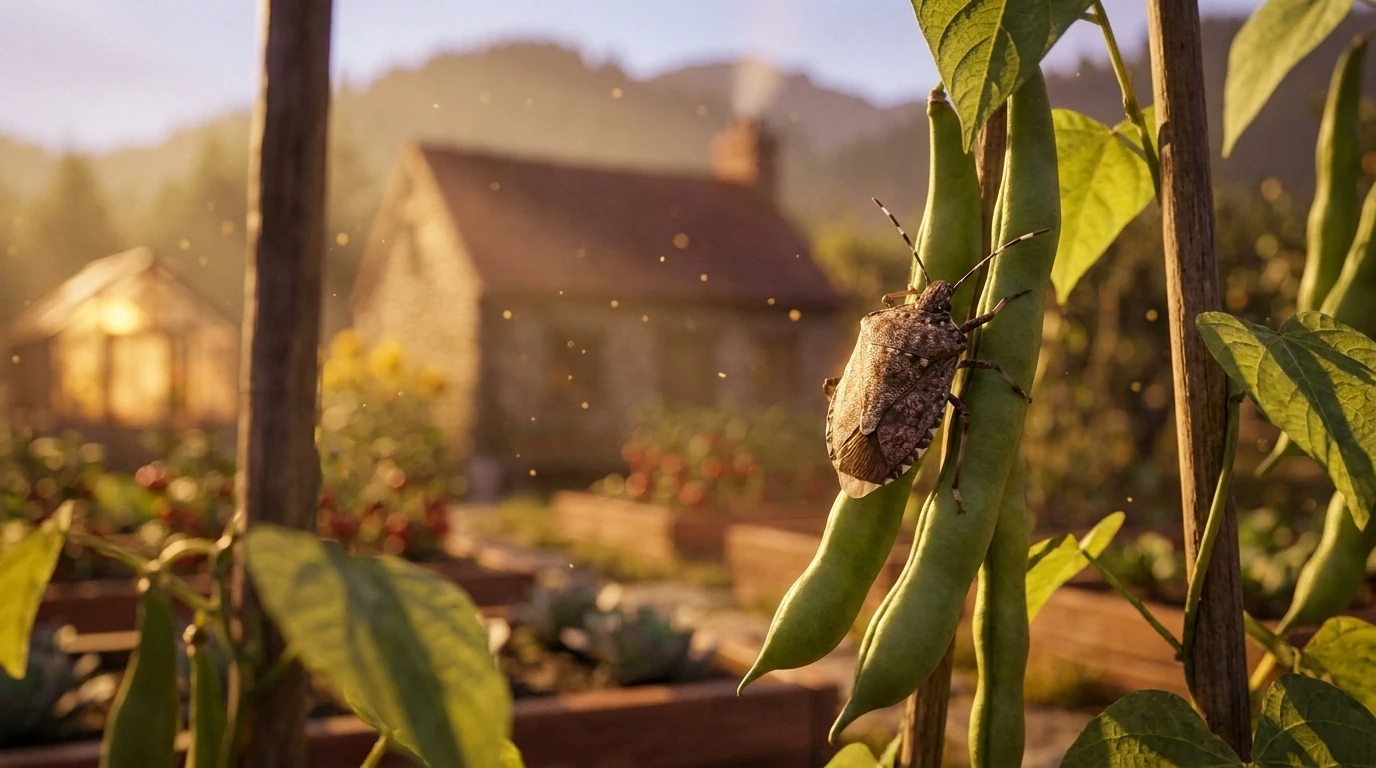
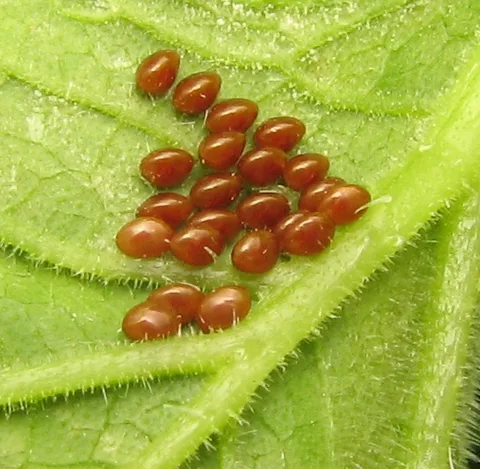
Flat, shield-shaped gray-brown bugs on squash and pumpkins, with tidy clusters of bronze, football-shaped eggs tucked into the vein angles on the leaf undersides. Crush one and you will know the smell.
The damage
Wilting, yellow-speckled leaves — young plants can collapse — and the neat coppery egg clusters on the undersides, the easiest life stage to catch.
The move
Scout the leaf undersides and scrape off the egg clusters — the single most effective habit. Hand-pick adults (a board laid beside the plant overnight collects them to dispatch at dawn), clear the debris they overwinter in, and row-cover young plants until flowering.
A whitefly on a leaf undersideWee Hong · CC BY-SA 4.0
What it looks like
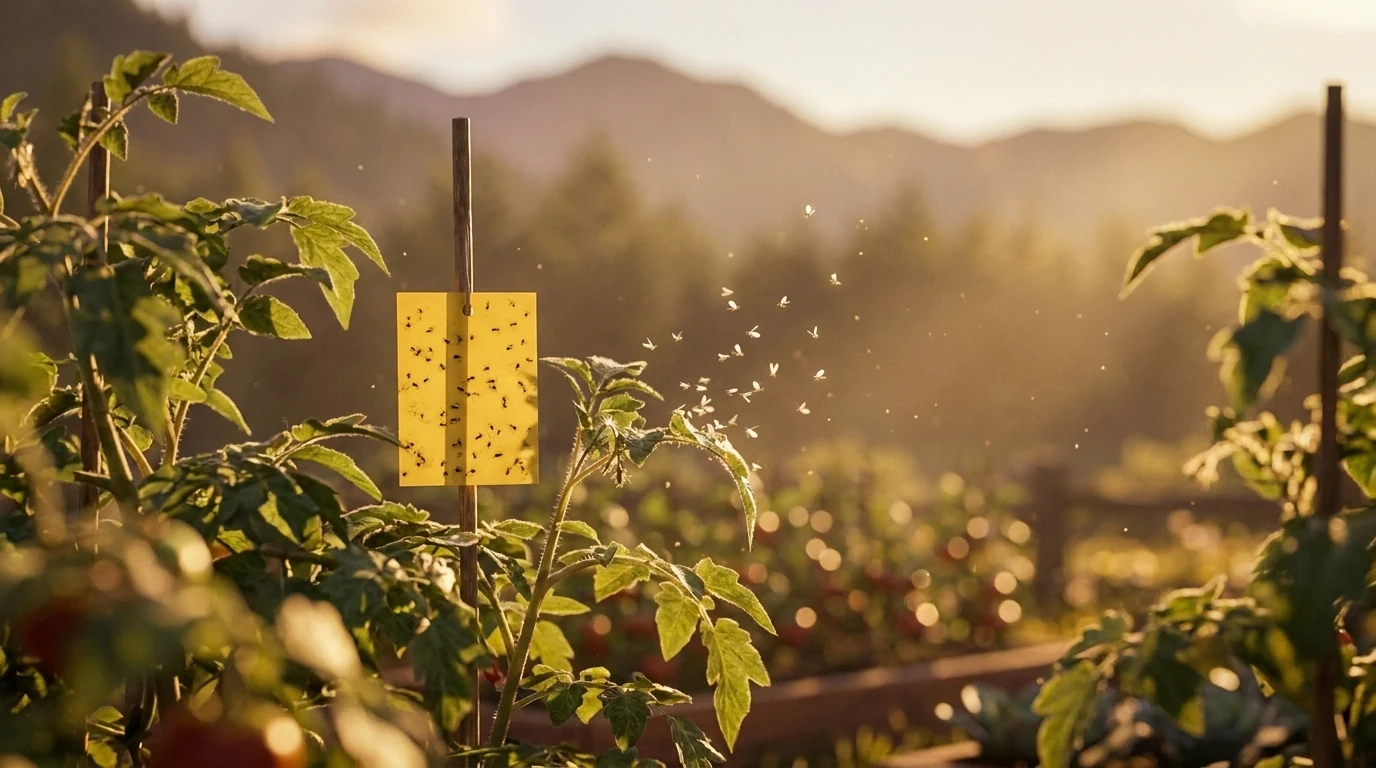
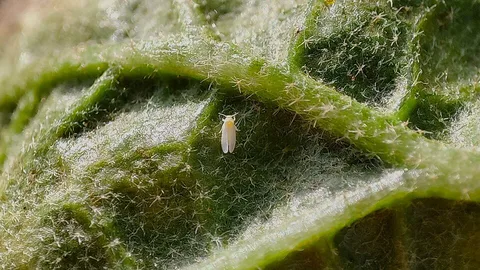
Clouds of tiny white moth-like insects that lift off in a puff when you brush the plant, then settle back on the leaf undersides. Common on tomatoes, greenhouse crops, and many ornamentals.
The damage
That shaken-plant white cloud, yellowing and weakening leaves, sticky honeydew below with sooty mold on it; heavy numbers stunt plants and can spread viruses.
The move
Yellow sticky traps catch the adults and read you the numbers; a hard water spray and insecticidal soap on the undersides knock them back. Protect the beneficials — lacewings, ladybugs, and tiny parasitic wasps do steady work — pull the worst-infested lower leaves, and ventilate greenhouses, where whiteflies thrive.
A spider mite and its silk webbingGilles San Martin · CC BY-SA 2.0
What it looks like
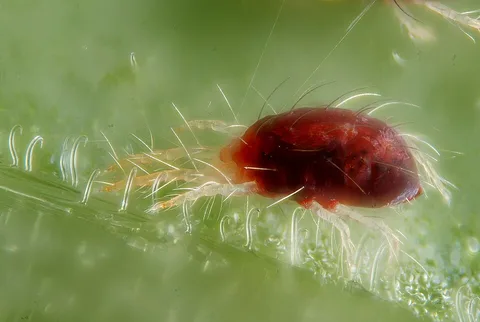
Not insects but tiny spider relatives, almost too small to see. The first sign is fine pale stippling that gives leaves a dusty, bronzed cast; in bad cases you will find fine webbing on the undersides and at the leaf joints. They boom in hot, dry, dusty conditions.
The damage
Stippled, bronzed, drying leaves and fine silk webbing; a badly hit plant looks scorched and can drop its leaves.
The move
They hate humidity and water, so a regular hard spray to the leaf undersides sets them back hard, and keeping plants unstressed and well-watered denies them the hot, dry conditions they need. Insecticidal soap or horticultural oil helps — avoid broad insecticides, which wipe out the predatory mites that are their main natural check.
Before you spray a sap-sucker, look for the good bugs already on the case — ladybug larvae (little orange-and-black alligators), lacewing eggs on tiny stalks, or a mummified aphid. A broad spray kills them along with the pest, and then you have traded a balanced garden for a dependent one.
The Ground Crew
Some pests work at or below the soil line — slugs after dark, fire ants in their mounds, nematodes in the root zone. You manage them by changing the ground itself: cut their shelter, bait them where they live, and build a soil that favors their predators.
Slugs & Snails
A grey field slugBruce Marlin · CC BY-SA 3.0
What it looks like
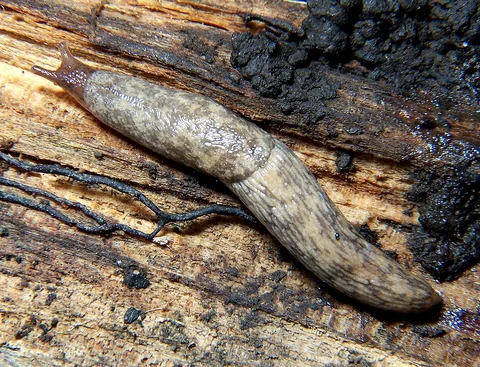
You will meet the damage before the animal — they feed at night and hide in cool, damp cover by day. Hostas, lettuce, seedlings, and strawberries take the brunt.
The damage
Ragged, smooth-edged holes in low leaves and fruit, seedlings grazed to the ground, and silvery dried slime trails glinting on leaves and soil in the morning.
The move
Patrol at night or after rain and remove them, set out iron-phosphate baits (safe around pets and wildlife), and cut their daytime shelter — boards, mulch piled against stems, weedy edges. A copper strip repels them from a bed or pot, and letting the surface dry between waterings makes the whole bed less hospitable.
Fire Ants
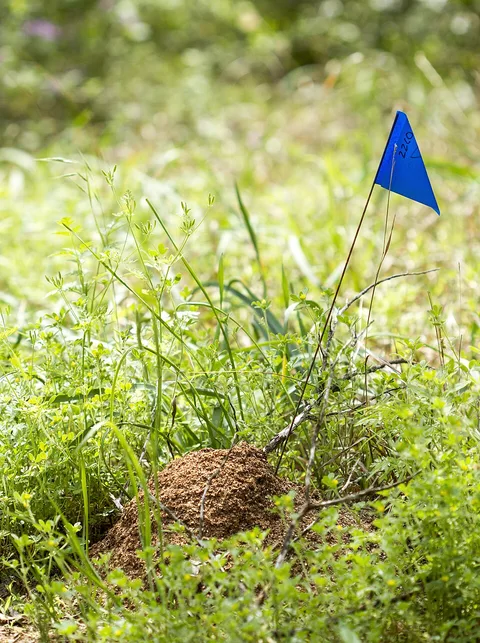
A fire-ant mound
What it looks like
Dome-shaped mounds of loose soil with no obvious opening, in sunny open ground across the South. Disturb one and the ants boil out and sting. They are more a hazard to the gardener and a nuisance in beds than a plant-eater, though they tend honeydew pests and disturb roots.
The damage
Painful stings, mounds that get in the way of beds and tools, and colonies that shelter and protect aphids and other honeydew-producing pests.
The move
Season-long baiting beats mound-by-mound whack-a-mole: broadcast bait while the ants are actively foraging so the colony carries it to the queen, then spot-treat the stubborn mounds. Keep beds and paths tidy so the ground is less inviting.
The current two-step control program and its timing are regional — your Extension publishes the one that works where you garden.
Root-Knot Nematodes
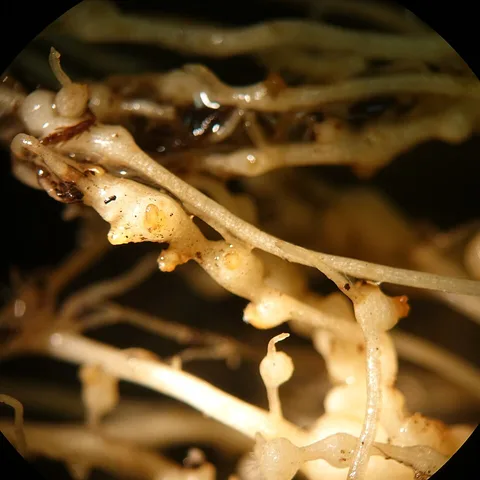
Root-knot nematode galls on roots
What it looks like
Microscopic soil roundworms you will never see. Above ground, plants yellow, stunt, and wilt in patches despite good care; below ground, the roots are knotted with swollen galls — not to be confused with the beneficial nodules on beans and peas. Worst in warm, sandy soils.
The damage
Stunted, drought-prone plants in patches, and roots studded with galls that keep the plant from taking up water and nutrients.
The move
Rotate to non-host cover crops, plant resistant varieties (the "N" in a tomato tag’s VFN), solarize infested beds under clear plastic through the hottest weeks, and build soil organic matter, which feeds the fungi and predators that hold nematodes in check. Raised beds with clean soil are a clean start.
Your Extension can confirm the species from a soil sample — the right fix depends on which nematode it is.
The Spreaders
A handful of pests matter less for what they chew than for what they carry. Controlling them is really disease prevention — which is why the moves here point straight at the plant-diseases guide.
Cucumber Beetles
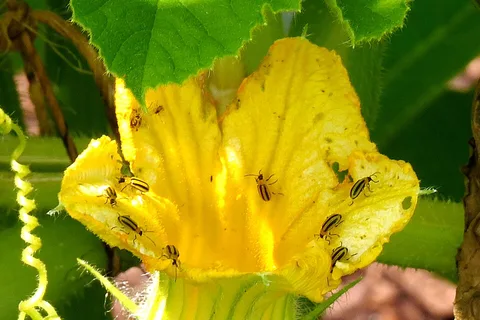
Striped cucumber beetles on a squash blossomD. Gordon E. Robertson · CC BY-SA 3.0
What it looks like
Small yellow beetles marked with either black stripes or a scatter of black spots, swarming the flowers and leaves of cucumbers, squash, and melons. The chewing is real, but the bigger threat is what they carry.
The damage
Chewed leaves and flowers and scarred fruit — and, more seriously, the bacterial wilt and mosaic viruses they spread as they feed, which do far more harm than the chewing.
The move
Row-cover young plants until flowering (then lift for pollination), use yellow sticky traps and a trap crop to pull the beetles off the main planting, and treat them as a disease vector, not just a chewer — manage them promptly. Mulch and resistant varieties help; clear the debris where adults overwinter.
Because they vector bacterial wilt, controlling them is half of that disease’s fix — see the plant-diseases guide.
Integrated pest management is just an ordered set of moves — you climb the ladder only as far as you need to, and most problems are solved on the first two rungs.
1 · Look first
Scout regularly and identify what you have before you act. Half of pest control is knowing whether the insect in front of you is a pest, a bystander, or a beneficial.
2 · Hand-pick
For beetles, caterpillars, and egg clusters, your hands (and a can of soapy water) are the fastest, most selective control there is. Ten minutes at dawn beats any spray.
3 · Barrier
Row covers, collars, and copper strips keep pests off the plant entirely — the cleanest control of all, since nothing has to be killed. Lift covers at flowering for pollination.
4 · Bait & trap — honestly
Iron-phosphate slug baits and targeted ant baits earn their place. But skip Japanese-beetle pheromone traps: they draw in more than they catch.
5 · Beneficials
Feed and protect the ladybugs, lacewings, hoverflies, and parasitic wasps that hunt pests for free. A pollinator strip and a no-broad-spray policy keep the workforce on site.
6 · Targeted sprays, last
When you do spray, choose the narrowest tool — Bt for caterpillars, insecticidal soap for soft bodies, horticultural oil for mites — and apply it to spare the beneficials.
Grow Them Strong: Start Here
A vigorous plant matched to its site outruns most pest pressure on its own. These are the crops the guide covers — each links to its full growing page, where you can score it against your own soil, sun, and climate before you plant.
We read your parcel's soil, sun, and climate and score 1,085 plants against the real conditions — a well-matched, vigorous plant is your first and best line of pest defense.
Three things about your exact spot that zone averages miss:
Your soil pHYour frost-free daysYour sun & shade
We read public map data for this spot — soil, climate, flood, and parcel records. How we handle your address.
25+ data sources analyzed in seconds
Frequently Asked Questions
What is eating holes in my leaves overnight?
Smooth-edged holes in low leaves with a silvery slime trail point to slugs. Ragged holes with dark-green droppings in the crown of a cabbage or broccoli point to cabbage worms. Clean-severed seedlings lying beside their stumps are cutworms. Each has a specific move — identify first, then act.
How do I get rid of aphids without killing the good bugs?
A hard blast of water knocks most colonies off, and insecticidal soap handles the rest — both spare the beneficials. Then let ladybugs, lacewings, and hoverflies do the ongoing work by skipping the broad-spectrum sprays that kill them too. A little patience early is what brings the good bugs in.
Do Japanese-beetle traps work?
Not the way you would hope. Pheromone traps attract more beetles to your yard than they capture, so they often make the problem worse. Hand-picking into soapy water in the cool morning, and row-covering high-value plants during the few peak weeks, works far better.
What are the white cocoons on my tomato hornworm?
Those are the pupae of braconid wasps — a beneficial insect that parasitizes hornworms. Leave that caterpillar exactly where it is: the wasps will finish it and hatch out to hunt the next generation. It is free, self-renewing pest control doing its job.
When a pest first emerges, and which species you actually have, is local — and that is exactly what your state’s Cooperative Extension tracks. They can confirm a nematode species from a soil sample or pin the week a borer moth flies. Every Growable Ground state growing page links yours — the local complement to this national playbook, never the dead-end.

 Pests
Pests