
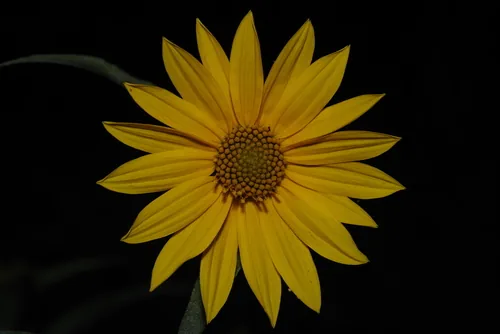
Conditional — Some Areas
Maximilian sunflower (zones 4-9) reaches only part of Hawaii (8b-13a): zones 8-9 are in range, so where you are in the state decides it.
Maximilian Sunflower in Hawaii — the short answer
Maximilian Sunflower in Hawaii: hardy in zones 4–9, full sun.
- Plant zones
- 4-9
- NC State Extension Gardener Plant Toolbox
- Hawaii zones
- 8b-13a
- USDA PHZM 2023
- Killing freeze
- None on record
- NOAA RCC ACIS 1991-2020
- Shortest county season
- 365 days
- NOAA Regional Climate Centers ACIS station record, 1991-2020, county 28°F killing freeze
Plant data: Growable Ground Plant Database, compiled from FAO ECOCROP, USDA PLANTS and university Extension sources — per-field provenance varies and is published with the dataset.

Your yard isn't the whole zone.
Hawaii spans zones 8b-13a, but your yard sits in exactly one — and slope, tree cover, and cold-air pockets nudge it further. Enter your address and we'll score maximilian sunflower against your parcel's actual hardiness, soil, and sun.
We read public map data for this spot — soil, climate, flood, and parcel records. How we handle your address.
No card required · your parcel report in seconds — read in full free for your first 14 days
Hawaii is not one climate
Hawaii’s winter-low ladder runs across 5 counties, from zone 9 in Hawaii County to zone 11.5 in Kalawao County. That is 25°F between the two counties’ average coldest night — the difference between maximilian sunflower overwintering in the ground and coming under cover.
The middle half of 5 counties runs 10–11.5 zones, with a median of 10 zones — a 2.5-zone span end to end.
Measured across 5 Hawaii counties. USDA PHZM 2023, per county. Quartiles are order statistics — every figure shown is a value a real county recorded, not an interpolation. Your own site sits somewhere inside this range; a parcel report resolves where.
Where Maximilian Sunflower Stands in Hawaii
Maximilian Sunflower is rated for zones 4–9 — a cold floor USDA puts at -30 to -20°F. No Hawaii county sits inside it, so in open ground this is a grown-under-cover plant here rather than a bed plant — which is a statement about Hawaii winters, not about maximilian sunflower.
Above the zone 9 ceiling
4 counties
- Kauai County · zone 10a-12b
- Maui County · zone 10a-13a
- Honolulu County · zone 11b-12b
3 of 4 shown
Warmer than the zone 9 end of its range.
County hardiness zones: USDA Plant Hardiness Zone Map (PHZM) 2023, per county. A zone is a 10°F band of average annual extreme minimum temperature, so the floor above is the band the plant's rating denotes, not a single measured kill point. Slope, shelter and cold-air drainage routinely move a site half a zone either way from its county figure — which is the part only your address resolves.
Zone Comparison
Maximilian Sunflower Needs
- USDA Zones: 4-9
- Sun: Full Sun
- Mature size: 8 ft tallWe haven't confirmed this against a published source yet.
- Picking window: ~45 days of harvestWe haven't confirmed this against a published source yet.
- Drought tolerance: Medium
Hawaii Has
- USDA Zones: 8b-13a
- Hard Freeze (28°F): None on record — year-round season
- Annual Rainfall: 10-400 inches
- Common Soils: Volcanic, Laterite, Coral sand
Plant Zone Range (zones 4-9)
Preferred Soil pH
We haven't confirmed this against a published source yet.
Plant data: Growable Ground Plant Database, compiled from FAO ECOCROP, USDA PLANTS, and university Extension sources — per-field provenance varies and is published with the dataset. State data: USDA ARS PHZM 2023, NOAA Climate Normals, NRCS SSURGO.
When to Plant Maximilian Sunflower in Hawaii
The frost window
Hawaii has none — the 1991-2020 station record carries no 28°F killing freeze, so there is no last-frost date to plant after and no first-frost date to harvest before (NOAA Regional Climate Centers ACIS station record). The growing season is year-round; what paces planting here is rainfall, heat and elevation, not the calendar.
Establishment timing
As a long-lived plant, maximilian sunflower can go in any month here. Aim for the start of your wetter season so it establishes on rainfall rather than on irrigation, and give it a year in the ground before judging it.
Frost tenderness
Maximilian Sunflower is killed by cold below 32°F, which simply does not bind at low and mid elevation here. It does bind upslope: Hawaii's summit country genuinely freezes, and no station up there carries a long enough daily record for us to date it. We haven't confirmed this against a published source yet.
Frost window: NOAA Climate Normals 1991-2020. Plant timing fields: Growable Ground Plant Database — frost-free days from FAO ECOCROP, days to harvest from university Extension production guides, and growing-degree-day and chill-hour minimums that are compilation estimates rather than published figures. Your site's own frost dates can run earlier or later than the state range — a parcel report pins them down.
Soil + Drainage Fit
Maximilian Sunflower likes near-neutral soil (pH 5.5-8). That's the common-ground band across Hawaii's volcanic and laterite — a soil test confirms it for your site. It will grow across that whole span, but it does best between pH 6 and 7.5 — worth knowing before you decide whether a Hawaii soil test result is a problem or just a number. Drainage matters: this plant wants well (dry spells). If your Hawaii site is heavier clay or sits in a low spot, a raised bed lifts the roots above wet ground, or work in compost. pH range, preferred pH and drainage need: We haven't confirmed this against a published source yet.
Plant pH requirements: FAO ECOCROP and USDA PLANTS, with the remaining rows from other published sources or Growable Ground compilation. Drainage: FAO ECOCROP, with the remaining rows from other published sources or Growable Ground compilation. Hawaii soil profile from USDA NRCS SSURGO. Site-specific verification: a 30-minute soil test from your local Extension lab.
What Else to Consider for Maximilian Sunflower in Hawaii
Zone compatibility tells you about winter cold survival — but Hawaii growers also need to think about:
Extreme rainfall variation — desert on one side, rainforest on the other
Volcanic soil is nutrient-poor in young flows
Invasive species pressure is severe
What to actually do about these — and the constraints that apply to every Hawaii grower, not just maximilian sunflower — is covered on the Hawaii growing guide.
Where in Hawaii Maximilian Sunflower Is Zone-Hardy
Maximilian Sunflower is rated for USDA zones 4–9. No single Hawaii county falls inside it: 0 are colder than the plant’s zone 4 floor and 4 are milder than its zone 9 ceiling. A band this narrow straddles the state rather than sitting inside it.
Across those 5 counties Hawaii’s winter-low ladder runs from zone 9a-13a in Hawaii County to zone 11b-12b in Kalawao County — 3.5 USDA zones of spread, which is 35°F between the two counties’ average coldest night of the year. None of that range reaches the band maximilian sunflower needs, so here the statewide answer really is the answer.
County hardiness zones: USDA Plant Hardiness Zone Map (PHZM) 2023, per county. Maximilian Sunflower’s zone 4–9 band: NC State Extension Gardener Plant Toolbox. A parcel report resolves your address’s own zone and frost dates rather than its county’s.
Pollinator + Wildlife Value
Maximilian Sunflower draws honeybees, native bees, and butterflies (high value). Planting it near vegetable beds can lift fruit set on neighboring crops. Maximilian Sunflower's flowers are not fenced in by a freeze date here: the 1991-2020 record resolves no 28°F killing frost anywhere in Hawaii, so what limits bloom is the plant's own cycle rather than the calendar. Pollinator value: We haven't confirmed this against a published source yet.
Hawaii Cooperative Extension
For Hawaii-specific cultivar recommendations, planting calendars, and pest pressure for maximilian sunflower, the canonical source is UH Mānoa CTAHR Extension. Their fact sheets carry the local trial data we can't generalize across 50 states.
Is Maximilian Sunflower native to Hawaii?
Maximilian Sunflower is native to parts of the Lower 48, but the USDA PLANTS Database (accessed 2026-10-19) does not record it growing in Hawaii. It can still earn a place in a Hawaii garden — the zone comparison above tells you whether it will thrive.
Looking for plants that belong here? The Hawaii growing guide lists plants that USDA PLANTS records growing in Hawaii and that Kew and NatureServe Explorer both list in its native range, leaving out any that NatureServe flags as exotic there or that our audit holds.
State records: USDA PLANTS Database state-distribution data (presence, not state-level nativity), accessed 2026-10-19.
Common Questions About Growing Maximilian Sunflower in Hawaii
When can I plant Maximilian Sunflower in Hawaii?
Any month — Hawaii records no 28°F killing freeze in the 1991-2020 station record, so there is no last-frost date to wait for and the growing season is year-round (NOAA Regional Climate Centers ACIS station record). Pace planting by rainfall, heat and elevation instead: the summit country does freeze, and no station up there carries a long enough record to date it.
What hardiness zone is Maximilian Sunflower grown in across Hawaii?
Hawaii spans USDA hardiness zones 8b-13a (USDA ARS PHZM 2023). Maximilian Sunflower carries a range of zones 4-9, so the overlap zones are where outdoor growing is most reliable.
How many frost-free days does a typical Hawaii site have?
A typical Hawaii site sees ~365 frost-free days per year (derived from NOAA Regional Climate Centers ACIS station record, 1991-2020). Maximilian Sunflower needs 70+ frost-free days, so check whether your local microclimate runs above or below the state average before settling on a planting date.
Is Maximilian Sunflower native to Hawaii?
Maximilian Sunflower is native to parts of the Lower 48, but the USDA PLANTS Database (accessed 2026-10-19) does not record it growing in Hawaii. It can still earn a place in a Hawaii garden — the zone comparison above tells you whether it will thrive.
How should I amend the soil for Maximilian Sunflower in Hawaii?
Maximilian Sunflower prefers pH 5.5-8 and well (dry spells) drainage. We haven't confirmed this against a published source yet. That sits in the common-ground band across Hawaii soils — a 30-minute soil test from a local Extension lab confirms it for your specific site.
Will Maximilian Sunflower actually grow on my specific land in Hawaii?
State-level zone + climate data is a sketch. A Growable Ground parcel report scores maximilian sunflower against your address's mapped soil pH, drainage, sun, and frost-date data drawn from USDA SSURGO, NOAA, and PRISM — not state averages.
Check your specific parcel in Hawaii
State-level data is a sketch. Your Growable Ground report scores maximilian sunflower against your land's mapped soil, modelled sun, drainage, and frost data — not zone averages.
Three things about your lot that Hawaii maximilian sunflower averages can't show:
We read public map data around Hawaii — soil, climate, flood, and parcel records. How we handle your address.
25+ data sources read at your address, not the Hawaii maximilian sunflower average
Explore More
Growing guides for maximilian sunflower
Explore Hawaii county by county
Hawaii carries 5 counties with their own USDA zone — a sample of the growing pages for maximilian sunflower there:
Where else maximilian sunflower grows
Maximilian Sunflower's zone band crosses state lines — these are the states closest to Hawaii in winter climate where it also has a page, plus the far ends of its range. Each one re-answers the question with that state's own record.
More to grow in Hawaii
Hawaii has a growing page for 789 plants — a rotating sample of the rest of the shelf.
Last updated: