Pollinators

Pollinators & Your Garden: Host Plants, Partnerships & Fixes

Sources: USDA NRCS, Xerces Society, USDA ARS, Cooperative Extension

A plant can grow beautifully and still set no seed — because seed and fruit often depend on one specific partner, and that partner lives where the plant is native. These stories cover the partnerships gardeners actually run into, and how to tell whether the pollinator lives where you garden.

Meet your pollinators

Bees do the most, but they are far from alone, and the nine groups below do not want the same things from a garden. One needs bare ground you never turn over; one needs clay mud within reach of its nest; one needs the porch light off. Here is who they are, what each one pollinates, and the specific thing each needs from you.

Native bees & bumble bees

The workhorses — and the only ones that can shake pollen loose.

What it is

Most of North America’s native bees are solitary, and about 70% of U.S. species nest in the ground rather than in a hive. Bumble bees are the exception: they are the only truly social bees native to North America, and their colonies are annual — the whole nest dies off in fall and only newly mated queens overwinter. They also have one of the longest flight seasons of any bee, often the first out in late winter and the last still working in November.

What it pollinates

Bumble bees do something no honey bee can: buzz pollination, gripping a flower’s anthers and vibrating their flight muscles until pollen the flower holds back shakes free. Tomatoes, peppers, cranberries and blueberries all benefit. Blueberry makes the gap measurable — its anthers release pollen only through small pores, and wild bees move roughly 45 pollen grains per visit against a honey bee’s 11.

How to support it

Leave a sunny, well-drained patch of bare ground undug. Even a one-inch layer of mulch can be as impenetrable as pavement to a ground-nesting bee, and the young spend up to eleven months underground, so turning that soil destroys a year’s brood. Be especially careful with soil drenches and granular systemics there: a label that says not to spray while bees are foraging does nothing for a bee whose exposure route is the soil itself. Native bunch grasses give overwintering queens cover.

Mason & leafcutter bees

Early, cold-tolerant, and they nest in holes you can provide.

What it is

Solitary cavity nesters — each female builds and stocks her own nest — that cannot excavate their own tunnels and depend on beetle borings, hollow stems and similar crevices. Mason bees seal their cells with mud and fly for roughly six to eight weeks in early spring; leafcutters cut neat discs from leaves and petals to line theirs. The quickest way to tell either from a honey bee is where the pollen rides: these carry it dry on the underside of the abdomen, not packed into baskets on the hind legs.

What it pollinates

All 140 North American Osmia species visit fruit trees, and mason bees fly in cooler, wetter weather than even bumble bees — the trait that makes them dependable through a short, cold spring bloom. They are documented on apple, blueberry, tart cherry, strawberry and raspberry, and they move across rows rather than down one, which is exactly what a cultivar needing cross-pollination requires. Their foraging radius is short, roughly 200 to 300 feet, so a nest box only works if bloom is close by.

How to support it

If you put up a bee house, treat it as something you maintain rather than hang and forget: tunnels about 5/16 inch across and six to eight inches deep, closed at one end, under a rainproof cover — and replace the nesting material every other year, because reused tubes accumulate mites and pathogens. Mason bees also need clay mud within reach; mud that is too sandy crumbles, and without it they will pass the site by. Leave last year’s pithy and hollow stems standing, and source bees locally rather than shipping them in, which spreads pathogens into new populations.

Sources: Penn State Extension (2026). Orchard Pollination: Solitary (Mason) Bees; Oregon State University Extension Service (2016). Nurturing Mason Bees in Your Backyard in Western Oregon (EM 9130); Utah State University Extension (2012). Blue Orchard Bee, Osmia lignaria (ENT-162-12); UC Statewide IPM Program. Leafcutting Bees

Squash bees

On the blossom at sunrise, asleep by noon — and they work only squash.

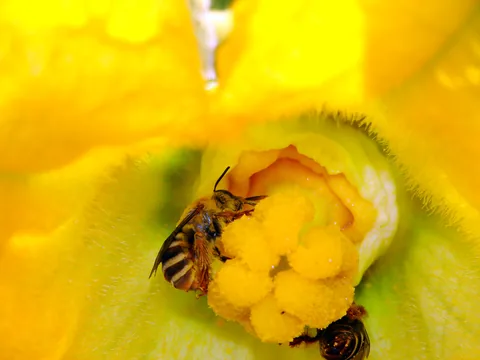
A squash bee on the pollen-covered anthers inside a squash blossom
A squash bee on the anthers inside a squash blossom

What it is

Solitary ground-nesters: each female digs her own vertical tunnel, ending in cells six to twelve inches down where the next generation spends most of the year. Adults fly in midsummer. They resemble a honey bee but are bulkier, with longer antennae and a rounder face; females carry loose pollen on very fuzzy hind legs, and males have a yellow spot on the face and are asleep in the withered flowers by noon.

What it pollinates

Pollen from the genus Cucurbita and nothing else — summer and winter squash, zucchini, pumpkins and many gourds, but not cucumbers, which is a common mix-up. They start foraging at dawn, and six to ten visits fully pollinate a female flower, so where they are established they often finish the patch before other bees begin the day. Squash depends entirely on insect visits for fruit: the pollen is too heavy for wind to carry, and the male and female parts sit in separate flowers.

How to support it

Leave the squash bed untilled where you can — the nests are in the ground directly under the plants. Watch soil-applied insecticides especially: a systemic put down before bloom can still be present at toxic levels in squash pollen, and one study measured an 89% drop in squash-bee reproductive success under an imidacloprid soil drench. On tillage itself the evidence is genuinely mixed, and worth stating that way — a census across Maryland, Virginia and West Virginia found three times more squash bees on no-till farms, while a second study of 20 farms found no such effect. No-till is the safer default, not a settled rule.

Hummingbirds

The only birds doing this job here — and they eat insects too.

What it is

In the continental United States, hummingbirds are the bird pollinators. Which ones you see is mostly settled by geography: one species, the ruby-throated, east of the Mississippi, and about a dozen across the southwestern states. They are not living on sugar alone — small insects and spiders supply the protein — and they can drop into torpor, a deep energy-saving state, to get through a cold night.

What it pollinates

Tubular flowers, usually red or orange, holding nectar deep and offering little scent, because birds hunt by sight rather than smell. At least 19 native plants in the northeastern U.S. are pollinated primarily by hummingbirds, among them trumpet vine, cardinal flower, trumpet honeysuckle, columbine and wild bergamot. These blooms also skip the ultraviolet landing guides that insect-pollinated flowers use — they are advertising to a different eye.

How to support it

Plant in conspicuous clusters rather than single plants scattered around, favor the species over nectar-poor hybrids and single flowers over doubles, and aim for continuous bloom across the whole stretch the birds are resident. Go easy on insecticides for a reason that is easy to miss: they remove the insect half of a hummingbird’s diet. Feeders are a legitimate supplement when bloom is scarce — the long-standing worry that they hold birds back from migrating has not held up — but skip the red dye, which is unnecessary when the feeder itself is red.

Sources: Penn State Extension (2024). Attracting Hummingbirds; USDA Forest Service. Bird Pollination; University of Wisconsin–Madison Extension. Hummingbirds in the Garden

Hawkmoths & moths

The night shift — and most of the Lepidoptera you actually have.

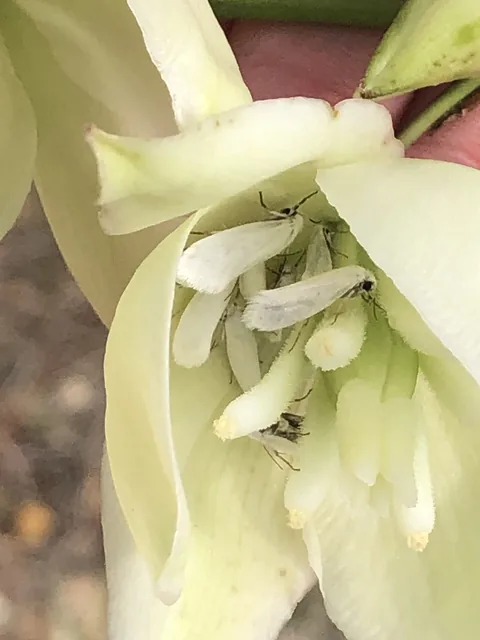
Small white yucca moths among the stamens inside an open yucca flower
Yucca moths inside a yucca flowerMarissa Calvert · CC BY 4.0

What it is

Butterflies are less than 10% of the Lepidoptera; nearly everything else in the order is a moth. Antennae are the reliable tell, not color and not the hour: a butterfly’s are thin and end in a club or ball, a moth’s taper to a point or are feathery. Hawkmoths hover like hummingbirds, some with tongues longer than their bodies, and fly upwind along a scent trail to find a clump of flowers — their caterpillars are the tomato and tobacco hornworms gardeners already know.

What it pollinates

Pale, fragrant flowers that open late in the day and reflect moonlight — morning glory, tobacco, yucca and gardenia among them. The yucca partnership is absolute: yuccas are pollinated solely by moths of the genera Tegeticula and Parategeticula, whose caterpillars eat only yucca seed, and the female deliberately packs a ball of pollen onto the stigma while laying her eggs. Because pollination research has concentrated on daytime insects, moths are likely major players in networks where they have simply not been counted.

How to support it

Turn off what you do not need after dark. One study found nocturnal visits to plants fell 62% in artificially lit areas compared with dark ones, and a moth held at a porch light all night is not out feeding or finding a mate. Motion sensors, or yellow and red bulbs, are far less disruptive. Leave leaf litter a couple of inches deep and standing stems through winter, and if you want the spectacular adults, tolerate the hornworms — sequester them on a few sacrificial plants in a corner rather than spraying.

Hoverflies (flower flies)

A fly wearing a bee’s stripes — and its larvae eat aphids by the hundred.

What it is

Flower flies mimic bees and wasps closely enough to fool most people, but the tells are clear once you know them: one pair of wings instead of two, huge eyes, short stubby antennae with a bristle, and nowhere on the body to carry pollen. They hover and change position abruptly, which is where the name comes from. They cannot sting or bite — one that lands on you is after moisture or salt. Roughly 900 species live in North America, and most overwinter as larvae in soil and leaf litter.

What it pollinates

Adults feed on pollen and nectar, and the peer-reviewed literature ranks them the second most important pollinator group after bees. Short mouthparts steer them toward open, shallow flowers, often white or yellow, and under controlled conditions they raise seed and fruit production in onion, sweet pepper, strawberry, pear and almond. Because they do not provision a nest, some species range over more of the landscape and carry pollen longer distances than bees do.

How to support it

This is the guild where restraint pays twice. A single larva eats between 100 and 600 aphids, and where larvae are abundant they can cut an aphid population by 70 to 100% — so spraying a colony that hoverfly larvae are already working removes the thing solving the problem. Keep something in bloom all season; they favor white, compound flowers such as sweet alyssum and the carrot family. Leave leaf litter for the overwintering larvae, and give them a windbreak, because they do not fly in windy conditions.

Sources: University of Kentucky Entomology. Syrphid Flies: Overlooked Pollinating Insects (ENTFACT-710); Cornell University, New York State IPM. Hover Fly Biocontrol Fact Sheet; UC Statewide IPM Program. Syrphids (Flower Flies, or Hover Flies); Li, Wyckhuys & Wu — Frontiers in Plant Science (2023). Hoverflies provide pollination and biological pest control in greenhouse-grown horticultural crops

Wasps

Hunters that fuel on nectar — and the reason a fig is a fig.

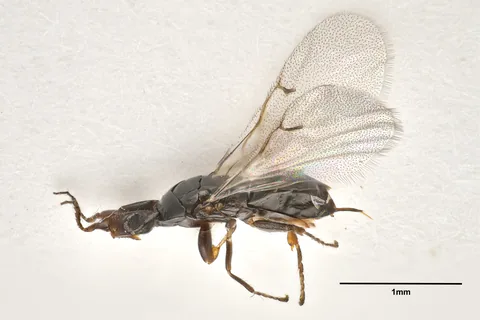
A female fig wasp specimen photographed beside a one-millimetre scale bar
A female fig wasp (Blastophaga psenes) — the scale bar is 1 mmRehberger S, Vogel J, Müller B, Vasilita C, Krogmann L, Schmidt S, Peters RS (2024) · CC BY 4.0

What it is

Nearly all wasps are solitary; the stinging social species everyone pictures are a small fraction of the group. You tell a wasp from a bee by its pointed abdomen, the narrow waist between abdomen and thorax, and a smooth, mostly hairless body — and that smoothness is exactly why it carries less pollen, since it lacks the branched, pollen-trapping hairs bees have. Evolutionarily, bees are simply wasps that took up a vegetarian diet. One subfamily, the pollen wasps, went back the other way and provisions its young on pollen and nectar rather than meat.

What it pollinates

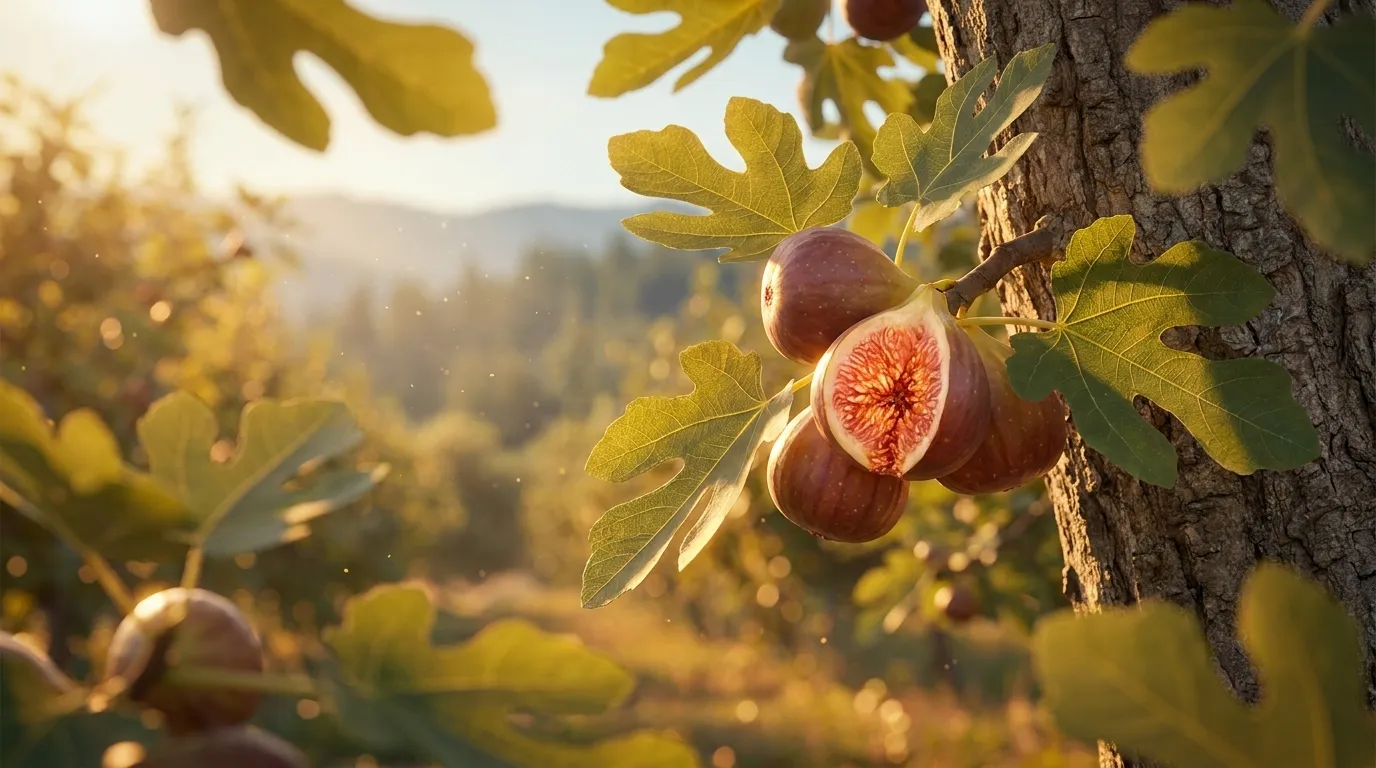
Wasps feed their young insects but need sugar themselves, so they visit flowers constantly for nectar and move pollen incidentally as they go — less efficiently than a bee, but across a great many flowers. Short tongues restrict them to shallow, open blooms, the carrot family especially. The exception is absolute: fig wasps pollinate nearly a thousand fig species, pushing in through a tiny pore to reach flowers that face inward, in a partnership more than 60 million years old.

How to support it

Plant shallow, open flowers — dill, fennel and their relatives — alongside natives like boneset, rattlesnake master and New England aster. Leave stems standing over winter for the stem-nesting species instead of cutting everything back in fall, and go light on tillage. Worth saying plainly: predatory wasps are generalists and will take other beneficial insects along with the pests, so this is a guild you feed and tolerate rather than one you deploy.

Sources: Xerces Society. Who Are the Pollinators?; USDA Forest Service. Wasp Pollination; Oregon State University Extension Service (2020). Wasps are pollinators too; Oregon State University Extension Service (2025). Encouraging beneficial insects in the garden (PNW 550)

Read the full story: Do Fig Trees Need a Pollinator? Why Your Fig Isn't Fruiting

Beetles

The oldest pollinators still on the job — messy, and effective.

What it is

Beetles were visiting flowers before bees existed. Amber fossils carrying pollen put beetle flower-visiting roughly 30 million years earlier than the oldest pollen-rich bee fossil, which makes them the oldest known pollinators of flowering plants. They come for protein-rich pollen rather than nectar, and they chew through petals and defecate in the bloom as they work — the behavior that earned them the nickname "mess and soil" pollinators. They navigate by smell rather than sight, drawn to spicy, sweet or fermented scents.

What it pollinates

The flowers built for beetles are bowl-shaped with their sexual parts exposed, white to dull green, strongly fruity, and sturdy enough to serve as a landing platform for a clumsy flier. Magnolia is the classic case: the flower is old enough to predate modern pollinators like bees, and its carpels are unusually tough to withstand beetle jaws. Pawpaw is the North American fruit crop in this category, pollinated by flies and beetles drawn to its meat-colored, faintly foul flowers.

How to support it

Plant what suits them — magnolia and pawpaw where you have room, plus aster-family landing pads like yarrow and goldenrod. Because many beetles lay their eggs in soil or loose leaf litter, leaving that layer intact matters as much as anything you plant: soldier beetle larvae overwinter there and spend it eating aphids, slugs and worms. If you grow pawpaw, know going in that its natural pollinators are neither efficient nor dependable — hand pollination is standard practice for reliable fruit set, not a sign something has gone wrong.

Sources: USDA Forest Service. Beetle Pollination; University of Maryland Extension. Beetles and Pollination (Maryland Agronomy News); Alabama Cooperative Extension System (2024). Pawpaw Production Guide (ANR-3095); Kentucky State University. Pawpaw Planting Guide

Butterflies

Nectar for the adult, one specific plant for the caterpillar.

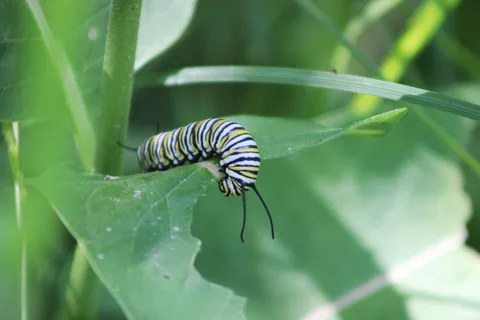
A monarch caterpillar feeding on a common milkweed leaf
A monarch caterpillar feeding on common milkweed

What it is

Day-flying and the most visible pollinators in a garden, but relatively inefficient ones: perched high on long thin legs, they pick up little pollen and lack the specialized structures bees use to collect it. The part that matters for a garden is the life cycle. A female tastes with her feet, identifying the one plant her caterpillars can eat — the host plant — before she lays her eggs on it.

What it pollinates

They favor flat, clustered flowers that provide a landing pad, and unlike bees they can see red. Proboscis length decides what a given species can use: hairstreaks and skippers cannot reach the nectar in a large bloom, while swallowtails prefer exactly those. Milkweed is the textbook case — adult monarchs nectar on many flowers but breed only where milkweed grows, and of the 100-plus milkweed species in North America only about a quarter are known to be important monarch hosts. The species matters, not just the genus.

How to support it

Plant both halves — nectar flowers for the adults and host plants for the caterpillars — in a sunny spot, since most butterflies are only active in sun. Skip double-flowered cultivars, which are bred for showiness rather than nectar. Be careful with Bt in particular: Btk kills caterpillars and only caterpillars, which is why UC IPM’s guidance is not to treat butterfly-garden plants with it at all. And leave the leaves in fall — swallowtail chrysalises are disguised as dried ones, so raking is how a garden quietly loses next year’s butterflies.

Sources: NC State Extension (2026). Butterflies in Your Backyard; USDA Forest Service. Monarch Butterfly Habitat Needs; UC Statewide IPM Program (2025). Leaf-Feeding Caterpillars; University of Minnesota Extension. Creating a butterfly garden

Read the full story: Monarch Host Plants: Which Milkweed Is Native to Your State

Related