
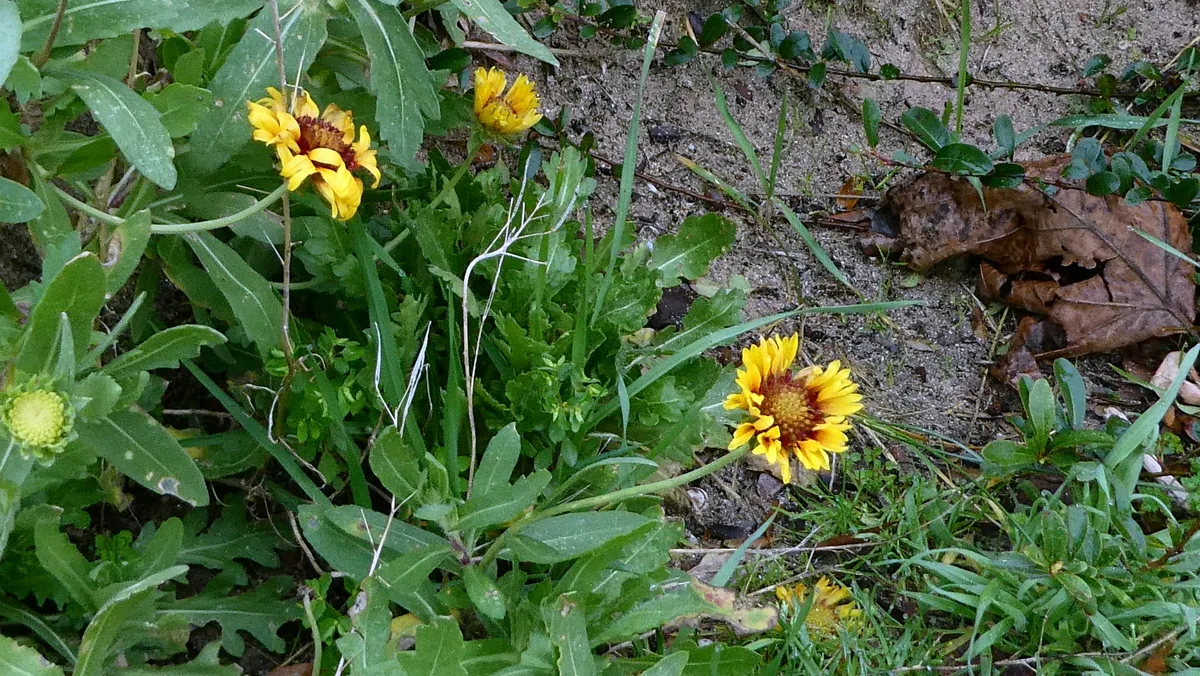
Conditional — Some Areas
blanket flower (zones 7-10) reaches only part of Kansas (5b-7a): zone 7 are in range, so where you are in the state decides it.
Blanket Flower in Kansas — the short answer
Blanket Flower in Kansas: hardy in zones 7–10, full sun, against a state median of ~208 frost-free days.
- Plant zones
- 7-10
- Manual horticultural correction (source not retained); NC State Extension and Missouri Botanical Garden, with the remaining rows from other published sources or Growable Ground compilation
- Kansas zones
- 5b-7a
- USDA PHZM 2023
- Frost window
- Apr 1 - Apr 12 – Oct 25 - Nov 3
- NOAA RCC ACIS 1991-2020, 28°F
- Shortest county season
- 177 days
- NOAA Regional Climate Centers ACIS, 1991-2020, county 28°F killing freeze
Plant data: Growable Ground Plant Database, compiled from FAO ECOCROP, USDA PLANTS and university Extension sources — per-field provenance varies and is published with the dataset.

Your yard isn't the whole zone.
Kansas spans zones 5b-7a, but your yard sits in exactly one — and slope, tree cover, and cold-air pockets nudge it further. Enter your address and we'll score blanket flower against your parcel's actual hardiness, soil, and sun.
We read public map data for this spot — soil, climate, flood, and parcel records. How we handle your address.
No card required · your full report in seconds
Kansas is not one climate
Kansas’s winter-low ladder runs across 105 counties, from zone 6 in Atchison County to zone 7 in Wilson County. That is 10°F between the two counties’ average coldest night — the difference between blanket flower overwintering in the ground and coming under cover.
The middle half of 105 counties runs 6–6.5 zones, with a median of 6.5 zones — a 1-zone span end to end.
Measured across 105 Kansas counties. USDA PHZM 2023, per county. Quartiles are order statistics — every figure shown is a value a real county recorded, not an interpolation. Your own site sits somewhere inside this range; a parcel report resolves where.
Where in Kansas Fits Best
Blanket Flower is rated for zones 7–10 — a cold floor USDA puts at 0 to 10°F. Against Kansas’s 105 counties that band holds in 16 of them, and the line runs at Barber County (zone 7a), the coldest county still inside it.
Inside zones 7–10
16 counties
- Bourbon County · zone 7a
- Butler County · zone 7a
- Chautauqua County · zone 7a
3 of 16 shown
Below the zone 7 floor
89 counties
- Atchison County · zone 6a
- Brown County · zone 6a
- Cheyenne County · zone 6a
3 of 89 shown
Winter cold is the limit here — the same plant works in a container that comes under cover.
County hardiness zones: USDA Plant Hardiness Zone Map (PHZM) 2023, per county. A zone is a 10°F band of average annual extreme minimum temperature, so the floor above is the band the plant's rating denotes, not a single measured kill point. Slope, shelter and cold-air drainage routinely move a site half a zone either way from its county figure — which is the part only your address resolves.
Even within Kansas's zones 5b-7a, county microclimates differ enough to change what thrives. These counties carry the closest zone match for blanket flower (USDA PHZM 2023):
Zone Comparison
Blanket Flower Needs
- USDA Zones: 7-10
- Sun: Full Sun
- Mature size: 2 ft tall
- Picking window: ~90 days of harvest
- Drought tolerance: High
Kansas Has
- USDA Zones: 5b-7a
- Last Hard Freeze (28°F): Apr 1 - Apr 12
- First Hard Freeze (28°F): Oct 25 - Nov 3
- Annual Rainfall: 16-42 inches
- Common Soils: Prairie loam, Silt loam, Clay
Plant Zone Range (zones 7-10)
Preferred Soil pH
Plant data: Growable Ground Plant Database, compiled from FAO ECOCROP, USDA PLANTS, and university Extension sources — per-field provenance varies and is published with the dataset. State data: USDA ARS PHZM 2023, NOAA Climate Normals, NRCS SSURGO.
When to Plant Blanket Flower in Kansas
The frost window
Across Kansas, the last spring hard freeze (28°F) clears between Apr 1 and Apr 12, and the first fall hard freeze lands between Oct 25 and Nov 3 (NOAA Regional Climate Centers ACIS, 1991-2020). Counting from the latest last freeze to the earliest first freeze, that's a 196-day window you can count on — up to 216 days on a mild site in a kind year. That marks the hard freeze, not the last light frost, so tender transplants usually wait another 2-3 weeks.
Winter standing
Kansas runs as cold as USDA zone 5, and no sourced winter-hardiness floor is on record for blanket flower, so this page does not state whether it overwinters here — and gives no fall establishment date on the strength of a guess. Whether blanket flower is a permanent planting or a replant-every-spring crop for you turns on your own zone within Kansas; check its hardiness range against that before treating it as long-lived ground.
Frost window: NOAA Climate Normals 1991-2020. Plant timing fields: Growable Ground Plant Database — frost-free days from FAO ECOCROP, days to harvest from university Extension production guides, and growing-degree-day and chill-hour minimums that are compilation estimates rather than published figures. Your site's own frost dates can run earlier or later than the state range — a parcel report pins them down.
Soil + Drainage Fit
Blanket Flower likes near-neutral soil (pH 6-7). That's the common-ground band across Kansas's prairie loam and silt loam — a soil test confirms it for your site. Drainage requirement: excessive (dry/moderately dry). A soil-survey lookup (NRCS SSURGO) flags whether your specific site matches.
Plant pH requirements: FAO ECOCROP and USDA PLANTS, with the remaining rows from other published sources or Growable Ground compilation. Drainage: FAO ECOCROP, with the remaining rows from other published sources or Growable Ground compilation. Kansas soil profile from USDA NRCS SSURGO. Site-specific verification: a 30-minute soil test from your local Extension lab.
What Else to Consider for Blanket Flower in Kansas
Zone compatibility tells you about winter cold survival — but Kansas growers also need to think about:
Low rainfall in western KS requires irrigation
Extreme wind and hail during severe storm season
Hot dry summers with 100F+ days
What to actually do about these — and the constraints that apply to every Kansas grower, not just blanket flower — is covered on the Kansas growing guide.
Where in Kansas Blanket Flower Is Zone-Hardy
Blanket Flower is rated for USDA zones 7–10. 16 of Kansas’s 105 counties fall inside that band. The coldest that does is Barber County at zone 7a. 89 counties sit below the plant’s zone 7 floor, where an unprotected plant is relying on snow cover and a mild year. Where you are in Kansas decides this one.
Across those 105 counties Kansas’s winter-low ladder runs from zone 6a in Atchison County to zone 7a in Wilson County — 1 USDA zone of spread, which is 10°F between the two counties’ average coldest night of the year. That is why a statewide hardiness answer is where you start and not where you finish.
The planting window moves with it. Rawlins County holds its last hard freeze (28°F) until about Apr 23, while Cherokee County is clear by Mar 24 — 30 days apart. Set blanket flower out on your county’s date, not the state’s.
County hardiness zones: USDA Plant Hardiness Zone Map (PHZM) 2023, per county. County last-freeze dates: NOAA Regional Climate Centers ACIS (1991-2020), county 28°F killing freeze — earlier than the folk 32°F "last frost". Blanket Flower’s zone 7–10 band: USDA PLANTS / Growable Ground plant database. A parcel report resolves your address’s own zone and frost dates rather than its county’s.
Pollinator + Wildlife Value
Blanket Flower draws honeybees, native bees, and butterflies (high value, Growable Ground Plant Database). Planting it near vegetable beds can lift fruit set on neighboring crops. Outdoors, blanket flower can only work that bloom inside Kansas's frost window — roughly 208 days, opening after the last 28°F freeze (Apr 1 - Apr 12) and closing at the first (Oct 25 - Nov 3), per NOAA Regional Climate Centers ACIS, 1991-2020.
Kansas Cooperative Extension
For Kansas-specific cultivar recommendations, planting calendars, and pest pressure for blanket flower, the canonical source is K-State Research and Extension. Their fact sheets carry the local trial data we can't generalize across 50 states.
Common Questions About Growing Blanket Flower in Kansas
When can I plant Blanket Flower in Kansas?
Kansas's last spring hard freeze (28°F) clears between Apr 1 and Apr 12, and the first fall hard freeze lands between Oct 25 and Nov 3 (NOAA Regional Climate Centers ACIS, 1991-2020). No sourced winter-hardiness floor is on record for Blanket Flower, so this page does not state whether it overwinters in Kansas and publishes no fall establishment date for it — check its hardiness range against your own zone before treating it as a permanent planting.
What hardiness zone is Blanket Flower grown in across Kansas?
Kansas spans USDA hardiness zones 5b-7a (USDA ARS PHZM 2023). Blanket Flower carries a range of zones 7-10, so the overlap zones are where outdoor growing is most reliable.
How many frost-free days does a typical Kansas site have?
A typical Kansas site sees ~208 frost-free days per year (derived from NOAA Regional Climate Centers ACIS, 1991-2020). Blanket Flower should be matched against that window, so check whether your local microclimate runs above or below the state average before settling on a planting date.
How should I amend the soil for Blanket Flower in Kansas?
Blanket Flower prefers pH 6-7 and excessive (dry/moderately dry) drainage (Growable Ground Plant Database). That sits in the common-ground band across Kansas soils — a 30-minute soil test from a local Extension lab confirms it for your specific site.
Will Blanket Flower actually grow on my specific land in Kansas?
State-level zone + climate data is a sketch. A Growable Ground parcel report scores blanket flower against your address's exact soil pH, drainage, sun, and frost-date data drawn from USDA SSURGO, NOAA, and PRISM — not state averages.
Check your specific parcel in Kansas
State-level data is a sketch. Your Growable Ground report scores blanket flower against your parcel's exact soil, sun, drainage, and frost data — not zone averages.
Three things about your lot that Kansas blanket flower averages can't show:
We read public map data around Kansas — soil, climate, flood, and parcel records. How we handle your address.
25+ data sources read at your address, not the Kansas blanket flower average
Explore More
Growing guides for blanket flower
Explore Kansas county by county
Kansas carries 105 counties with their own USDA zone — a sample of the growing pages for blanket flower there:
Where else blanket flower grows
Blanket Flower's zone band crosses state lines — these are the states closest to Kansas in winter climate where it also has a page, plus the far ends of its range. Each one re-answers the question with that state's own record.
More to grow in Kansas
Kansas has a growing page for 893 plants — a rotating sample of the rest of the shelf.
Last updated: