Pollinator Guide
Do Fig Trees Need a Pollinator? Why Your Fig Isn't Fruiting
Sources: UF/IFAS Extension, NC State Extension, University of Florida IFAS Extension, Clemson Cooperative Extension HGIC
Fig trees have a reputation for needing a special wasp to fruit, and it worries people whose tree has never set a fig. The reassuring answer: the fig cultivars home gardeners grow — Celeste, Brown Turkey, Chicago Hardy, and other common types — are self-fruiting (parthenocarpic) and swell into edible figs with no pollination and no wasp at all.
Only two fig groups actually depend on the fig wasp: Smyrna types (such as Calimyrna) and the main crop of San Pedro types. So if a backyard fig is not fruiting, the cause is almost always something else — a very young tree, too much shade, drought or heat stress, or a hard winter that killed the fruiting wood — not a missing pollinator.
Sources: University of Florida IFAS Extension. The Fig (HS27/MG214) — "Common fig cultivars have only female flowers and do not require pollination"; Clemson Cooperative Extension HGIC. Figs — the common figs home gardeners grow fruit without the wasp; the wasp requirement is a rare exception
The partnership
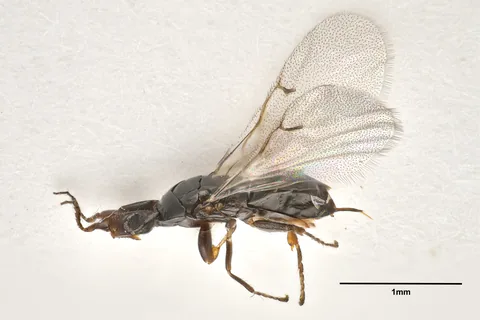
Every wild fig is pollinated by its own species of tiny wasp, which crawls inside the closed flower (the fig is an inside-out flower cluster) to lay eggs and, in doing so, pollinates it — the ancient process called caprification. Ficus carica keeps that relationship in its wild and Smyrna forms, but centuries of selection gave home gardeners 'common'-type cultivars that swell into edible figs with no pollination at all (parthenocarpy). That's why a Brown Turkey or Celeste in a Georgia backyard fruits heavily though the fig wasp never reaches most of North America — the plant kept the fruit and dropped the dependency.
For a common-type fig, missing fruit is almost never about pollination — it's usually one of these:
- A young tree that is not yet mature enough to fruit
- Too little sun — too much shade on the tree
- Drought or heat stress causing the tree to drop its fruit
- A hard winter that killed the fruiting wood
Address those and a healthy common fig fruits on its own.
Where it grows
A Mediterranean/southwest-Asian native grown across the warmer U.S.; common-type cultivars fruit anywhere they are winter-hardy.
See whether a fig fits your land
Fig fruiting comes down to winter cold and sun, not a wasp. Enter your address for your USDA zone, your site type, and a starting plant list. Free, no account.
We read public map data for this spot — soil, climate, flood, and parcel records. How we handle your address.
Do fig trees need a pollinator?
Most do not. The common fig cultivars home gardeners grow are parthenocarpic — they set edible figs with no pollination and no fig wasp. Only Smyrna and San Pedro types (such as Calimyrna) need the wasp or hand-pollination.
Are figs self-pollinating?
Common-type figs are effectively self-fruiting: they form fruit without any pollination at all, which is why a single tree fruits heavily far outside the fig wasp's range. Smyrna and San Pedro types are the exception and require the wasp.
Why is my fig tree not producing fruit?
For a common-type fig, a lack of fruit is almost never a pollination problem. The usual causes are a young tree not yet mature, too little sun, drought or heat stress dropping the fruit, or winter cold killing the fruiting wood. Address those and a healthy common fig fruits on its own.
Sources (6)
- UF/IFAS Extension (2019). The Fig (HS27 / MG214)
- NC State Extension (2024). Ficus carica — NC State Extension Gardener Plant Toolbox
- NC State Extension (2024). Ficus carica 'Brown Turkey'
- NC State Extension (2024). Ficus carica 'Celeste'
- University of Florida IFAS Extension. The Fig (HS27/MG214) — "Common fig cultivars have only female flowers and do not require pollination"
- Clemson Cooperative Extension HGIC. Figs — the common figs home gardeners grow fruit without the wasp; the wasp requirement is a rare exception
Related pollinator stories