Pollinator Guide
How to Hand-Pollinate Squash (When Your Zucchini Won't Set Fruit)
Sources: NC State Extension, Penn State Extension, Artz & Nault, University of Florida IFAS Extension
When a young zucchini or squash yellows at the tip and drops off before it can grow, the plant is almost never sick — its female flower simply was not pollinated in time. Squash co-evolved with the specialist squash bee, and where those bees are active it takes just a handful of visits to set a fruit. But on a cool morning, in a new garden, or after a wet spell when bees stay home, the window can close before any pollinator arrives.
The fix takes about thirty seconds and no tools. Once you can tell a male squash flower from a female, you can move the pollen yourself — a reliable backstop any time bees fall short.
The partnership
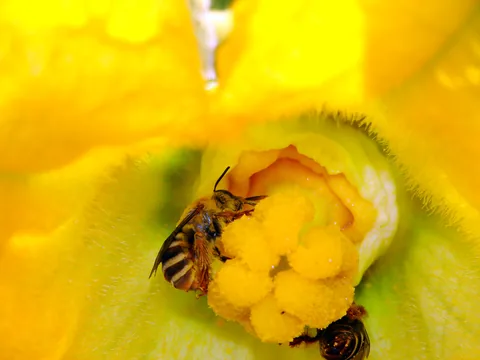
Squash, pumpkins and gourds are New World crops, and they came with a dedicated pollinator: the squash bee, which visits only Cucurbita flowers and provisions its entire nest with their pollen. Where squash bees are present it takes just 6–10 of their visits to fully pollinate a female flower — they often finish the job before honeybees are even awake. But unlike the yucca or wild fig, squash kept its options open: honeybees and bumble bees are perfectly good backups, and a gardener can hand off the pollen in seconds. The specialist is the star, not a single point of failure.
How to hand-pollinate a squash plant
- 1
Go out in the morning
Squash flowers open for a single morning and close by afternoon, so pollinate early — soon after the blooms open, while the pollen is fresh.
- 2
Tell the male flower from the female
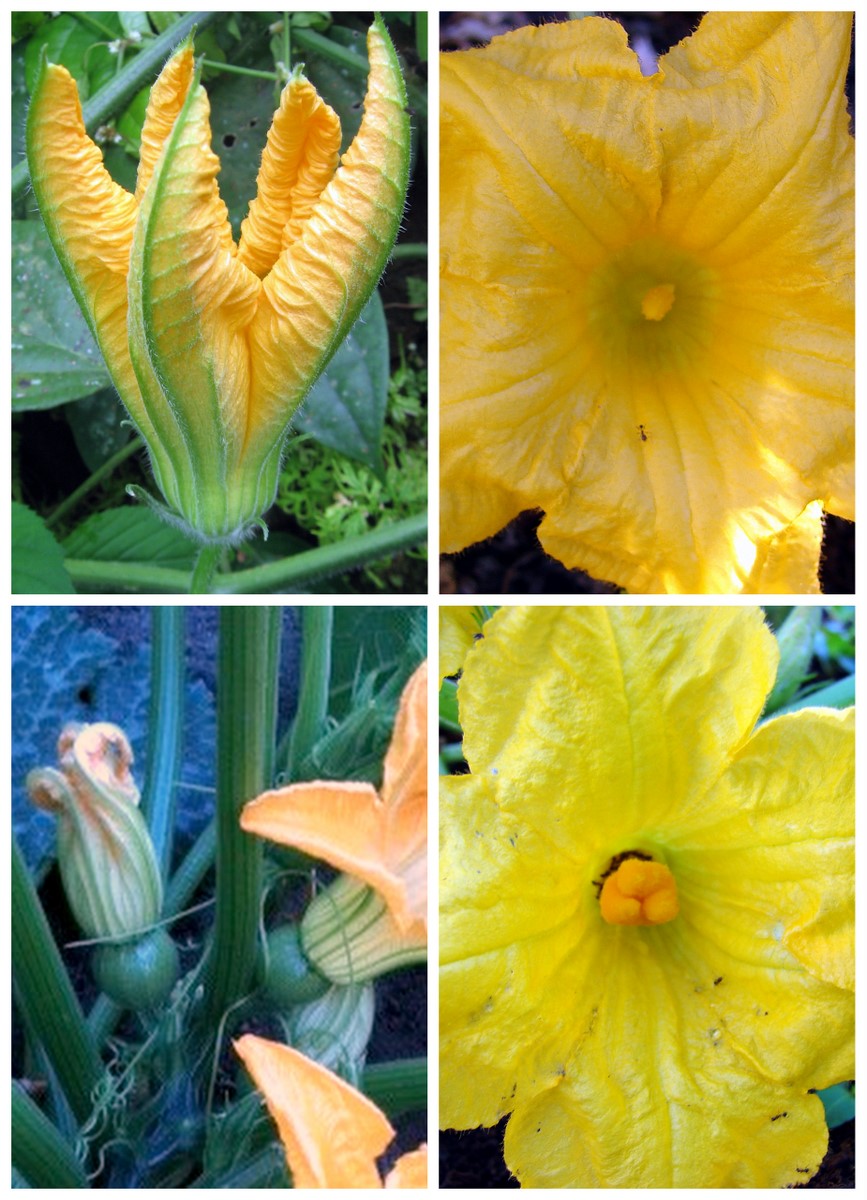
A male flower sits on a thin, straight stem and has a pollen-covered anther in its center. A female flower has a tiny immature squash — a swollen bulb — just behind the petals.
- 3
Pick a fresh male flower
Snap off a newly opened male flower and gently peel back or remove its petals to expose the pollen-loaded center.
- 4
Transfer the pollen
Brush the male anther directly onto the stigma in the center of the open female flower, dabbing so visible pollen transfers. One male flower can pollinate one or two females.
- 5
Watch the fruit set
A pollinated female fruit swells and stays green over the next few days; an unpollinated one yellows and drops. Repeat on new female flowers as they open.
Sources: University of Florida IFAS Extension. Hand Pollination of Squash and Corn in Small Gardens (HS398); University of Maryland Extension. Growing Summer Squash (Zucchini) in a Home Garden
Plants to grow
Where it grows
Cucurbita are New World natives cultivated across the U.S.; squash bees have expanded across the continent alongside the crop.
See how squash fits your land
A short season or a shaded bed changes when squash sets fruit. Enter your address for your USDA zone, your site type, and a starting plant list for your soil and sun. Free, no account.
We read public map data for this spot — soil, climate, flood, and parcel records. How we handle your address.
Why are my squash flowers falling off?
The first flowers a squash plant opens are usually all male, so they bloom and drop with no fruit — that is normal. When female flowers (the ones with a tiny squash behind them) yellow and drop, it means they were not pollinated in time. A morning hand-pollination fixes it.
How do you hand-pollinate squash?
In the morning, pick a freshly opened male flower (thin stem, pollen-covered center), remove its petals, and brush the pollen onto the stigma inside an open female flower (the one with a small immature squash behind it). The fruit then swells over the next few days.
Do squash need bees to make fruit?
Squash need their flowers pollinated, and bees usually do the job — specialist squash bees plus honey bees and bumble bees. They are not obligate, though: when bees are scarce you can transfer the pollen yourself and set the fruit by hand.
Sources (5)
- NC State Extension (2021). Squash Bees in the Home Garden
- Penn State Extension (2023). Biology and Pollination Services of the Squash Bee
- Artz & Nault (2011). Performance of Apis mellifera, Bombus impatiens, and Peponapis pruinosa as pollinators of Cucurbita pepo (Environmental Entomology)
- University of Florida IFAS Extension. Hand Pollination of Squash and Corn in Small Gardens (HS398)
- University of Maryland Extension. Growing Summer Squash (Zucchini) in a Home Garden
Related pollinator stories