Pollinator Guide
Monarch Host Plants: Which Milkweed Is Native to Your State
Sources: Xerces Society, Burghardt, Tallamy & Shriver
If you want to support monarchs, one plant does what no other can: milkweed. A monarch caterpillar eats milkweed leaves (genus Asclepias) and nothing else, so a garden without it is one monarchs pass over. That is what a host plant is — the plant a butterfly must have to breed, not just a flower it visits.
The catch is that "milkweed" is not one plant but dozens of species, and the right one depends on where you live: swamp milkweed thrives in a wet Midwestern yard, butterfly milkweed in dry Southern soil. Planting the milkweed native to your state gives monarchs the plant they evolved with — and native plantings do more than feed monarchs. On paired suburban properties, yards landscaped with native plants hosted roughly four times as many caterpillars as yards planted with non-natives (Burghardt, Tallamy & Shriver, 2009).
Source: Burghardt, Tallamy & Shriver (2009). Impact of Native Plants on Bird and Butterfly Biodiversity in Suburban Landscapes (Conservation Biology 23(1):219–224)
The partnership
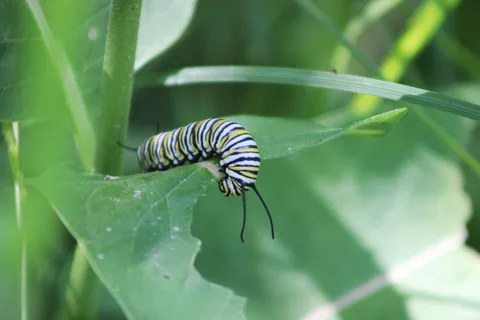
Milkweed is the whole reason monarch butterflies exist as we know them: it is the only plant their caterpillars can eat. A female monarch lays her eggs on milkweed leaves, the larvae feed on them, and the milky sap loads them with the toxins that make monarchs unpalatable to birds for life. The plant's own flowers, though, are pollinated by a wide range of bees, wasps and butterflies — so milkweed sets seed with or without monarchs. This is a support relationship: planting native milkweed feeds monarchs, it doesn't depend on them to reproduce.
Plants to grow
Where it grows
Native across much of the Lower 48; the state-native species vary — see the USDA state-distribution layer for which milkweed belongs in a given state.

See which milkweed fits your land
Enter your address for your USDA zone, your site type, and a starting plant list — with the native milkweed for your land included where it fits. Free, no account.
We read public map data for this spot — soil, climate, flood, and parcel records. How we handle your address.
What is a monarch host plant?
A host plant is the plant a butterfly must lay eggs on because its caterpillars can eat nothing else. For monarchs that plant is milkweed (Asclepias) — the sole food of monarch caterpillars. Nectar flowers feed adult monarchs, but only milkweed lets them breed.
Which milkweed should I plant?
Plant the milkweed native to your state so monarchs get the species they evolved with. Swamp milkweed suits wet soil, butterfly milkweed suits dry and sunny sites, and common milkweed spreads readily across the eastern and central U.S. Growable Ground scores each against your actual soil, sun, and climate.
Do milkweeds need monarchs to reproduce?
No. Milkweed flowers are pollinated by a wide range of bees, wasps, and butterflies, so the plant sets seed with or without monarchs. This is a support relationship — planting native milkweed feeds monarchs; it does not depend on them.
Sources (3)
- Xerces Society (2024). Native Milkweeds (Project Milkweed)
- Xerces Society (2024). Milkweed FAQ
- Burghardt, Tallamy & Shriver (2009). Impact of Native Plants on Bird and Butterfly Biodiversity in Suburban Landscapes (Conservation Biology 23(1):219–224)
Related pollinator stories