What Grows in Rhode Island

USDA Zones 6a-7a · 44-52 inches annual rainfall

Rhode Island spans USDA hardiness zones 6a-7a, with a growing season of about 170 frost-free days — a season that fits spring and fall plantings of cool-weather crops around a solid warm-season core.

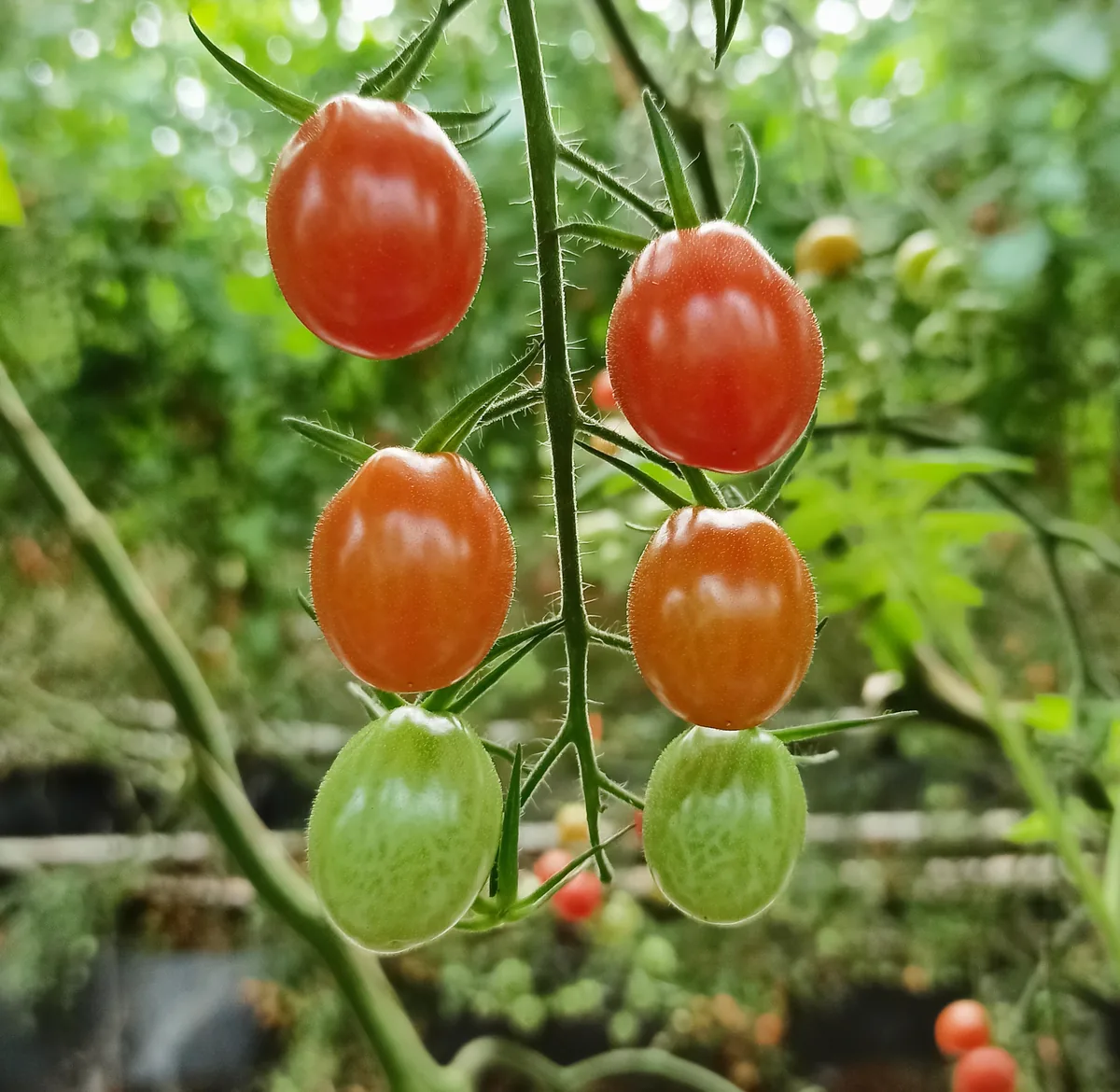
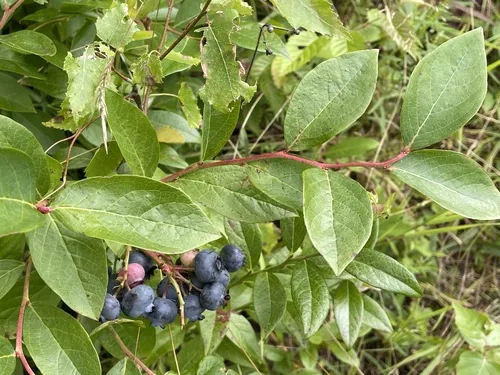
The growing year is built on 44-52 inches of annual rainfall, a median of roughly 2,900 growing-degree days (base 50°F), and about 1,500 winter chill hours for tree fruit, and every crop choice answers to them. Most ground here falls among glacial till, sandy loam, coastal sand, and river silt, whose drainage habits quietly decide which beds flourish. Well-matched crops include tomato, blueberry, red maple, and garlic, and the gap between "grows in the area" and "grows in your yard" is closed by soil, sun, and drainage.

Grounded inUSDA PHZM 2023NOAA Climate NormalsUSDA NRCS SSURGOGDD aggregate (Cornell CALS)Chill-hour aggregate (MSU Extension)EPA FRSUSDA PLANTSGrowable Ground suitability scoring

Score your parcel · free

Your yard isn't the whole state.

Rhode Island spans zones 6a-7a, but your yard sits in exactly one — and slope, tree cover, and low spots nudge it further. Enter your address and we'll score 1,112 plants against your land's actual soil, sun, and frost.

We read public map data for this spot — soil, climate, flood, and parcel records. How we handle your address.

No card required · your full report in seconds

Quick Facts

USDA Zones

6a-7a

USDA PHZM 2023

Last Frost

Apr 10 - May 1

NOAA 30-yr Normals

First Frost

Oct 5 - Oct 25

NOAA 30-yr Normals

Annual Rainfall

44-52 inches

NOAA Climate Normals

Zone maps are averages across Rhode Island. Your yard's slope, trees, and frost pockets shift what actually grows — see your land's exact reading.

The Ground You’re Working With

The soil types that dominate Rhode Island — how each drains decides more about crop success than almost anything else. Tap any soil to learn what it is and how to work with it.

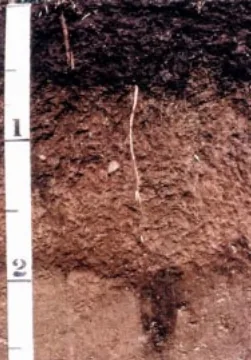
Lester soil profile: brown unsorted glacial till
Soil profile: Lester series, Minnesota

Glacial till

  • Drainage

    Variable by the shovelful. Sandy till drains freely; dense, compacted till (hardpan) can perch water above it after snowmelt and heavy rain.

  • What thrives

    Apples, stone fruits, brambles, and the whole northern vegetable garden do well on till — much of New England and the upper Midwest farms it. Deep-rooted perennials work through the stony structure happily.

How to work with Glacial till
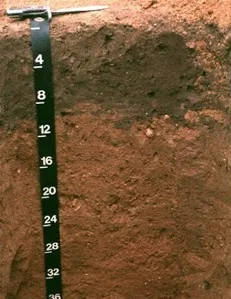
Downer soil profile: reddish sandy loam horizon with a depth scale
Soil profile: Downer series, New Jersey

Sandy loam

  • Drainage

    Fast. The sand fraction opens the soil up, so water moves through the root zone quickly and the surface rarely stays soggy. The trade is that nutrients ride out with the water.

  • What thrives

    Root crops love it — carrots, potatoes, radishes, and onions size up cleanly in ground they can push through. Melons, sweet potatoes, asparagus, and most herbs appreciate the warmth and the drainage.

How to work with Sandy loam
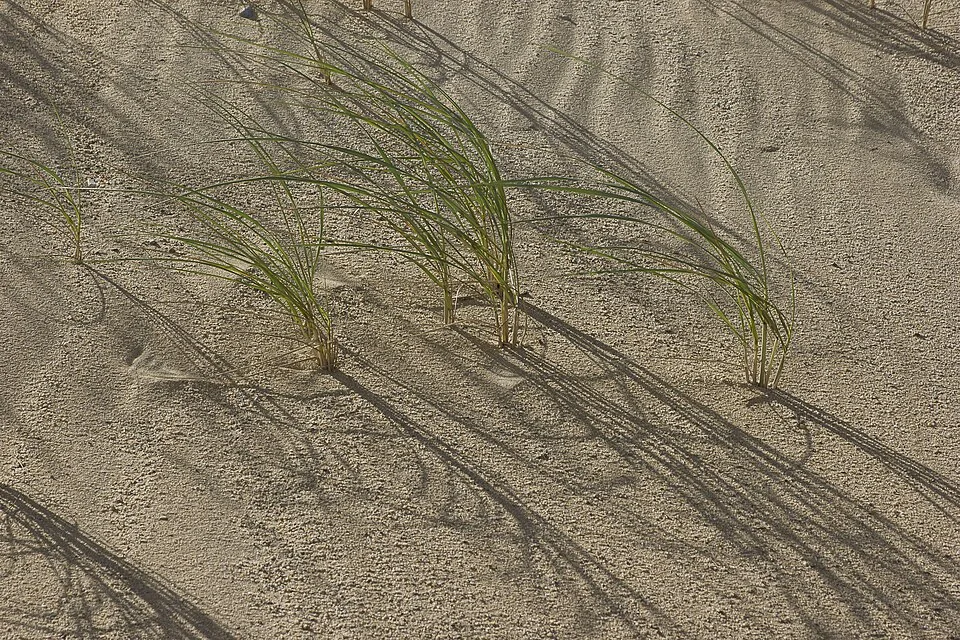
American beach grass roots stabilizing pale dune sand at Cape Cod National Seashore
Dune sand and beach grass, Cape Cod National Seashore

Coastal sand

  • Drainage

    Extremely fast. Rain and irrigation vanish through it almost as fast as they land.

  • What thrives

    Salt-tough plants earn their keep here: beach plum, bayberry, seaside goldenrod, rugosa roses, and hardy herbs like rosemary. Vegetables produce well in amended beds sheltered from the wind.

How to work with Coastal sand

See the alluvial profile — river silt is its fine, fertile bottomland fraction.

River silt

  • Drainage

    Moderate. It holds moisture generously through dry spells; in the lowest bottomland positions it can stay wet late into spring.

  • What thrives

    Bottomland silt grows legendary sweet corn, squash, melons, and greens — the moisture-holding fertility suits big, thirsty crops.

How to work with River silt

Soil data: USDA NRCS SSURGO · Soil types explained

Is it too late to plant in Rhode Island?

Almost never — the real question is what to plant next. Across Rhode Island, cool-season planting typically opens about four weeks before the local last hard freeze — county medians put that freeze near Mar 25, with the middle half of counties between Mar 24 and Mar 31 (NOAA 1991–2020 climate normals). Tender transplants wait two to three weeks past it, and fall planting counts back from first freezes mostly between Nov 24 and Dec 3 — long-season crops need about 90 days of runway, quick greens only 30. With a season this long, “too late” mostly means “switch crops” — second sowings and a full fall garden are the norm, with garlic closing the year.

State Symbols of Rhode Island

The plants Rhode Island put its name on — cultural emblems, not growing recommendations.

Official state flower

Violet

Viola

Designated 1968.

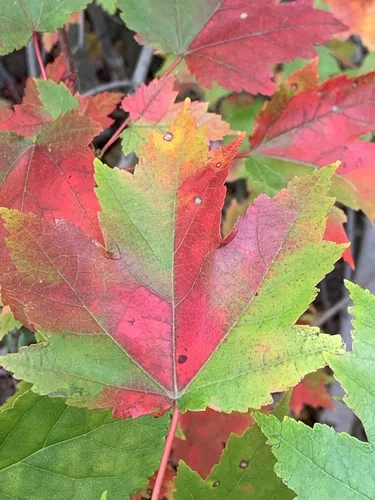
Red maple, photograph
Official state tree

Red maple

Acer rubrum

Designated 1964. In our plant library — see its full growing profile.

Official state fruit

Rhode Island Greening Apple

Designated 1991.

Native Plants of Rhode Island

Plants the USDA PLANTS Database documents as native and present in Rhode Island — a real per-state range, not just a zone match. Presence is statewide, so a plant may still be uncommon in your specific county; your state’s Cooperative Extension or a native-plant society is the local authority.

Also zone-compatible

US-native plants whose hardiness range overlaps Rhode Island’s USDA zones 6a-7a but which USDA PLANTS doesn’t map to a single state range here. Zone overlap is a starting filter, not a range map.

Browse all US-native plants by state & zone →

Growing Challenges in Rhode Island

What an experienced grower plans around here — each one has a move.

Small lot sizes limit garden space in much of the state

Small ground grows big in containers and vertical beds — a well-planned patio out-yields a neglected quarter acre.

Salt spray affects coastal plantings

Put salt-tolerant species on the front line and a windbreak behind them to take the coastal spray.

Rocky glacial soils need clearing

Skip the rock harvest — a raised bed over cleared ground starts clean and productive the same weekend.

For cultivar selection, pest pressure, and planting-time guidance specific to Rhode Island, the URI Cooperative Extension is the authoritative local source.

Safe to Grow Here?

What the federal record shows across Rhode Island — and how to grow with it.

Federal record: High

We checked the federal record across Rhode Island7,250 documented sites across 7 of the 9 source types we track.

The most significant on record: 141 Superfund sites. Sites tracked in EPA's Superfund program — from assessment-stage CERCLIS entries to confirmed National Priorities List cleanup sites.

Rhode Island carries one of the heavier federal records we track — and that's not a verdict on your yard. Proximity to a documented site is information, not a diagnosis: nothing here says any particular parcel is affected. It does earn one concrete step — before food beds go in the ground, a professional soil test tells you exactly what you're working with, and raised beds with clean imported soil grow well almost anywhere in the meantime.

Severity Distribution

across Rhode Island

High155Moderate1,713Low5,382

Highest-Severity Sites

100 Reynolds Road Area
Superfund · Superfund (Non-NPL)
254 Old Great Road Property
Superfund · Superfund (Non-NPL)
2ND Street Mercury Release
Superfund · Superfund (Non-NPL)
Acn - Providence
Superfund · Superfund (Non-NPL)
Atlantic Tubing CO.
Superfund · Superfund (Non-NPL)

A note from Gnorman

What an experienced grower watches for around here

In and around Rhode Island, two things run higher than the national average — Superfund (141 sites) and Toxic Release Inventory (446 sites). It's not cause for alarm — it's worth knowing, and there's a sensible way to grow around it.

Superfund: Superfund sites represent the most severe contamination in the federal system.

Toxic Release Inventory: TRI facilities report annual chemical releases to air, water, and land.

Commission professional soil testing before any food production (test for heavy metals, VOCs, and SVOCs).

Check prevailing wind direction — downwind parcels face higher exposure than upwind or crosswind locations.

Sources: EPA, USGS1.8M documented sites tracked nationwide across 9 federal source types.

See what grows on YOUR specific land

State averages sketch the shape. Your soil, sun exposure, drainage, and microclimate decide what actually takes. Pull a site-specific report for your exact parcel.

Free Report

Read your Rhode Island parcel

Enter your address. We read your soil, sun, drainage, and frost dates, then score 1,112 plants against the real conditions on your land.

Three things about your exact spot that zone averages miss:

Your soil pHYour frost-free daysYour sun & shade

We read public map data for this spot — soil, climate, flood, and parcel records. How we handle your address.

25+ data sources analyzed in seconds

Frequently Asked Questions

What USDA hardiness zones are in Rhode Island?

Rhode Island spans USDA hardiness zones 6a-7a, per the USDA Plant Hardiness Zone Map 2023. Zones reflect average annual extreme minimum temperatures from 1991–2020 weather data.

Is it too late to plant in Rhode Island?

Almost never — the real question is what to plant next. Across Rhode Island, cool-season planting typically opens about four weeks before the local last hard freeze — county medians put that freeze near Mar 25, with the middle half of counties between Mar 24 and Mar 31 (NOAA 1991–2020 climate normals). Tender transplants wait two to three weeks past it, and fall planting counts back from first freezes mostly between Nov 24 and Dec 3 — long-season crops need about 90 days of runway, quick greens only 30. With a season this long, “too late” mostly means “switch crops” — second sowings and a full fall garden are the norm, with garlic closing the year.

When does frost risk typically end in Rhode Island?

Across Rhode Island, the middle half of counties see their last hard freeze (28°F) between about Mar 24 and Mar 31, with a county median near Mar 25 (NOAA 1991–2020 climate normals). That marks the hard freeze, not the last light frost — light frosts can still bite for a few more weeks, so tender transplants usually wait another 2–3 weeks.

How long is the growing season in Rhode Island?

Measured between 28°F hard freezes, growing seasons across Rhode Island's counties mostly run about 238 to 255 days, with a county median near 253 (NOAA 1991–2020 climate normals). Tender crops get a somewhat shorter practical window, since lighter frosts reach a few weeks past the hard-freeze dates on both ends.

What vegetables grow well in Rhode Island?

Rhode Island's zones 6a-7a support a wide range — strong performers include Tomato, Blueberry, Red Maple, Garlic, and Violet. What actually takes on any one site comes down to its soil, sun, and drainage, and we score each plant against the real conditions at your address.

Which hardiness zone is Rhode Island, really?

Officially, Rhode Island spans USDA zones 6a-7a (USDA PHZM 2023) — but a zone is a 30-year average of winter's coldest night across an area, and it can't see any one yard. A south-facing slope, a tree line, or a low frost pocket can shift a single site by half a zone either way, which is why neighboring gardeners often quote different numbers. We read the conditions at your exact address — soil, sun, slope, and frost — and score 1,112 plants against what's actually there.

Is the soil safe to grow vegetables in Rhode Island?

The federal record across Rhode Island runs heavier than most — 7,250 documented sites — so test the soil before planting food in the ground, and raised beds with clean imported soil grow well in the meantime. Even here, proximity to a documented site is information, not a diagnosis of any one yard; the contamination map shows exactly what's recorded and where.

Just moved to Rhode Island — what should I know before planting?

Start with three facts. Rhode Island spans USDA zones 6a-7a, which sets what survives winter; last hard freezes range from about Mar 24 to Mar 31 across its counties (NOAA 1991–2020 climate normals); and 7,250 documented sites sit on the federal record here, so a soil test before food beds is the smart first step. From there, matching plants to your actual soil and sun is the fun part.


Everything on this page is a Rhode Island average. Your yard writes its own version — we read soil, sun, drainage, and frost at your exact address. Try it for 14 days — no card required.

Counties in Rhode Island

Explore growing conditions by county — each has its own zone range and land area.

States with a Similar Growing Climate

Rhode Island shares its dominant growing region with these states — a useful comparison if you're weighing where a crop will behave the same way.